Showing posts with label horses. Show all posts

Friday, September 3, 2021

Fall dandelions stand thick in the meadows.


September 3.


Why was there never a poem on the cricket? Its creak seems to me to be one of the most prominent and obvious facts in the world, and the least heeded. In the report of a man's contemplations I look to see somewhat answering to this sound.


When I sat on Lee's Cliff the other day (August 29th), I saw a man working with a horse in a field by the river, carting dirt; and the horse and his relation to him struck me as very remarkable. There was the horse, a mere animated machine, — though his tail was brushing off the flies, his whole existence subordinated to the man's, with no tradition, perhaps no instinct, in him of independence and freedom, of a time when he was wild and free, completely humanized.

No compact made with him that he should have the Saturday afternoons, or the Sundays, or any holidays. His independence never recognized, it being now quite forgotten both by men and by horses that the horse was ever free. For I am not aware that there are any wild horses known surely not to be descended from tame ones.

Assisting that man to pull down that bank and spread it over the meadow; only keeping off the flies with his tail, and stamping, and catching a mouthful of grass or leaves from time to time, on his own account, all the rest for man. It seemed hardly worthwhile that he should be animated for this. It was plain that the man was not educating the horse; not trying to develop his nature, but merely getting work out of him.

That mass of animated matter seemed more completely the servant of man than any inanimate. For slaves have their holidays; a heaven is conceded to them, but to the horse none. Now and forever he is man's slave.

The more I considered, the more the man seemed akin to the horse; only his was the stronger will of the two.

For a little further on I saw an Irishman shovelling, who evidently was as much tamed as the horse. He had stipulated that to a certain extent his independence be recognized, and yet really he was but little more independent.

I had always instinctively regarded the horse as a free people somewhere, living wild. Whatever has not come under the sway of man is wild. In this sense original and independent men are wild, — not tamed and broken by society.

Now for my part I have such a respect for the horse's nature as would tempt me to let him alone; not to interfere with him, --  his walks, his diet, his loves. But by mankind he is treated simply as if he were an engine which must have rest and is sensible of pain.

Suppose that every squirrel were made to turn a coffee-mill! 

Suppose that the gazelles were made to draw milk-carts! 

There he was with his tail cut off, because it was in the way, or to suit the taste of his owner; his mane trimmed, and his feet shod with iron that he might wear longer.

What is a horse but an animal that has lost its liberty? 

What is it but a system of slavery? and do you not thus by insensible and unimportant degrees come to human slavery? 

Has lost its liberty! - and has man got any more liberty himself for having robbed the horse, or has he lost just as much of his own, and become more like the horse he has robbed?

Is not the other end of the bridle in this case, too, coiled round his own neck?

Hence stable-boys, jockeys, all that class that is daily transported by fast horses.

There he stood with his oblong square figure (his tail being cut off) seen against the water, brushing off the flies with his tail and stamping, braced back while the man was filling the cart.


It is a very remarkable and significant fact that, though no man is quite well or healthy, yet every one believes practically that health is the rule and disease the exception, and each invalid is wont to think himself in a minority, and to postpone somewhat of endeavor to another state of existence. But it may be some encouragement to men to know that in this respect they stand on the same platform, that disease is, in fact, the rule of our terrestrial life and the prophecy of a celestial life.

Where is the coward who despairs because he is sick? 

Every one may live either the life of Achilles or of Nestor.

Seen in this light, our life with all its diseases will look healthy, and in one sense the more healthy as it is the more diseased. Disease is not the accident of the individual, nor even of the generation, but of life itself. In some form, and to some degree or other, it is one of the permanent conditions of life. It is, nevertheless, a cheering fact that men affirm health unanimously, and esteem themselves miserable failures.

Here was no blunder. They gave us life on exactly these conditions, and me thinks we shall live it with more heart when we perceive clearly that these are the terms on which we have it.

Life is a warfare, a struggle, and the diseases of the body answer to the troubles and defeats of the spirit. Man begins by quarrelling with the animal in him, and the result is immediate disease.

In proportion as the spirit is the more ambitious and persevering, the more obstacles it will meet with. It is as a seer that man asserts his disease to be exceptional.


2 P. M. — To Hubbard's Swimming-Place and Grove in rain.

As I went under the new telegraph-wire, I heard it vibrating like a harp high overhead. It was as the sound of a far-off glorious life, a supernal life, which came down to us, and vibrated the lattice-work of this life of ours.?

The melons and the apples seem at once to feed my brain.

Here comes a laborer from his dinner to resume his work at clearing out a ditch notwithstanding the rain, remembering as Cato says, per ferias potuisse fossas veteres tergeri, that in the holidays old ditches might have been cleared out. One would think that I were the paterfamilias come to see if the steward of my farm has done his duty.

The ivy leaves are turning red.

Fall dandelions stand thick in the meadows.

How much the Roman must have been indebted to his agriculture, dealing with the earth, its clods and stubble, its dust and mire.

Their farmer consuls were their glory, and they well knew the farm to be the nursery of soldiers.

Read Cato to see what kind of legs the Romans stood on.

The leaves of the hardhack are somewhat appressed, clothing the stem and showing their downy under sides like white, waving wands. Is it peculiar to the season, or the rain, -- or the plant? 

Walk often in drizzly weather, for then the small weeds (especially if they stand on bare ground), covered with rain-drops like beads, appear more beautiful than ever, -- the hypericums, for instance. They are equally beautiful when covered with dew, fresh and adorned, almost spirited away, in a robe of dewdrops.

Some farmers have begun to thresh and winnow their oats.

Identified spotted spurge (Euphorbia maculata), apparently out of blossom.

Shepherd's-purse and chickweed.

As for walking, the inhabitants of large English towns are confined almost exclusively to their parks and to the highways. The few footpaths in their vicinities "are gradually vanishing,” says Wilkinson, “under the encroachments of the proprietors." He proposes that the people's right to them be asserted and defended and that they be kept in a passable state at the public expense. "This," says he, “would be easily done by means of asphalt laid upon a good foundation" !!!
So much for walking, and the prospects of walking, in the neighborhood of English large towns.

Think of a man -- he may be a genius of some kind -- being confined to a highway and a park for his world to range in! I should die from mere nervousness at the thought of such confinement. I should hesitate before I were born, if those terms could be made known to me beforehand. Fenced in forever by those green barriers of fields, where gentlemen are seated! Can they be said to be inhabitants of this globe? Will they be content to inhabit heaven thus partially?


H. D. Thoreau, Journal, September 3, 1851

Disease is not the accident of the individual, nor even of the generation, but of life itself. In some form, and to some degree or other, it is one of the permanent conditions of life. Compare December 11. 1855 ("Beauty and music are not mere traits and exceptions. They are the rule and character. It is the exception that we see and hear ")

Fall dandelions stand thick in the meadows. See August 26, 1853 ("The fall dandelion is as conspicuous and abundant now in Tuttle's meadow as buttercups in the spring. It takes their place."); September 1, 1859 ("The autumnal dandelion is a prevailing flower now, but since it shuts up in the afternoon it might not be known as common unless you were out in the morning or in a dark afternoon.."); September 11, 1859 ("This being a cloudy and somewhat rainy day, the autumnal dandelion is open in the afternoon.") See also A Book of the Seasons, by Henry Thoreau, the Autumnal Dandelion

Walk often in drizzly weather, for then the small weeds (especially if they stand on bare ground), covered with rain-drops like beads, appear more beautiful than ever, See September 2, 1859 ("The sarothra grows thickly, and is now abundantly in bloom, on denuded places, i.e., where the sod and more or less soil has been removed, by sandy roadsides.")  See also A Book of the Seasons,  by Henry Thoreau, St. Johns-wort (Hypericum)

Thursday, March 17, 2016

Horses slump.

March 17.

Snow going off very gradually under the sun alone. Going begins to be bad; horses slump; hard turning out. 

See where the cattle, which have stepped a few inches one side the sled-track, have slumped two feet or more, leaving great holes.

H. D. Thoreau, Journal, March 17, 1856

Going begins to be bad; horses slump; hard turning out.
See March 5, 1856 ("It is very hard turning out, there is so much snow in the road. Your horse springs and flounders in it.”); March 30, 1856 (“[T]he Corner road is impassable to horses, because of their slumping in the old snow”).. Compare February 9, 1855 (“The snow is so light and dry that it rises like spray or foam before the legs of the horses. They dash it before them upward like water. It is a handsome sight, a span of horses at a little distance dashing through it, like suds around their legs. ”)

Sunday, May 3, 2015

Early leaf-out: tchevet

May 3

P. M. -— To  Bath.

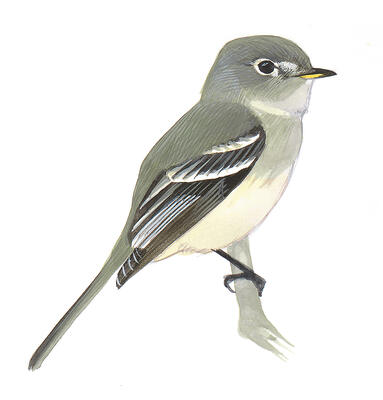
Empidonax minimus
Small pewee; tchevet, with a jerk of the head. 

Hardhack leafed two or maybe three days in one place. Early pyrus leafed yesterday or day before, if I have not named it. 

The skull of a horse, —not a mare, for I did not see the two small canine teeth in the upper jaw, nor in the under,—six molars on each side, above and below, and six incisors to each jaw. 

I first observe the stillness of birds, etc., at noon, with the increasing warmth, on the 23d of April. 

Sitting on the bank near the stone-heaps, I see large suckers rise to catch insects,—sometimes leap. 

A butterfly one inch in alar extent, dark velvety brown with slate colored tips, on dry leaves. 

On the north of Groton Turnpike beyond Abel Hosmer’s, three distinct terraces to river; first annually overflowed, say twenty-five or thirty rods wide, second seven or eight feet higher and forty or sixty wide, third forty feet higher still. 

Sweet-fern opened apparently yesterday. 

Vaccinium Pennsylvanicum began to leaf yesterday.

Young red maple leaf to-morrow; also some white birch, and perhaps sugar maple.

H. D. Thoreau, Journal, May 3, 1855

Small pewee.  (probably the least flycatcher)  See:
  • May 7, 1852 ("The first small pewee sings now che-vet, or rather chirrups chevet, tche-vet — a rather delicate bird with a large head and two white bars on wings. The first summer yellow- birds on the willow causeway. The birds I have lately mentioned come not singly, as the earliest, but all at once, i. e. many yellowbirds all over town. Now I remember the yellowbird comes when the willows begin to leave out. (And the small pewee on the willows also.)")
  • May 2, 1853 "(Summer yellowbird on the opening Salix alba. Chimney swallows and the bank or else cliff ditto. Small pewee?")
  • May 3, 1854 ("What I have called the small pewee on the willow by my boat, — quite small, uttering a short tchevet from time to time.")
  • April 29, 1856 ("I hear the small pewee’s tche-vet’ repeatedly.")
  • May 7, 1857 ("Small pewee.")
  • May 5, 1858 ("Saw and heard the small pewee yesterday. The aspen leaves at Island to-day appear as big as a nine pence suddenly.")
  • May 2, 1859 ("Small pewee and young lackey caterpillars.")
  • May 8, 1860 ("The small pewee, how long.")
See also A Book of the Seasons: the "Small Pewee"

Sweet-fern opened apparently yesterday. See  April 27, 1854 ("The meadow-sweet and sweet-fern are beginning to leaf")  May 3, 1858 ("Comptonia well out, how long?") May 4, 1855 ('Sweet-fern, and early thorn begin to leaf to-day.") See also A Book of the Seasons,  by Henry Thoreau, The Sweet-Fern 

Monday, February 9, 2015

River and meadow concealed under a foot of snow.


February 9.

Snowed harder in the night and blowed considerably. 

It is somewhat drifted this morning. A very fine and dry snow, about a foot deep on a level. It stands on the top of our pump about ten inches deep, almost a perfect hemisphere, or half of an ellipse.

It snows finely all day, making about twice as much as we have had on the ground before this winter.

February 9, 2025

Tree sparrows, two or three only at once, come into the yard, the first I have distinguished this winter.   I was so sure this storm would bring snowbirds into the yard that I went to the window at ten to look for them, and there they were.

I notice that the snow-drifts on the windows, as you see the light through them, are stratified, showing undulating, equidistant strata, alternately dark and light. 

The snow is so light and dry that it rises like spray or foam before the legs of the horses. They dash it before them upward like water. It is a handsome sight, a span of horses at a little distance dashing through it, like suds around their legs. 

Why do birds come into the yards in storms almost alone? Are they driven out of the fields and woods for their subsistence? Or is it that all places are wild to them in the storm? 

It is very dark in cellars, the windows being covered with snow.

P. M. — Up river to Hubbard’s Swamp and Wood.  The river and meadow are concealed under a foot of snow. I cannot tell when I am on it. It would be dangerous for a stranger to travel across the country now. 

The snow is so dry that but little lodges on the trees. Though I go through drifts up to my middle, it falls off at once and does not adhere to and damp my clothes at all.  

It must be very hard for our small wild animals to get along while the snow is so light. Not only the legs but the whole body of some sinks in it and leaves its trail. I see very few tracks to-day.

All over this swamp I find that the ice, upheld by the trees and shrubs, stands some two feet above the ground, the water having entirely run out beneath, and as I go along the path, not seeing any ice in snow a foot deep, it suddenly sinks with a crash for a rod around me, snow and all, and, stooping, I look through a dry cellar from one to two feet deep, in some places pretty dark, extending over the greater part of the swamp, with a perfectly level ceiling composed of ice one to two inches thick, surmounted by a foot of snow, and from the under side of the ice there depends from four to six inches a dense mass of crystals, so that it is a most sparkling grotto. 

You could have crawled round under the ice and snow all over the swamp quite dry, and I saw where the rabbits, etc., had entered there. Those crystals were very handsome, and tinkled when touched like bits of tin. I saw a similar phenomenon February 4th, on a smaller scale.

H. D. Thoreau, Journal, February 9, 1855

A very fine and dry snow. See  December 14, 1859 ("Snow-storms might be classified. This is a fine, dry snow, drifting nearly horizontally from the north, so that it is quite blinding to face, almost as much so as sand."); January 19, 1857 ("A fine dry snow, intolerable to face.") See also A Book of the Seasons, by Henry Thoreau, Snow-storms might be classified.

It stands on the top of our pump about ten inches deep, almost a perfect hemisphere, or half of an ellipse. See January 1, 1854 ("The snow-drift does not lie close about the pump, but is a foot off, forming a circular bowl"); December 30, 1855 ("A dry, light, powdery snow . . .T he pump has a regular conical Persian cap.")

Tree sparrows, two or three only at once, come into the yard, the first I have distinguished this winter.  See  December 28, 1853 (" I hear and see tree sparrows about the weeds in the garden. They seem to visit the gardens with the earliest snow"); March 14, 1855 ("Winter back again in prospect, and I see a few sparrows, probably tree sparrows, in the yard"); December 25, 1855 ("Snow driving almost horizontally from the northeast and fast whitening the ground, and with it the first tree sparrows I have noticed in the yard") See also A Book of the Seasons, by Henry Thoreau, the Tree Sparrow

February 9. See A Book of the Seasons, by Henry Thoreau, February 9

Drifted this morning. 
A very fine and dry snow
 about a foot deep.


A Book of the Seasons
,  by Henry Thoreau
 "A book, each page written in its own season, 
out-of-doors, in its own locality."
 ~edited, assembled and rewritten by zphx ©  2009-2025

https://tinyurl.com/hdt-550209

Wednesday, July 18, 2012

To Sudbury Meadows in boat


July 18.

After passing Hubbard's Bridge, looking up the smooth river between the rows of button-bushes, willows, and pads, we see the sun shining on Fair Haven Hill behind a sun-born cloud, while we are in shadow, -- a misty golden light, yellow, fern-like, with shadows of clouds flitting across its slope, -- and horses in their pasture standing with outstretched necks to watch us; and now they dash up the steep in single file, as if to exhibit their limbs and mettle.


Sunday. 8.30 a. m. — To the Sudbury meadows in boat.

Peter Robbins says that the rain of yesterday has not reached the potatoes, after all. Exorbitant potatoes! It takes a good deal to reach them, — serious preaching to convert them.

The white lilies and the floating-heart are both well open at this hour, and more abundant than I have noticed them before. Like ducks, the former sit on the water as far as I can see on both sides.

As we push away from Monroe's shore, the robins are singing and the swallows twittering. There is hardly a cloud in the sky. There are dewy cob webs on the grass; so this is a fit morning for any adventure. It is one of those everlasting mornings, with cobwebs on the grass, which are provided for long enterprises.

It is a sabbath within the water as well as in the air and on the land, and even the little pickerels not half so long as your finger appear to be keeping it holy amid the pads. There is a sort of dusty or mealy light in the bream's tail and fins waving in clear water.

The river is now in all its glory, adorned with water-lilies on both sides. Walkers and sailers ordinarily come hither in the afternoon, when the lilies are shut, and so never see the river in its pride. They come after the exhibition is over for the day, and do not suspect it.

We are gliding swiftly up the river by Barrett's Bend. The surface of the water is the place to see the pontederia from, for now the spikes of flowers are all brought into a dense line, — a heavy line of blue, a foot or more in width, on one or both sides of the river. The pontederias are now in their prime, there being no withered heads. They are very freshly blue. In the sun, when you are looking west, they are of a violaceous blue. The lilies are in greater profusion than when we came to see them before. They appear to be too many for the insects, and we find enough untouched.

Horsemint (Mentha Canadensis) is now out.

We take a bath at Hubbard's Bend. The water seems fresher, as the air, in the morning. Again under weigh, we scare up the great bittern amid the pontederia, and, rowing to where he alights, come within three feet of him and scare him up again. He flies sluggishly away plowing the air with the coulter of his breast-bone, and alighting ever higher up the stream.

We scare him up many times in the course of an hour. The surface of the river is spotted with the radical leaves of the floating-heart, large and thin and torn, rarely whole, which something has loosened from the bottom. The larks and blackbirds and kingbirds are heard in the meadows. But few button-bushes are in blossom yet.

Are they dark-brown weed-like fibrous roots of the plant itself that invest its stems below?

Harmless bright-downy clouds form in the atmosphere on every side and sail the heavens. After passing Hubbard's Bridge, looking up the smooth river between the rows of button-bushes, willows, and pads, we see the sun shining on Fair Haven Hill behind a sun-born cloud, while we are in shadow, — a misty golden light, yellow, fern-like, with shadows of clouds flitting across its slope, — and horses in their pasture standing with outstretched necks to watch us; and now they dash up the steep in single file, as if to exhibit their limbs and mettle.

The carcass of a cow which has recently died lies on the sandy shore under Fair Haven, close to the water. Perhaps she was poisoned with the water parsnip, which is now in flower and abounds along the side of the river.

We have left the dog in the middle of Fair Haven Bay swimming in our wake, while we are rowing past Lee's, and we see no more of him.

How simple are the ornaments of a farmhouse! To one rowing past in the middle of a warm summer day, a well at a distance from the house in the shadow of an oak, as here, is a charming sight. The house, too, with no yard but an open lawn sloping to the river. And young turkeys seen wandering in the grass, and ever and anon hopping up as if a snake had scared them. The pontederias are alive with butterflies. Here is a fisherman's willow pole left to mark a lucky place, with green shoots at the top. The other day I noticed that Neighbor Gorman's willow bean poles had grown more than his beans.

We now go through the narrow gut at the bend near the town bound. A comfortable day. Methinks we shall have no torrid blazing dry heats after this," but muggy, dog-dayish weather, tempered by mists and shadows of fogs, the evaporation of vegetation? The nights, too, can be decidedly cool.

No one has ever put into words what the odor of water-lilies expresses. A sweet and innocent purity. The perfect purity of the flower is not to be surpassed. They now begin to shut up. Looking toward the sun, I cannot see them, cannot distinguish lilies from the sun reflected from the pads.

Thus we go on, into the Sudbury meadows, opening the hills. The near hills, even, have a misty blueness, — a liquid one, like a field of oats yet green. Both wish now to face up-stream and see the hills open.

The Peltandra Virginica (Calla), which I saw well budded opposite the Pantry, July 1st, has flowered and curved downward into the water and mud, but I observe other flowers to come. The columbine lingers still.

The red-eye sings at noon, and the song sparrow. The bobolink I do not hear of late, — not since this fall-like, late-feeling weather. Now the fogs have begun, in midsummer and mid-haying time.

We go inland to the Jenkins house spring, through the handsome oak grove, white and black (?), eight or nine of them, on the further edge of the meadow, where the haymakers' path comes in. Strawberries are still occasionally found in meadows. The Cerasus Virginiana, or choke-cherry, is turning, nearly ripe.

We sit on the edge of the hill at the Jenkins house, looking northward over a retired dell in the woods, an unfrequented johnswort and blackberry field, surrounded by a deep forest — with several tall white pines against the horizon, a study of which you would never tire.

The swallows twitter over head, the locust, we know not where, is z-ing, and the huckleberry-bird is heard on the birches. The ground under the apple tree, where we lie, is strewn with small sun-baked apples, but we are not yet reminded of apples.

When I think of the London Times and the reviews here, the Revue des Deux Mondes, and of the kind of life which it is possible to live here, I perceive that this, the natural side, has not got into literature. Think of an essay on human life, through all which was heard the note of the huckleberry-bird still ringing, as here it rings ceaselessly. As if it were the muse invoked! The Revue des Deux Mondes does not embrace this view of things, nor imply it.

Which neottia have I found? In the front and lowest rank, the narrow-leaved polygonum, in the river, I see a flower or two beginning. The farmers have cut some meadow-hay here. In the broader meadows the river winds the most, where there are no iron-bound rocky hills to constrain it. Through all these Sudbury meadows it is a perfect meander, where no wind will serve the sailer long. It is a luxury to sit sailing or rowing here and look off to the hills, at the deep shadows of the trees in which the cattle stand. We land on the left, half a mile above Sherman's Bridge, ramble to the " sand " and poplars, where I picked up two arrow heads. The Spergula arvensis, corn-spurry, which has long been in blossom; the Raphanus Raphanistrum, wild radish; the Lycopus sinuatus, horehound. Here is a horse who keeps the hilltop for the breeze.

We push still further up the river into the great meadow, scaring the bitterns, the largest and the next in size. In many parts of the river the pickerel-weed is several rods wide, its blueness akin to the misty blue air which paints the hills. You thin it by rising in the boat; you thicken or deepen it by sitting low. (When we looked from the hills, there was a general sheeny light from the broad, level meadow, from the bent grass, watered, as it were, with darker streaks where a darker grass, the pipes, etc., bordered the (for the most part) concealed river.)

The lilies are shut. First on the edge of the bright river in the sun, in this great meadow, are the pads, then the pontederia or polygonum, then the bulrushes standing in dense squadrons, or pipes or meadow-grass, then the broad heavens, in which small downy clouds are constantly forming and dissolving. No fear of rain. The sky is a pretty clear blue, yet not such a skimmed-milk blue, methinks, as in winter; some cream left in the milk. I cannot believe that any of these dissolving cloudlets will be rainbow-tinged or mother-o'-pearled.

I observe that even in these meadows, where no willows nor button-bushes line the shore, there is still a pretty constant difference between the shores. The border of pontederia is rarely of equal depth on both sides at once, but it keeps that side in the meander where the sediment is deposited, the shortest course which will follow the shore, as I have dotted it,


crossing from this side to that as the river meanders; for on the longest side the river is active, not passive, wearing into the bank, and runs there more swiftly. This is the longest line of blue that nature paints with flowers in our fields, though the lupines may have been more densely blue within a small compass. Thus by a natural law a river, instead of flowing straight through its meadows, meanders from side to side and fertilizes this side or that, and adorns its banks with flowers. The river has its active and its passive side, its right and left breast.

Return.

There is a grand view of the river from the hill near Rice's. The outlines of this hill, as you ascend it, and its various swells are very grateful, closely grazed, with a few shade trees on its sides. You look far south over the gulf meadow, and north also. The meadow-grass seen from this side has no sheen on it. Round Hill is a mathematical curve. The petals of the rhexia have a beautiful clear purple with a violet tinge. The Brasenia peltata, or water-shield, which was budded July 1st, is now in blossom, — obscure reddish blossoms.

To what plant does that elliptical pad belong whose lobes lap more than half an inch, three inches long, and stem lenticular on a cross-section? Does the Kalmiana so vary? What kind of lettuce (or Nabalus?) is that, with triangular hastate leaves, reddish stem, and apparently whitish flowers, now budded ?

When near home, just before sundown, the sun still inconveniently warm, we were surprised to observe on the uppermost point of each pontederia leaf a clear drop of dew already formed, or flowing down the leaf, where all seemed still warmth and dryness, also as often hanging from the lobes below. It appeared a wonderful chemistry by which the broad leaf had collected this pearly drop on its uppermost extremity. The sun had no sooner sunk behind the willows and the button-bushes, than this process commenced.

And now we see a slight steam like smoke rising from amidst the pontederias. In half an hour the river and the meadows are white with fog, like a frosted cake. As you stand on the bank in the twilight, it suddenly moves up in sprayey clouds, moved by an unfelt wind, and invests you where you stand, its battalions of mists reaching even to the road.

But there is less in the morning.

Every poet has trembled on the verge of science.

Got green grapes to stew.

H. D. Thoreau, Journal, July 18, 1852


This is a fit morning for any adventure. It is one of those everlasting mornings, with cobwebs on the grass, which are provided for long enterprises. See July 18, 1851 ("It is a test question affecting the youth of a person, — Have you knowledge of the morning ? Do you sympathize with that season of nature? Are you abroad early, brushing the dews aside ?"); May 21, 1854 ("Cobwebs on grass, the first I have noticed.. . .These little dewy nets or gauze, a faery's washing spread out in the night, are associated with the finest days of the year, days long enough and fair enough for the worthiest deeds.")

Every poet has trembled on the verge of science. See February 18, 1852(“It is impossible for the same person to see things from the poet's point of view and that of the man of science.”)


July 18. See A Book of Seasons, by Henry Thoreau, July 18

A Book of Seasons, by Henry Thoreau
"A book, each page written in its own season,
out-of-doors, in its own locality."
 ~edited, assembled and rewritten by zphx © 2009-2021

Popular Posts Last 30 Days.

The week ahead in Henry’s journal

The week ahead in Henry’s journal
A journal, a book that shall contain a record of all your joy.
"A stone fruit. Each one yields me a thought." ~ H. D. Thoreau, March 28, 1859


I sit on this rock
wrestling with the melody
that possesses me.