Showing posts with label march 18. Show all posts

Saturday, March 18, 2023

A Book of the Seasons, Signs of the Spring: The New Warmth of the Sun


No mortal is alert enough 
to be present at the first dawn of the spring. 
Henry Thoreau, March 17, 1857

 Perhaps what most moves us in winter 
is some reminiscence of far-off summer . . .  
It is in the cawing of the crow, the crowing of the cock, 
the warmth of the sun on our backs. 

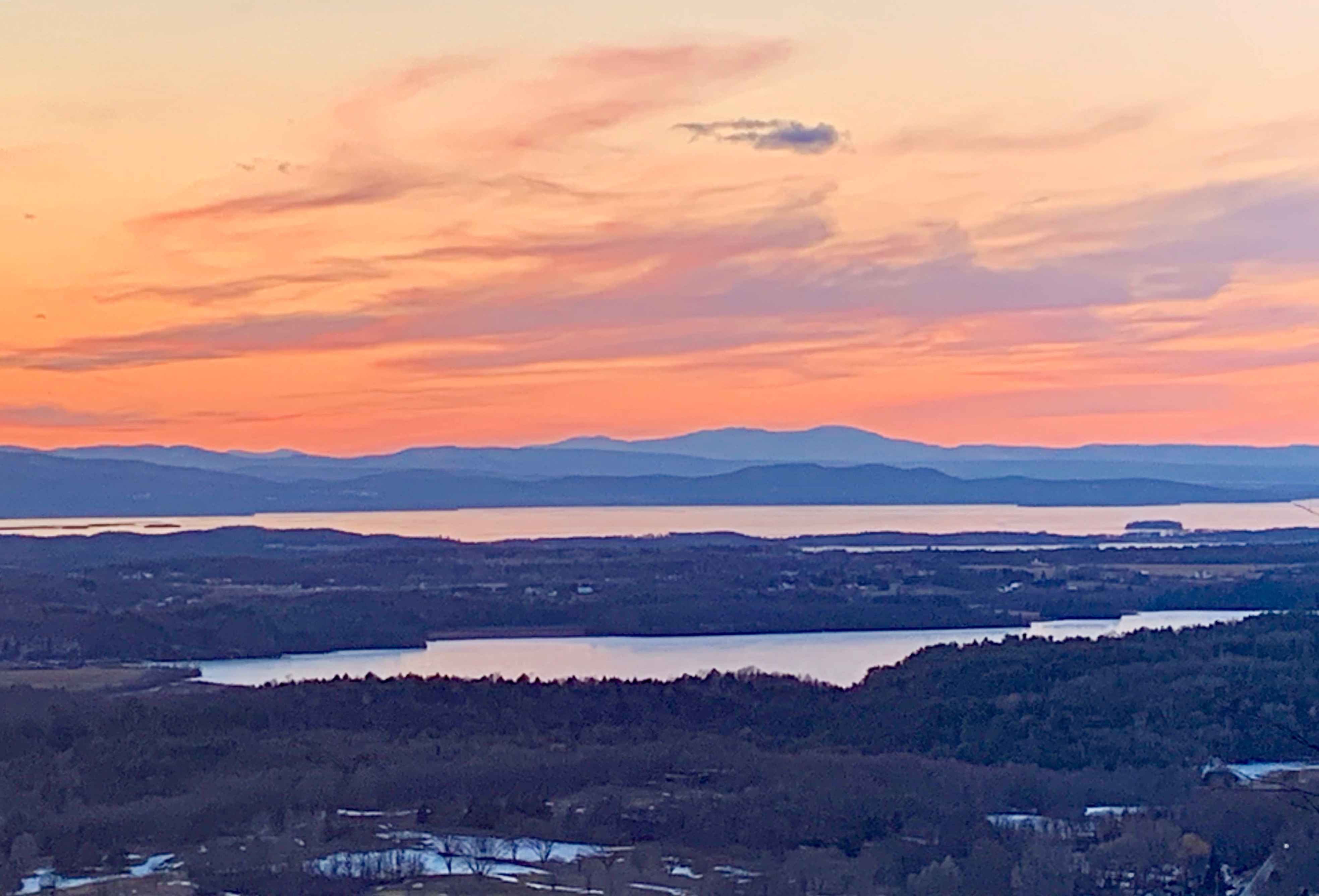
March 18,  2019

Sun now warm and bright
the walker goes home at eve 
to dream of summer.


January 25. It is glorious to be abroad this afternoon . . . The warmth of the sun reminds me of summer. January 25, 1852


January 31.  The wind is more southerly, and now the warmth of the sun prevails, and is felt on the back. The snow softens and melts. It is a beautiful clear and mild winter day. January 31, 1854

February 12 It is very pleasant to stand now in a high pine wood where the sun shines in amid the pines and hemlocks and maples as in a warm apartment.  February 12, 1855

February 16. The sun is most pleasantly warm on my cheek; the melting snow shines in the ruts; the cocks crow more than usual in barns; my greatcoat is an incumbrance. February 16, 1856

February 18Though not particularly warm, the light of the sun (now travelling so much higher) on the russet fields, —the ground being nearly all bare, —and on the sand and the pines, is suddenly yellower. February 18, 1855


February 21. A warmth begins to be reflected from the partially dried ground here and there in the sun in sheltered places, very cheering to invalids who have weak lungs, who think they may weather it till summer now. Nature is more genial to them. February 21, 1855

February 23.  It is inspiriting to feel the increased heat of the sun reflected from the snow. February 23, 1856

February 23.   I have seen signs of the spring.  February 23, 1857

March 1. The sunlight looks and feels warm, and a fine vapor fills the lower atmosphere. I hear the phoebe or spring note of the chickadee, and the scream of the jay is perfectly repeated by the echo from a neighboring wood.  March 1, 1854

March 1.  The dusty banks of snow by the railroad reflect a wonderfully dazzling white due to the higher sun. March 1, 1855

March 4. The sun has got a new power in his rays after all, cold as the weather is. He could not have warmed me so much a month ago. March 4, 1852

March 8. There is something of spring in all seasons . . . Nowadays we separate the warmth of the sun from the cold of the wind and observe that the cold does not pervade all places, but being due to strong northwest winds, if we get into some sunny and sheltered nook where they do not penetrate, we quite forget how cold it is elsewhere.  March 8, 1860

March 15. This afternoon I throw off my outside coat. A mild spring day.  The air is full of bluebirds. . . . The villagers are out in the sun, and every man is happy whose work takes him outdoors.  March 15, 1852

March 15.  Notwithstanding this day is so cold that I keep my ears covered, the sidewalks melt in the sun, such is its altitude.  March 15, 1853

March 18. The season is so far advanced that the sun affects me as I have not been affected for a long time. I must go forth . . .  All nature is thus forward to move with the revolution of the seasons . . . This the foreglow of the year, when the walker goes home at eve to dream of summer.  March 18, 1853

March 18.  Two little water-bugs . . . Notwithstanding the backwardness of the season, all the town still under deep snow and ice, here they are, in the first open and smooth water, governed by the altitude of the sun.  March 18, 1856

March 18.  My spirit is like a lit tree . . . Is it not the higher sun, and cleansed air, and greater animation of nature?  There is a warmer red to the leaves of the shrub oak, and to the tail of the hawk circling over them. March 18, 1858

March 18Examining the skunk-cabbage , now generally and abundantly in bloom . . . I hear the hum of honeybees  in the air, attracted by this flower . . . The first sunny and warmer day in March the honeybee leaves its home, probably a mile off, and wings its way to this warm bank. There is but one flower in bloom in the town, and this insect knows where to find it . . . No doubt this flower, too, has learned to expect its winged visitor knocking at its door in the spring. March 18, 1860

March 22.  The phenomena of an average March are increasing warmth . . .some calm and pleasant days reminding us of summer, with a blue haze or a thicker mist wreathing the woods at last, in which, perchance, we take off our coats awhile and sit without a fire a day. March 22, 1860
*****
So I came in and
shut the door and passed my first
spring night in the woods.
Walden, Spring
*****

See also Signs of the Spring:


  <<<<< Signs of Spring                                                                                   Early Spring >>>>>


A Book of the Seasons,  by Henry Thoreau,  Signs of the Spring: 

A Book of the Seasons
, by Henry Thoreau
"A book, each page written in its own season,
out-of-doors, in its own locality."
~edited, assembled and rewritten by zphx © 2009-2024

tinyurl.com/HDTnewwarmth

Thursday, March 16, 2023

A Book of the Seasons, Signs of the Spring: the anxious peep of the early robin


No mortal is alert enough 
to be present at the first dawn of the spring. 
Henry Thoreau, March 17, 1857

I hear a faint note 
far in the wood which reminds 
me of the robin. 
 March 17, 1858

The robin does not come singing, 
but utters a somewhat anxious or 
inquisitive peep at first.
March 18, 1858

February 23.   I have seen signs of the spring.  February 23, 1857

February 27.   Before I opened the window this cold morning, I heard the peep of a robin, that sound so often heard in cheerless or else rainy weather, so often heard first borne on the cutting March wind or through sleet or rain, as if its coming were premature.  February 27, 1857 

February 27. Mother hears a robin to-day. February 27, 1861

March 5. This instant it occurs to me that this may be that earliest spring note which I hear, and have referred to a woodpecker! (This is before I have chanced to see a bluebird , blackbird , or robin in Concord this year.) It is the spring note of the nuthatch. March 5, 1859

March 7.  While I am watching [a shrike] eight or ten rods off, I hear robins down below, west of the hill . . . Hearing a peep, I looked up and saw three or four birds passing . . . They were robins, but the shrike instantly hid himself behind a bough . . . The robins kept their ground, one alighting on the very point which the shrike vacated . . . The first note which I heard from the robins, far under the hill, was sveet sveet, suggesting a certain haste and alarm, and then a rich, hollow, somewhat plaintive peep or peep-eep-eep, as when in distress with young just flown. When you first see them alighted, they have a haggard, an anxious and hurried, look. March 7, 1859

March 8.   Stopping in a sunny and sheltered place on a hillock in the woods, — for it is raw in the wind, —I hear the hasty, shuffling, as if frightened, note of a robin from a dense birch wood . . . This sound reminds me of rainy, misty April days in past years.  March 8, 1855

March 12.   I hear my first robin peep distinctly at a distance. No singing yet. March 12, 1854

March 16. What a change since yesterday! Last night I came home through as incessant heavy rain as I have been out in for many years,  . . .  now, as we glide over the Great Meadows before this strong wind, we no longer see dripping, saturated russet and brown banks through rain, hearing at intervals the alarm notes of the early robins . . . but we see the bare and now pale-brown and dry russet hills. March 16, 1859

March 17.   Sitting under the handsome scarlet oak beyond the hill, I hear a faint note far in the wood which reminds me of the robin. Again I hear it; it is he, — an occasional peep. March 17, 1858

March 18.   I stand still now to listen if I may hear the note of any new bird, for the sound of my steps hinders, and there are so few sounds at this season in a still afternoon like this that you are pretty sure to detect one within a considerable distance. Hark ! Did I not hear the note of some bird then? Methinks it could not have been my own breathing through my nose. No, there it is again, — a robin; and we have put the winter so much further behind us. What mate does he call to in these deserted fields? It is as it were, a scared note as he whisks by, followed by the familiar but still anxious toot, toot, toot. He does not sing as yet . . . The bluebird and song sparrow sing immediately on their arrival, and hence deserve to enjoy some preeminence. They give expression to the joy which the season inspires. But the robin and blackbird only peep and chuck at first. March 18, 1853

March 18I now again hear the song sparrow’s tinkle along the riverside, probably to be heard for a day or two, and a robin, which also has been heard a day or two. March 18,1857

March 18. The robin does not come singing, but utters a somewhat anxious or inquisitive peep at first. March 18, 1858

March 18Three days ago, the 15th, we had steady rain with a southerly wind, with a clear interval and a brilliant double rainbow at sunset, — a day when all the russet banks were dripping, saturated with wet, and the peep of the robin was heard through the drizzle and the rain. March 18, 1859

March 21.  Why are the early birds found most along the water? These song sparrows are now first heard commonly. The blackbirds , too , create some melody. And the bluebirds, how sweet their warble in the soft air, heard over the water! The robin is heard further off, and seen flying rapidly, hurriedly through the orchard. And now the elms suddenly ring with the chill - lill - lill and canary-like notes of the Fringilla hyemalis, which fill the air more than those of any bird yet , — a little strange they sound be cause they do not tarry to breed with us , — a ringing sound . . . How suddenly the newly arrived birds are dispersed over the whole town! How numerous they must be! Robins are now quite abundant, flying in flocks. One after another flits away before you from the trees, somewhat like grasshoppers in the grass, uttering their notes faintly, ― ventriloquizing, in fact. I hear [one] meditating a bar to be sung anon, which sounds a quarter of a mile off, though he is within two rods  However, they do not yet get to melody.  March 21, 1853

March 22. Overcast and cold. Yet there is quite a concert of birds along the river; the song sparrows are very lively and musical, and the blackbirds already sing o-gurgle ee-e-e . . . I also hear a short, regular robin song, though many are flitting about with hurried note. March 22, 1855

March 24.   The chip of the [song sparrow] resembles that of a robin, i.e., its expression is the same, only fainter, and reminds me that the robin's peep, which sounds like a note of distress, is also a chip, or call-note to its kind.  March 24, 1858  

March 25. Hear the hurried and seemingly frightened notes of a robin and see it flying over the railroad lengthwise, and afterwards its tut tut at a distance. This and the birds of yesterday have come, though the ground generally is covered deep with snow. They will not only stay with us through a storm, but come when there are but resting-places for them. It must be hard for them to get their living now.March 25, 1856

April 2.   The robin now peeps with scared note in the heavy overcast air, among the apple trees. The hour is favorable to thought. April 2, 1852

April 2.  Sitting on the rail over the brook, I hear something which reminds me of the song of the robin in rainy days in past springs. April 2, 1854

*****
So I came in and
shut the door and passed my first
spring night in the woods.
Walden, Spring
*****

See A Book of the Seasonsby Henry Thoreau, The Robin in Spring 
See also A Book of the Seasons, by Henry Thoreau, Signs of the Spring:

I heard a robin in the distance, 
the first I had heard for many a thousand years, methought, 
whose note I shall not forget for many a thousand more,—
the same sweet and powerful song as of yore. 
O the evening robin, at the end of a New England summer day!
 If I could ever find the twig he sits upon! I mean he; I mean the twig
~ Walden

A Book of the Seasons,  by Henry Thoreau,
A Book of the Seasons,  by Henry Thoreau 
 "A book, each page written in its own season, 
out-of-doors, in its own locality."
 ~edited, assembled and rewritten by zphx ©  2009-2023

https://tinyurl.com/HDTearlyrobin

Friday, March 18, 2022

A Book of the Seasons: March 18 (snow, wind, rain, song sparrows, early flower, willows)


The year is but a succession of days,
and I see that I could assign some office to each day
which, summed up, would be the history of the year.
Henry Thoreau, August 24, 1852


I feel sympathy
with the pine or oak fringed with
lichens this wet day.

The woods affect me
reflected there in the pond where
opaque ice so long.

Foreglow of the year --
the walker goes home at eve
to dream of summer.

The white caps of the
waves on the flooded meadow
seen from the window.

I now again hear
the song sparrow’s tinkle and
a robin also. 
March 18, 1857

The snow is off the
mountains, which seem to have come
again like the birds,

their blue scalloped rim
a deeper and warmer blue
than winter, methinks.

A spring landscape as
impossible a fortnight
ago as birdsong.

The note of each bird
remembered like a dream when
we hear it again.

How happens it that
each new year is always
a pleasing surprise?

March 18, 1858

The honeybee stretches
and goes forth in search of the
earliest flower.

The spring flower too
expects a winged visitor
knocking at its door.

March 18, 1860


March 18, 2017


This morning the ground is again covered with snow, and the storm still continues. This afternoon the woods and walls and the whole face of the country wear once more a wintry aspect, though there is more moisture in the snow and the trunks of the trees are whitened now on a more southerly or southeast side. . . . There is more rain than snow now falling, and the lichens, especially the Parmelia conspersa, appear to be full of fresh fruit, though they are nearly buried in snow. The Evernia jubata might now be called even a very dark olive-green. I feel a certain sympathy with the pine or oak fringed with lichens in a wet day. They remind me of the dewy and ambrosial vigor of nature and of man's prime. The pond is still very little melted around the shore.. . .  But this snow has not driven back the birds. I hear the song sparrow's simple strain, most genuine herald of the spring, and see flocks of chubby northern birds with the habit of snowbirds passing north. March 18, 1852

The season is so far advanced that the sun, every now and then promising to shine out through this rather warm rain, lighting up transiently with a whiter light the dark day and my dark chamber, affects me as I have not been affected for a long time. I must go forth.How eagerly the birds of passage penetrate the northern ice, watching for a crack by which to enter! Forthwith the swift ducks will be seen winging their way along the rivers and up the coast. They watch the weather more sedulously than the teamster. All nature is thus forward to move with the revolution of the seasons . . . The ice in Fair Haven is more than half melted, and now the woods beyond the pond, reflected in its serene water where there has been opaque ice so long, affect me as they perhaps will not again this year. The sun is now declining, with a warm and bright light on all things, a light which answers to the late afterglow of the year, when, in the fall, wrapping his cloak closer about him, the traveller goes home at night to prepare for winter. This the foreglow of the year, when the walker goes home at eve to dream of summer. To-day first I smelled the earth.  March 18,1853


Very high wind this forenoon; began by filling the air with a cloud of dust. Never felt it shake the house so much; filled the house with dust through the cracks; books, stove, papers covered with it. Blew down Mr. Frost's chimney again. Took up my boat, a very heavy one, which was lying on its bottom in the yard, and carried it two rods . . .  The white caps of the waves on the flooded meadow, seen from the window, are a rare and exciting spectacle, — such an angry face as our Concord meadows rarely exhibit . . .Elms bending and twisting and thrashing the air as if they would come down every moment . . .  Two sizable elms by river in Merrick's pasture blown down . . . Old barn blown down on Conantum. It fell regularly, like a weak box pushed over . . .The river was at its height last night. It is very cold and freezing, this wind. The water has been blown quite across the Hubbard's Bridge causeway in some places and incrusted the road with ice. March 18, 1854


Fair in the forenoon, but more or less cloudy and windy in the afternoon . . . Our river is quite low for the season, and yet it is here without freshet or easterly storm. It seems to take this course on its migrations without regard to the state of the waters . . . For the last two or three days very wet and muddy walking, owing to the melting of the snow; which also has slightly swollen the small streams. Notwithstanding the water on the surface, it is easier crossing meadows and swamps than it will be a month hence, on account of the frost in the ground. March 18, 1855

What a solid winter we have had! No thaw of any consequence; no bare ground since December 25th; but an unmelting mass of snow and ice, hostile to all greenness. Have not seen a green radical leaf even, as usual, all being covered up. Nut Meadow Brook is open for a dozen rods from its mouth, and for a rod into the river. Higher up, it is still concealed by a snowy bridge two feet thick. I see the ripples made by some fishes, which were in the small opening at its mouth, making haste to hide themselves in the ice-covered river. This square rod and one or two others like it in the town are the only places where I could see this phenomenon now. Thus early they appear, ready to be the prey of the fish hawk . . . Notwithstanding the backwardness of the season, all the town still under deep snow and ice, here they are, in the first open and smooth water, governed by the altitude of the sun. March 18, 1856

9 A. M. —Up Assebet. A still and warm but overcast morning, threatening rain. I now again hear the song sparrow’s tinkle along the riverside, probably to be heard for a day or two, and a robin, which also has been heard a day or two. The ground is almost completely bare, and but little ice forms at night along the riverside. I meet Goodwin paddling up the still, dark river on his first voyage to Fair Haven for the season, looking for muskrats and from time to time picking driftwood . . . I land and walk half-way up the hill. A red squirrel runs nimbly before me along the wall, his tail in the air at a right angle with his body; leaps into a walnut and winds up his clock. The reindeer lichens on the pitch pine plain are moist and flacid. I hear the faint fine notes of apparent nuthatches coursing up the pitch pines, a pair of them, one answering to the other, as it were like a vibrating watch-spring. Then, at a distance, that whar-whar whar-whar-whar-whar, which after all I suspect may be the note of the nuthatch and not a woodpecker. And now from far southward coming on through the air, the chattering of blackbirds, —probably red-wings, for I hear an imperfect conquereeAlso I hear the chill-lill or tchit-a-tchit of the slate-colored sparrow, and see it.  March 18, 1857

 7 A.M. – By river. Almost every bush has its song sparrow this morning, and their tinkling strains are heard on all sides. You see them just hopping under the bush or into some other covert, as you go by, turning with a jerk this way and that, or they flit away just above the ground, which they resemble. It is the prettiest strain I have heard yet . . .  How much more habitable a few birds make the fields! . . .  The robin does not come singing, but utters a somewhat anxious or inquisitive peep at first. The song sparrow is immediately most at home of any that I have named. I see this afternoon as many as a dozen bluebirds on the warm side of a wood . . . The rather warm but strong wind now roars in the wood — as in the maple swamp — with a novel sound. I doubt if the same is ever heard in the winter. It apparently comes at this season, not only to dry the earth but to wake up the trees . . . Each new year is a surprise to us. We find that we had virtually forgotten the note of each bird, and when we hear it again it is remembered like a dream, reminding us of a previous state of existence. . . . The voice of nature is always encouraging . . . When I get two thirds up the hill, I look round and am for the hundredth time surprised by the landscape of the river valley and the horizon with its distant blue scalloped rim. It is a spring landscape, and as impossible a fortnight ago as the song of birds. March 18, 1858


What a variety of weather! What a difference in the days! Three days ago, the 15th, we had steady rain with a southerly wind, with a clear interval and a brilliant double rainbow at sunset, — a day when all the russet banks were dripping, saturated with wet, and the peep of the robin was heard through the drizzle and the rain. In the evening it rained again much harder than before. The next day it was clear and cool, with a strong northwest wind, and the flood still higher on the meadows; the dry russet earth and leather-colored oak reflected a flashing light from far; the tossing blue waves with white crests excited the beholder and the sailer. In short, the tables were completely turned; snow and ice were for the most part washed and blown away from both land and water. Yesterday it was very warm, without perceptible wind, with a comparatively lifeless [air], yet such as invalids like, with no flashing surfaces, but, as it were, an in visible mist sobering down every surface; and the water, still higher than before, was perfectly smooth all day. This was a weather-breeder. To-day comes a still, steady rain again, with warm weather and a southerly wind, which threatens to raise the river still higher, though it had begun to fall. March 18, 1859

Examining the skunk-cabbage, now generally and abundantly in bloom all along under Clamshell, I hear the hum of honeybees in the air, attracted by this flower. They circle about the bud at first hesitatingly, then alight and enter at the open door and crawl over the spadix, and reappear laden with the yellow pollen. What a remarkable instinct it is that leads them to this flower! The first sunny and warmer day in March the honeybee leaves its home, probably a mile off, and wings its way to this warm bank. There is but one flower in bloom in the town, and this insect knows where to find it. You little think that it knows the locality of early flowers better than you. You have not dreamed of them yet. Yet it knows a spot a mile off under a warm bank-side where the skunk-cabbage is in bloom. No doubt this flower, too, has learned to expect its winged visitor knocking at its door in the spring.  March 18, 1860

When I pass by a twig of willow, though of the slenderest kind, rising above the sedge in some dry hollow early in December, or in midwinter above the snow, my spirits rise as if it were an oasis in the desert. The very name “sallow” (salix, from the Celtic sallis, near water) suggests that there is some natural sap or blood flowing there. It is a divining wand that has not failed, but stands with its root in the fountain. The fertile willow catkins are those green caterpillar like ones, commonly an inch or more in length, which develop themselves rapidly after the sterile yellow ones, which we had so admired are fallen or effete. Arranged around the bare twigs, they often form green wands eight to eighteen inches long. A single catkin consists of from twenty-five to a hundred little pods, more or less ovate and beaked, each of which is closely packed with cotton, in which are numerous seeds so small that they are scarcely discernible by ordinary eyes. . . . Ah, willow! willow! Would that I always possessed thy good spirits.  March 18, 1861


*****

A Book of the Seasons, by Henry Thoreau, the Lichens
A Book of the Seasons, by Henry Thoreau, The Nuthatch
A Book of the Seasons, by Henry Thoreau, The Song Sparrow
A Book of the Seasons, by Henry Thoreau, The Dark-eyed Junco
A Book of the Seasons, by Henry Thoreau, The Red-wing in Spring
A Book of the Seasons, by Henry Thoreau, The Skunk Cabbage 
A Book of the Seasons, by Henry Thoreau, the Earliest Flower.
A Book of the Seasons, by Henry Thoreau, Reflections
A Book of the Seasons, by Henry Thoreau, Signs of the Spring: the anxious peep of the early robin


March 18, 2018

If you make the least correct 
observation of nature this year,
 you will have occasion to repeat it
 with illustrations the next, 
and the season and life itself is prolonged.


A Book of the Seasons, by Henry Thoreau, March 18
A Book of the Seasons, by Henry Thoreau
"A book, each page written in its own season,
out-of-doors, in its own locality.”
~edited, assembled and rewritten by zphx © 2009-2022
Popular Posts Last 30 Days.

The week ahead in Henry’s journal

The week ahead in Henry’s journal
A journal, a book that shall contain a record of all your joy.
"A stone fruit. Each one yields me a thought." ~ H. D. Thoreau, March 28, 1859


I sit on this rock
wrestling with the melody
that possesses me.