Showing posts with label nearness to the earth. Show all posts

Friday, June 7, 2013

Visit my nighthawk on her nest

June 7. 

Visit my nighthawk on her nest. Can hardly believe my eyes when I stand within seven feet and behold her sitting on her eggs, her head to me. She looks so Saturnian, so one with the earth, so sphinxlike, a relic of the reign of Saturn which Jupiter did not destroy, a riddle that might well cause a man to go dash his head against a stone. 

It is not an actual living creature, far less a winged creature of the air, but a figure in stone or bronze, a fanciful production of art, like the gryphon or phoenix. In fact, with its breast toward me, and owing to its color or size no bill perceptible, it looks like the end of a brand, such as are common in a clearing, its breast mottled or alternately waved with dark brown and gray, its flat, grayish, weather-beaten crown, its eyes nearly closed, purposely, lest those bright beads should betray it, with the stony cunning of the sphinx. A fanciful work in bronze to ornament a mantel. 

It is enough to fill one with awe. The sight of this creature sitting on its eggs impresses me with the venerableness of the globe. There is nothing novel about it. All the while, this seemingly sleeping bronze sphinx, as motionless as the earth, watches me with intense anxiety through those narrow slits in its eyelids. 

Another step, and it flutters down the hill close to the ground, with a wabbling motion, as if touching the ground now with the tip of one wing, now with the other, so ten rods to the water, skims close over a few rods, then rises and soars in the air above me.

Wonderful creature, which sits motionless on its eggs on the barest, most exposed hills, through pelting storms of rain or hail, as if it were a rock or a part of the earth itself, the outside of the globe, with its eyes shut and its wings folded, and, after the two days' storm, when you think it has become a fit symbol of the rheumatism, it suddenly rises into the air a bird, one of the most aerial, supple, and graceful of creatures, without stiffness in its wings or joints!

H. D. Thoreau, Journal, June 7, 1853


Visit my nighthawk on her nest.
See June 1, 1853 ("Walking up this side-hill, I disturb a nighthawk eight or ten feet from me, which goes down the hill, half fluttering, half hopping, as far as I can see. . . .Without moving, I look about and see its two eggs on the bare ground") See also A Book of Seasons,  by Henry Thoreau,, the Nighthawk

June 7. See A Book of the Seasons,  by Henry Thoreau, June 7

Wonderful creature
sitting sphinxlike on its eggs –
so one with the earth.
A Book of the Seasons,  by Henry Thoreau
"A book, each page written in its own season,
out-of-doors, in its own locality.”
~edited, assembled and rewritten by zphx © 2009-2021

Saturday, May 5, 2012

The vast wild earth.

May 3

5 a. m. — To Cliffs. A great brassy moon going down in the west.

A flock of neat sparrows, small, striped-throated, whitish over eye, on an apple tree by J. Potter's. At Hayden's orchard, quite a concert from some small sparrows, forked-tailed, many jingling together like canaries. Their note still somewhat like the chip-sparrow's. Can it be this?

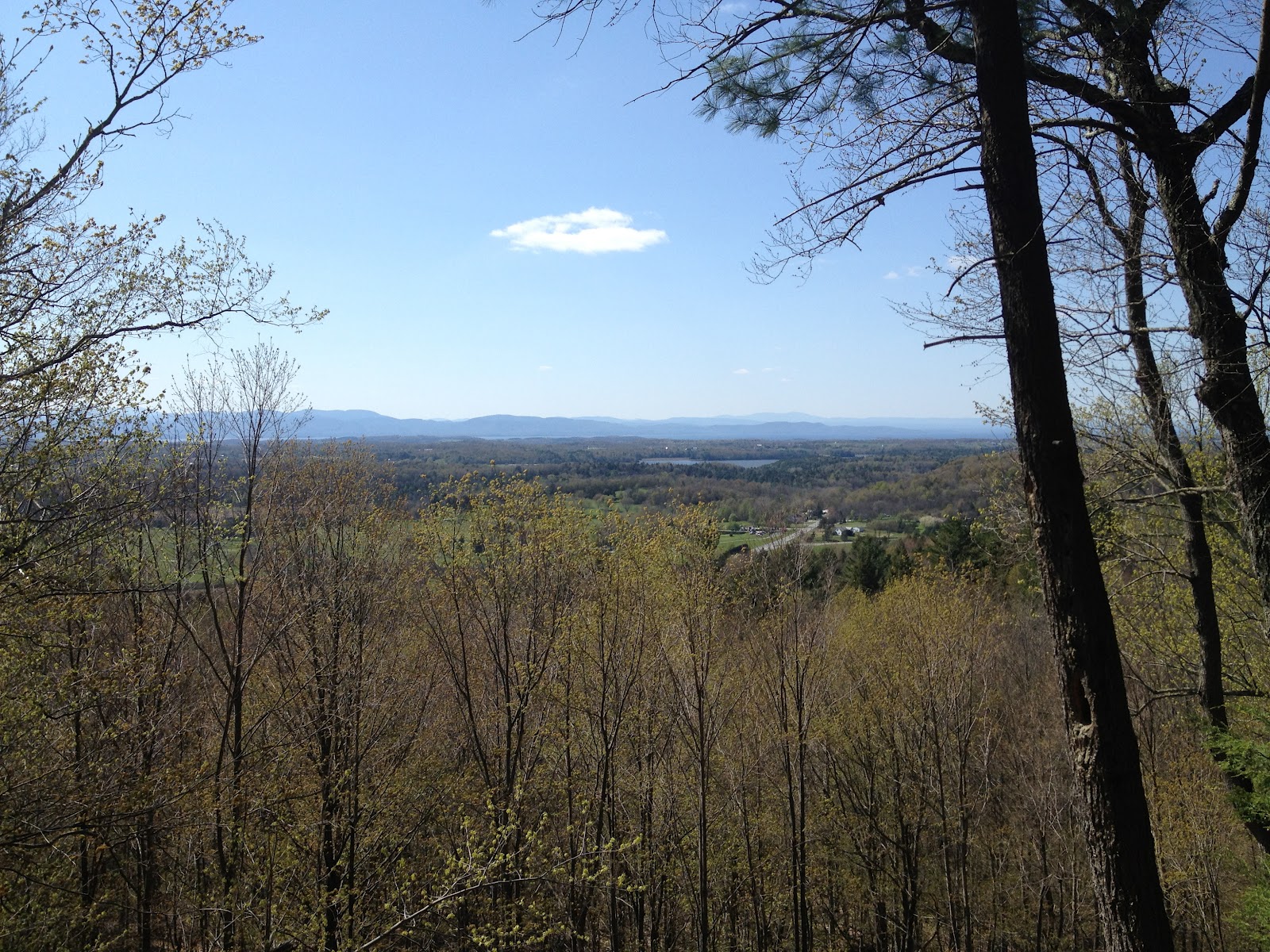
Fair Haven. How cheering and glorious any landscape viewed from an eminence! For every one has its horizon and sky. It is so easy to take wide views. Snow on the mountains. 

The wood thrush reminds me of cool mountain springs and morning walks. 

That oven-birdish note which I heard here on May 1st I now find to have been uttered by the black and white warbler or creeper. He has a habit of looking under the branches. 

The towhee finch is the loudest singer here now.

Looking from the Cliff, now, about 6 A.M.  the landscape is as if seen in a mirage, the Cliff being both in shadow and in the fresh and dewy sunshine (not much dew yet). Cool sunlight. The landscape lies in a fresh morning light; the earth and water smell fresh and new; the,   water is marked by a few smooth streaks. 

The white pine is beautiful in the morning light--the early sun light and the dew on it -- before the water is rippled and the morning song of the birds is quenched.


Evening.--The moon is full. The air is filled with a certain luminous, liquid, white light. You can see the moonlight, as it were, reflected from the atmosphere,- which some might mistake for a haze, - a glow of mellow light,  as if the air were a very thin but transparent liquid, not dry, as in winter, nor gross, as in summer.  The sky has depth, and not merely distance.  The sky is not so withdrawn, clear, tight, and cold as last moon.

I go along the side of Fair Haven Hill. The clock strikes distinctly, showing the wind is easterly. There is a grand, rich, musical echo trembling on the air long after the clock has ceased to strike, like a vast organ, filling the air with a trembling music like a flower of sound. Nature adopts it. Beautiful is sound. 

From the Hill the river is a broad blue stream exactly the color of the heavens which it reflects. Sit on the Cliff with comfort, in greatcoat.  All the tawny and russet earth--for no green is seen on the ground at this hour--  sending only this faint multitudinous sound (of frogs) to heaven. The vast, wild earth.

Summer is coming apace. Within three or four days the birds have come so fast I can hardly keep the run of them  - much faster than the flowers. I did not watch for the very earliest, however. 

The little peeping frogs make a background of sound in the horizon, which you do not hear unless you attend. The little peeper prefers a pool on the edge of a wood, which mostly dries up at midsummer, whose shore is covered with leaves and [where] twigs lie in the water, as where choppers have worked. Theirs is a clear, sharp, earpiercing peep, not shrill, - sometimes a squeak from one whose pipe is out of order, frequently a quavering, curving (?) trill, as if of alarm (?). My little peepers when they slept, the pulsation in their throats stopped. There was a wrinkled bag there. They begin to peep in earnest at or before sundown, and they keep it up now at 10 P. M. But I rarely hear any numbers in the morning, when they probably sleep. 

H. D. Thoreau, Journal, May 3, 1852 

How cheering and glorious any landscape viewed from an eminence!
See A Book of the Seasons, by Henry Thoreau, Seen from a Hillside

That oven-birdish note which I heard here on May 1st I now find to have been uttered by the black and white warbler or creeper. See May 1, 1852 ("I think I heard an oven-bird just now, wicher wicher whicher wich."); May 3, 1858 ("Heard the black and white creeper April 25th. I hear it and see it well to-day."); See also April 28, 1856 ("I hear to-day frequently the seezer seezer seezer of the black and white creeper, . . .”); May 4, 1858 ("I hear the weese wese wese of the creeper continually from the swamp. It is the prevailing note there.") See also A Book of the Seasons  by Henry Thoreau, The Black and White Creeper


The clock strikes distinctly, showing the wind is easterly.
See August 8, 1851 ("I hear the nine o'clock bell ringing in Bedford. Pleasantly sounds the voice of one village to another."); January 21, 1853 ("I hear the nine-o'clock bell in Bedford five miles off, which I might never hear in the village, but here its music surmounts the village din and has something very sweet and noble and inspiring in it, associated, in fact, with the hooting of owls"); April 18, 1852 ("An east wind. I hear the clock strike plainly ten or eleven P.M."); October 21, 1855 ("The wind must be east, for I hear the church bell very plainly.") and An East Wind. See also A Book of the Seasons, by Henry Thoreau, Bells and Whistles and April 5, 1855 ("[W]e on the water hear the loud and musical sound of bells ringing for church in the surrounding towns."); April 15, 1855 ("The sound of church bells sounds very sweet to us on the water this still day. It is the song of the villages."); September 13, 1851 ("The Bedford sunrise bell rings sweetly and musically at this hour, when there is no bustle in the village to drown it. Bedford deserves a vote of thanks from Concord for it. It is a great good at these still and sacred hours, when towns can hear each other. ")

Within three or four days the birds have come so fast.
See May 7, 1852 (" The birds I have lately mentioned come not singly, as the earliest, but all at once, i.e. many yellowbirds all over town.")

The little peeping frogs make a background of sound in the horizon, which you do not hear unless you attend.   See  May 3, 1857 ("A hylodes or two were heard close about me, but not one was seen. The nearest seemed to have his residence in my ear alone. It took such possession of my ear that I was unable to appreciate the source whence it came. ") See also March 31, 1857  ("How gradually and imperceptibly the peep of the hylodes mingles with and swells the volume of sound which makes the voice of awakening nature! If you do not listen carefully for its first note, you probably will not hear it, and, not having heard that, your ears become used to the sound, so that you will hardly notice it at last, however loud and universal.")

Wednesday, September 15, 2010

Mr. Davis's museum.


September 15.

Looked at Mr. Davis's museum. Miss Lydia Hosmer has given him some relics which belonged to the Hosmer family.

A small lead or pewter sun-dial, which she told him was brought over by her ancestors and which has the date 1626 scratched on it.

Also some stone weights in an ancient linen bag, said to have been brought from England. They were oval stones or pebbles. There was a pound, a half-pound, a quarter, a two-ounce, and several one-ounce weights, now all rather dark and ancient to look at, like the bag. This was to me the most interesting relic in his collection.

I love to see anything that implies a simpler mode of life and greater nearness to the earth.

H. D. Thoreau, Journal, September 15, 1860

Saturday, July 17, 2010

To Walden. A nearness to the earth

July 17.

The soft sand on the bottom of Walden, as deep as I can wade, feels very warm to my feet, while the water feels cold.

The nighthawk's ripping sound heard overhead suggests a nearness to the earth, as of a low roof echoing back its sounds.

Clean and handsome bullfrogs, with beautiful eyes and fine yellow throats sharply separated from their pickle-green heads by their firmly shut mouths, sit imperturbable out on the stones all around the pond.


H. D. Thoreau, Journal, July 17, 1860

The soft sand on the bottom of Walden, as deep as I can wade, feels very warm to my feet, while the water feels cold. See note to July 23, 1856 ("Bathing in Walden, I find the water considerably colder at the bottom while I stand up to my chin, but the sandy bottom much warmer to my feet than the water.")

The nighthawk's ripping sound, heard overhead these days,[suggests] a nearness to the earth, as of a low roof echoing back its sounds
. See September 15, 1860 ("I love to see anything that implies a simpler mode of life and greater nearness to the earth."); June 11, 1851 I hear the nighthawks uttering their squeaking notes high in the air now at nine o ' clock P . M . , and occasionally - what I do not remember to have heard so late — their booming note . It sounds more as if under a cope than by day . . . . echoed hollowly to earth , making the low roof of heaven vibrate ")  See also A Book of Seasons,  by Henry Thoreau,, the Nighthawk


The soft sand on the bottom of Walden, as deep as I can wade, feels very warm to my feet, while the water feels cold. This may be partly a mere sensation, but I suspect that the sand is really much warmer than the water and that some creatures take refuge in it accordingly, that much heat passes through the water and is absorbed in the sand. Yet when I let a thermometer he on the bottom and draw it up quickly I detect no difference between the temperature of the bottom and of the water at the surface. Probably it would have been different if the thermometer had been buried in the sand.

The nighthawk's ripping sound, heard overhead these days, reminds us that the sky is, as it were, a roof, and that our world is limited on that side, it being reflected as from a roof back to earth. It does not suggest an infinite depth in the sky, but a nearness to the earth, as of a low roof echoing back its sounds.

The sternothaerus in Walden has a smooth, clean shell, rather prettily marked, it is so clean, and would by many be taken for a different species from that of the river, which is commonly colored with mud and moss. I take two into the boat, and they think it enough when they have merely hidden their heads in a corner.

Also the great bullfrogs which sit out on the stones every two or three rods all around the pond are singularly clean and handsome bullfrogs, with fine yellow throats sharply separated from their pickle-green heads by their firmly shut mouths, and with beautiful eyes. They sit thus imperturbable, often under a pile of brush, at nearly regular intervals.


Popular Posts Last 30 Days.

The week ahead in Henry’s journal

The week ahead in Henry’s journal
A journal, a book that shall contain a record of all your joy.
"A stone fruit. Each one yields me a thought." ~ H. D. Thoreau, March 28, 1859


I sit on this rock
wrestling with the melody
that possesses me.