Showing posts with label night sky. Show all posts

Thursday, September 4, 2014

The artist changes the direction of Nature and makes her grow according to his idea.


Aster multiflorus.

Observed the under sides of a shrub willow by the river, lit by the rays of the rising sun, shining like silver or dewdrops.
September 4, 2018

Yet, when I stood nearer and looked down on them at a different angle, they were quite dull.


I have provided my little snapping turtle with a tub of water and mud, and it is surprising how fast he learns to use his limbs and this world. He actually runs, with the yolk still trailing from him, as if he had got new vigor from contact with the mud.

The insensibility and toughness of his infancy make our life, with its disease and low spirits, ridiculous.

He impresses me as the rudiment of a man worthy to inhabit the earth. He is born with a shell. That is symbolical of his toughness.

His shell being so rounded and sharp on the back at this age, he can turn over without trouble.

P. M. – To climbing fern.  Polygonum articulatum, apparently three or four days.

In the wood-paths I find a great many of the Castile-soap galls, more or less fresh. Some are saddled on the twigs. They are now dropping from the shrub oaks.


September 4, 2018

Is not Art itself a gall? Nature is stung by God and the seed of man planted in her.

The artist changes the direction of Nature and makes her grow according to his idea.  If the gall was anticipated when the oak was made, so was the canoe when the birch was made.

Genius stings Nature, and she grows according to its idea.


7.30.– To Fair Haven Pond by boat.

Full moon; bats flying about; skaters and water bugs (?) like sparks of fire on the surface between us and the moon.

The high shore above the railroad bridge was very simple and grand, — first the bluish sky with the moon and a few brighter stars, then the near high level bank like a distant mountain ridge or a dark cloud in the eastern horizon, then its reflection in the water, making it double, and finally the glassy water and the sheen in one spot on the white lily pads.

Some willows for relief in the distance on the right.

It was Ossianic.

I noticed this afternoon that bubbles would not readily form on the water, and soon burst, probably on account of the late rains, which have changed its quality.

There is probably less stagnation and scum. It is less adhesive.

A fine transparent mist.

Lily Bay seemed as wide as a lake.

You referred the shore back to the Clamshell Hills. The mere edge which a flat shore presents makes no distinct impression on the eye and, if seen at all, appears as the base of the distant hills.

Commonly a slight mist yet more conceals it.

The dim low shore, but a few rods distant, is seen as the base of the distant hills whose distance you know. The low shore, if not entirely concealed by the low mist, is seen against the distant hills and passes for their immediate base. For the same reason hills near the water appear much more steep than they are.

We hear a faint metallic chip from a sparrow on the button-bushes or willows now and then.

Rowse was struck by the simplicity of nature now, — the sky the greater part, then a little dab of earth, and after some water near you.

Looking up the reach beyond Clamshell, the moon on our east quarter, its sheen was reflected for half a mile from the pads and the rippled water next them on that side, while the willows lined the shore in indistinct black masses like trees made with India ink (without distinct branches), and it looked like a sort of Broadway with the sun reflected from its pavements.

Such willows might be made with soot or smoke merely, lumpish with fine edges.

Meanwhile Fair Haven Hill, seen blue through the transparent mist, was as large and imposing as Wachusett, and we seemed to be approaching the Highlands of the river, a mountain pass, where the river had burst through mountains. A high mountain would be no more imposing.

Now I began to hear owls, screech (?) owls, at a distance up-stream; but we hardly got nearer to them, as if they retreated before us. At length, when off Wheeler's grape and cranberry meadow, we heard one near at hand.

The rhythm of it was pe-pe-ou; this once or twice repeated, but more of a squeal and somewhat human. Or do not all strange sounds thrill us as human, till we have learned to refer them to their proper source? 

They appeared to answer one another half a mile apart; could be heard from far woods a mile off.

The wind has risen and the echo is poor; it does not reverberate up and down the river.

No sound of a bullfrog, but steadily the cricket-like Rana palustris alongshore.

Rowse heard a whip-poor-will at Sleepy Hollow to night.

No scent of muskrats.


H. D. Thoreau, Journal, September 4, 1854


Nature is stung by God and the seed of man planted in her. See July 30, 1853 (“It suggests that Nature is a kind of gall, that the Creator stung her and man is the grub she is destined to house and feed.”). See also
A Book of the Seasons, by Henry Thoreau, Nature is genial to man (the anthropic principle)

The gall was anticipated when the oak was made.  See January 3, 1852 ("Oak-apples are a winter fruit . . . Do they not suggest that all vegetable fruit is but the albumen about young animal life?") 

The artist changes the direction of Nature and makes her grow according to his idea.
See Walden ("There was an artist in the city of Kouroo who was disposed to strive after perfection."); Walden ("To effect the quality of the day, that is the highest of arts"); December 11, 1855 ("The winter . . .is as it was designed and made to be, for the artist has had leisure to add beauty.") 

The artist cannot 
be hurried – time stands still while 
art is created

September 4. See A Book of the Seasons, by Henry Thoreau, September 4

As God stung Nature
and planted the seed of man

the artist changes
the direction of Nature –
Art itself a gall.


A Book of the Seasons, by Henry Thoreau
"A book, each page written in its own season,
out-of-doors, in its own locality."
~edited, assembled and rewritten by zphx © 2009-2024

https://tinyurl.com/hdt-540904


Wednesday, November 27, 2013

Now while the earth is bare, barren and cheerless.

November 27


Now a man will eat his heart, if ever, now while the earth is bare, barren and cheerless, and we have the coldness of winter without the variety of ice and snow; but methinks the variety and compensation are in the stars now. How bright they are now by contrast with the dark earth!

The days are short enough now. The sun is already setting before I have reached the ordinary limit of my walk, but the 21st of next month the day will be shorter still by about twenty-five minutes. In December there will be less light than in any month in the year.

It is too cold to-day to use a paddle; the water freezes on the handle and numbs my fingers.

 
Lychopodium, November 27, 2024

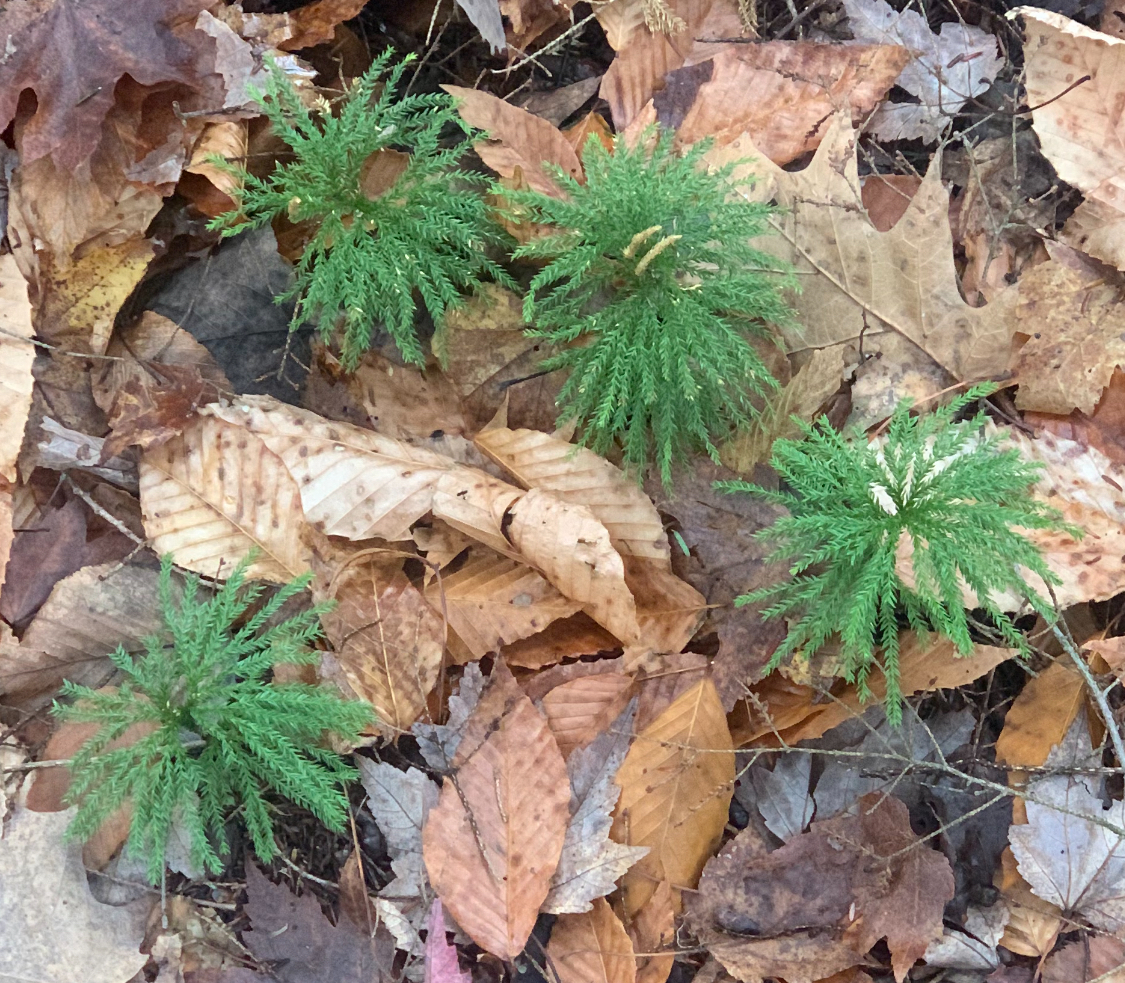
I observe the Lycopodium lucidulum still of a fresh, shining green.

Checkerberries and partridge-berries are both numerous and obvious now.

H. D. Thoreau, Journal, November 27, 1853

Now a man will eat his heart, if ever, now while the earth is bare, barren and cheerless. .See November 1, 1852 ("In November, a man will eat his heart, if in any month. "); 
November 13, 1851 ("Such a day as will almost oblige a man to eat his own heart. A day in which you must hold on to life by your teeth."); November 14, 1858 ("I walk on frozen ground two thirds covered with a sugaring of dry snow, and this strong and cutting northwest wind makes the oak leaves rustle dryly enough to set your heart on edge.");November 25, 1857 (“November Eatheart, — is that the name of it? Not only the fingers cease to do their office, but there is often a benumbing of the faculties generally. You can hardly screw up your courage to take a walk when all is thus tightly locked or frozen up and so little is to be seen in field or wood. ”) See also A Book of the Seasons,  by Henry Thoreau, November Days 

How bright [the stars]See November 13, 1851 ("Just in proportion to the outward poverty is the inward wealth. In cold weather fire burns with a clearer flame."); November 22, 1860 ("I rejoice in the bare, bleak, hard, and barren-looking surface of the tawny pastures, the firm outline of the hills, and the air so bracing and wholesome . . . Summer is gone with all its infinite wealth, and still nature is genial to man. Still he beholds the same inaccessible beauty around him."); January 29, 1854 ("Tonight I feel it stinging cold . . . it bites my ears and face, but the stars shine all the brighter.”) See also A Book of the Seasons, by Henry Thoreau, It is glorious November weather

The days are short enough now. The sun is already setting before I have reached the ordinary limit of my walk, See November 28, 1859 ("We make a good deal of the early twilights of these November days, they make so large a part of the afternoon.”); December 5, 1853 ("Now for the short days and early twilight. . . The sun goes down behind a low cloud, and the world is darkened."); December 9, 1856 ("The worker who would accomplish much these short days must shear a dusky slice off both ends of the night") December 11, 1854 ("The day is short; it seems to be composed of two twilights merely; the morning and the evening twilight make the whole day.”)

It is too cold to-day to use a paddle. See November 24, 1860 (“Fingers are so benumbed that you cannot open your jack-knife.”)

I observe the Lycopodium lucidulum still of a fresh, shining green. See note to November 27, 1859 ("This wood-lot, especially at the northwest base of the hill, is extensively carpeted with the Lycopodium complanatum and also much dendroideum and Chimaphila umbellata ") See also A Book of the Seasons,  by Henry Thoreau, The Lycopodiums

Checkerberries and partridge-berries are both numerous and obvious now. See 
November 16, 1850 (“The partridge-berry leaves checker the ground on the side of moist hillsides in the woods. Are they not properly called checker-berries ?”) ; November 19, 1850 ("Now that the grass is withered and the leaves are withered or fallen . . . the partridge-berry and checkerberry, and winter-green leaves even, are more conspicuous.”);    cember 3, 1853 ("The still green Mitchella repens and checkerberry in shelter, both with fruit"); See also A Book of the Seasons, by Henry Thoreau, Partridge-berry (Mitchella Repens)

Note "Checkerberry" is another name for American wintergreen (Gaultheria procumbens). See Checkerberry cum Wintergreen. What HDT calls “wintergreen” is Chimaphila umbellata, a/k/a pipsissewa,.See July 3, 1852 ("The Chimaphila umbellata, wintergreen, must have been in blossom some time.”);  November 16, 1858 (“Methinks the wintergreen, pipsissewa, is our handsomest evergreen, so liquid glossy green and dispersed almost all over the woods.”)

November 27. See A Book of the Seasons,  by Henry Thoreau,  November 27

The bare barren earth
    cheerless without ice and snow  –   
but how bright the stars.

A Book of the Seasons,  by Henry Thoreau
 "A book, each page written in its own season, 
out-of-doors, in its own locality."
 ~edited, assembled and rewritten by zphx ©  2009-2024

https://tinyurl.com/hdt-531127

Friday, July 20, 2012

Redness gradually deepening till the darkness prevails.


July 20.

At evening the eastern clouds, the western clouds, and the atmosphere of the west horizon have one history successively – a fainter glow and redness, gradually and by stages deepening till the darkness prevails.

We see from the hill darkness infolding the village, collected first in the elm-tops. If it were not for the lightcolored barns and white houses, it would already be dark there. The redness of the clouds, or the golden or coppery glow, appears to endure almost till starlight. Then the cloudlets in the west turn rapidly dark, the shadow of night advances in the east, and the first stars become visible. The pitch pine woods are heavy and dark, but the river is full of golden light and more conspicuous than by day.

It is starlight. We see the first star in the southwest, and know not how much earlier we might have seen it had we looked. Now the first whip-poor-will sings hollowly in the dark pitch pine wood on Bear Garden Hill, as if the night had never ceased, and it had never ceased to sing, only now we heard it. Night is seen settling down with mists on Fair Haven Bay. The stars are few and distant; the fireflies fewer still.

Now quite into evening. There is a second glow on the few low western cloudlets, when we thought the sun had bid us a final adieu. - Those small clouds, the rearmost guard of day, which were wholly dark, are again lit up for a moment with a dull-yellowish glow and again darken.

And now the evening redness deepens till all the west or northwest horizon is red; as if the sky were rubbed there with some rich Indian pigment, a permanent dye; as if the Artist of the world had mixed his red paints on the edge of the inverted saucer of the sky. 

An exhilarating, cheering redness, most wholesome. There should be a red race of men. I would look into the west at this hour till my face permanently reflects that red. It is like the stain of some berries crushed along the edge of the sky. 

The crescent moon, meanwhile, grows more silvery, and, as it sinks in the west, more yellowish, and the outline of the old moon in its arms is visible if you do not look directly at it. Some dusky redness lasts almost till the last traces of daylight disappear, about 10 o'clock, the same time the moon goes down.

H. D. Thoreau, Journal, July 20, 1852


The redness of the clouds, or the golden or coppery glow, appears to endure almost till starlight. Then the cloudlets in the west turn rapidly dark, the shadow of night advances in the east, and the first stars become visible. It is starlight. You see the first star in the southwest, and know not how much earlier you might have seen it had you looked. See August 8, 1851 ("Starlight! that would be a good way to mark the hour, if we were precise.”); May 8, 1852 (“Starlight marks conveniently a stage in the evening, i. e. when the first star can be seen. ”); June 28,1852 ("Now it is starlight; perhaps that dark cloud in the west has concealed the evening star before . . .Starlight! That would be a good way to mark the hour, if we were precise. That is an epoch, when the last traces of daylight have disappeared and the night (nox) has fairly set in.”); June 30, 1852 (“It is starlight about half an hour after sunset to-night; i. e. the first stars appear”); July 12, 1852 (“Now, a quarter after nine, as I walk along the river-bank, long after starlight, and perhaps an hour or more after sunset, I see some of those high-pillared clouds of the day, in the southwest, still reflecting a downy light from the regions of day, they are so high.”); July 21, 1852 ("Do we perceive such a deep Indian red after the first starlight at any other season as now in July?”)

The stars are few and distant; the fireflies fewer still.
Compare July 7, 1852 ("I am older than last year; the mornings are further between; the days are fewer.")


The horns of the moon
look sharp, still cloud-like, in the
midst of a blue space.

The darkness that first 
collects in the elm-tops now 
infolds the village.

The shadow of night
advances in the east and the
first stars visible.

We see the first star
and know not if we might have
seen it earlier.

The river is full
of golden light – the pitch pine
woods heavy and dark.

The first whip-poor-will
sings in the dark pitch pine wood
on Bear Garden Hill.

The whip-poor-will sings
like it never ceased – but we
hear it only now.

Quite into evening
the stars are few and distant –
fireflies fewer still.

And now the evening
redness deepens like paint on
the edge of the sky.

Redness gradually 
by stages deepening till 
the darkness prevails.

Old moon visible
in the arms of the crescent –
if we do not look.


A Book of the Seasons
, by Henry Thoreau, 
Redness gradually deepening till the darkness prevails.
A Book of the Seasons, by Henry Thoreau
"A book, each page written in its own season,
out-of-doors, in its own locality."
~edited, assembled and rewritten by zphx © 2009-2024


Friday, February 3, 2012

The landscape covered with snow seen by moonlight from these Cliffs.


February 3

February 3, 2019

About 6 P.M. walk to Cliffs via railroad. Snow quite deep. The sun has set without a cloud in the sky, - a rare occurrence. 
But I missed the clouds, which make the glory of evening. The sky must have a few clouds, as the mind a few moods; nor is the evening the less serene for them.
There is only a tinge of red along the horizon. 

The moon is nearly full tonight, and the moment is passed when the light in the east (i. e. of the moon) balances the light in the west.

Venus is now like a little moon in the west, and the lights in the village twinkle like stars. It is perfectly still and not very cold. 

The shadows of the trees on the snow are more minutely distinct than at any other season, finely reticulated, each limb and twig represented, as cannot be in summer. 

The heavens appear less thickly starred than in summer, —  rather a few bright stars, brought nearer by this splendid twinkling in the cold sky.  

(Is not the sky unusually blue to-night? dark blue? Is it not always bluer when the ground is covered with snow in the winter than in summer? )

I hear my old acquaintance, the owl, from the Causeway. 

As I stand over Deep Cut the cars do not make much noise, or else I am used to it. And now whizzes the boiling, sizzling kettle by me, in which the passengers make me think of potatoes, which a fork would show to be done by this time. The steam is denser for the cold, and more white; like the purest downy clouds in the summer sky, its volumes roll up between me and the moon, and far behind, when the cars are a mile off, it still goes shading the fields with its wreaths, - the breath of the panting traveller. 

I now cross from the railroad to the road. This snow, the last of which fell day before yesterday, is two feet deep, pure and powdery. From a myriad little crystal mirrors the moon is reflected, which is the untarnished sparkle of its surface. 

Here, in the midst of a clearing, where the choppers have been leaving the woods in pieces to-day, I hear the hooting of an owl, whose haunts the chopper is laying waste. The ground is all pure white powdery snow, which his sled, etc., has stirred up. I can see every track distinctly where the teamster drove his oxen to the choppers' piles and loaded his sled, and even the tracks of his dog in the moonlight, and plainly to write this. 

The moonlight now is very splendid in the untouched pine woods above the Cliffs, alternate patches of shade and light. The light has almost the brightness of sunlight. 

The stems of the trees are more obvious than by day, being simple black against the moonlight and the snow. I can tell where there is wood and where open land for many miles in the horizon by the darkness of the former and whiteness of the latter. 

The landscape covered with snow two feet thick, seen by moonlight from these Cliffs, gleaming in the moon and of spotless white. Who can believe that this is the habitable globe? The scenery is wholly arctic. It looks as if the snow and ice of the arctic world, travelling like a glacier, had crept down southward and overwhelmed and buried New England. See if a man can think his summer thoughts now.

But the evening star is preparing to set, and I will return. Floundering through snow, sometimes up to my middle, my owl sounds hoo hoo hoo, ho-O.

H. D. Thoreau, Journal, February 3, 1852

 The sky must have a few clouds, as the mind a few moods. See July 23, 1851 ("The mind is subject to moods, as the shadows of clouds pass over the earth."); December 27, 1851 ("The man is blessed who every day is permitted to behold anything so pure and serene as the western sky at sunset . . . The sky is always ready to answer to our moods."); January 17, 1852. (" As the skies appear to a man, so is his mind. Some see only clouds there; some behold there serenity, purity, beauty ineffable."); January 26, 1852 (" Would you see your mind, look at the sky. Would you know your own moods, be weather-wise.");  see also June 6, 1857  ("Each experience reduces itself to a mood of the mind."); February 18, 1860 ("Sometimes, when I go forth at 2 P. M., there is scarcely a cloud in the sky, but soon one will appear in the west and steadily advance and expand itself, and so change the whole character of the afternoon and of my thoughts.") and A Book of the Seasons,  by Henry Thoreau  Moods and Seasons of the Mind.

The moon is nearly full tonight, See February 4, 1852 ("Coming home through the village by this full moonlight, it seems one of the most glorious nights I ever beheld."); March 7, 1852 ("At 9 o'clock P.M to the woods by the full moon."). See also A Book of the Seasons, by Henry Thoreau, February Moonlight

The moment is passed when the light in the east (i. e. of the moon) balances the light in the west. See August 5, 1851 (“he light from the western sky is stronger still than that of the moon, and when I hold up my hand, the west side is lighted while the side toward the moon is comparatively dark.”)

The heavens appear less thickly starred than in summer, — rather a few bright stars, brought nearer by this splendid twinkling in the cold sky. See December 31, 1851 (“I have not enough valued and attended to the pure clarity and brilliancy of the winter skies . . . in which the stars shine and twinkle so brightly in this latitude.”);  January 1, 1852 ("Methinks there is a certain poverty about the winter night's sky. The stars of higher magnitude are more bright and dazzling, and therefore appear more near and numerable, while those that appear indistinct and infinitely remote in the summer, imparting the impression of unfathomability to the sky") Compare December 27, 1851 ("There is no winter necessarily in the sky. . .The heavens present, perhaps, pretty much the same aspect summer and winter.")

Is not the sky unusually blue to-night?
See note to February 4, 1852 ("Coming home through the village by this full moonlight, . . . the sky is the most glorious blue I ever beheld, even a light blue on some sides, as if I actually saw into day . . . Has not this blueness of the sky the same cause with the blue- ness in the holes in the snow , and in some distant shadows on the snow? — if , indeed , it is true that the sky is bluer in winter when the ground is covered with snow.); February 5, 1852 ("The sky last night was a deeper, more cerulean blue than the far lighter and whiter sky of to-day."); January 21, 1853 (''The blueness of the sky at night — the color it wears by day — is an everlasting surprise to me . . .At midnight I see into the universal day. Walking at that hour, unless it is cloudy, still the blue sky o'erarches me."); May 11, 1853 ("Blue is the color of the day, and the sky is blue by night as well as by day, because it knows no night."); 
September 9, 1851 (" Even by night the sky is blue and not black, for we see through the veil of night into the distant atmosphere of day"); See also  Night and Moonlight (first published in the Atlantic Monthly, November 1863) ("Nevertheless, even by night the sky is blue and not black, for we see through the shadow of the earth into the distant atmosphere of day, where the sunbeams are reveling.")

From a myriad little crystal mirrors the moon is reflected, which is the untarnished sparkle of its surface. Compare  June 13, 1851 ("I see the moon's inverted pyramid of light shimmering on its surface.. . . which, in fact, is made up of a myriad little mirrors reflecting the disk of the moon with equal brightness to an eye rightly placed.") See also  January 12, 1860 ("The sun is now out very bright and going from the sun, I see a myriad sparkling points scattered over the snow surface -- little mirror-like facets -- which on examination I find each to be one of those star wheels fallen in the proper position, reflecting an intensely bright little sun."); February 8, 1856  ("At this hour the crust sparkles with a myriad brilliant points or mirrors, one to every six inches, at least. "); May 24, ,1860 ("How perfectly new and fresh the world is seen to be, when we behold a myriad sparkles of brilliant white sunlight on a rippled stream!")

Venus is now like a little moon in the west . . .But the evening star is preparing to set,
See December 23, 1851 ("I find that the evening star is shining brightly, and, beneath all, the west horizon is glowing red . . . and I detect, just above the horizon, the narrowest imaginable white sickle of the new moon"); December 27, 1851 ("Venus - I suppose it is - is now the evening star, and very bright she is immediately after sunset in the early twilight"); April 3, 1852 ("Venus is very bright now in the west, and Orion is there, too, now"); May 8, 1852 ("Venus is the evening star and the only star yet visible"); June 15, 1852 ("The evening star, multiplied by undulating water, is like bright sparks of fire continually ascending. "); June 25, 1852 ("Moon half full . . .the evening star and one other bright one near the moon. It is a cool but pretty still night."); June 28, 1852 ("Now it is starlight; perhaps that dark cloud in the west has concealed the evening star before.")

The shadows of the trees on the snow are more minutely distinct than at any other season, finely reticulated. See January 21, 1853 ("A fine, still, warm moonlight evening . . . Myriad shadows checker the white ground and enhance the brightness of the enlightened portions. See the shadows of these young oaks which have lost half their leaves, more beautiful than themselves, like the shadow of a chandelier"); See also July 16, 1850 ("In a moonlight night, the shadows of rocks and trees and bushes and hills are more conspicuous than the objects themselves."); July 12, 1851 ("The moon shines over the pitch pines, which send long shadows down the hill. ); August 8, 1851 ("The woods and the separate trees cast longer shadows than by day, for the moon goes lower in her course at this season."); August 23, 1852 (It is pleasant walking in these forest paths, with heavy darkness on one side and a silvery moonlight on the oak leaves on the other, and again, when the trees meet overhead, to tread the checkered floor of finely divided light and shade. ")

The scenery is wholly arctic. See  November 25, 1857 ("The landscape looks darker than at any season, — like arctic scenery."); December 7, 1856 ("I look over my shoulder upon an arctic scene."); December 24, 1853 ("From the hill beyond I get an arctic view northwest."): February 2, 1860 ("A very wild and arctic scene. Indeed, no part of our scenery is ever more arctic than the river and its meadows now. . .It was a very arctic scene this cold day, "); February 21, 1855 (“There can be no more arctic scene than these mountains in the edge of the horizon completely crusted over with snow, with the sun shining on them.”); February 24, 1855 ("The whole of the broad meadows is a rough, irregular checker-board of great cakes a rod square or more —arctic enough to look at.”); February 28, 1855 ("Our meadows present a very wild and arctic scene.") See also A Book of the Seasons,  by Henry Thoreau, February is Mid-Winter

                                                    The landscape covered with snow –
                                                      is this the habitable globe?
                                                           The scenery is arctic.
                                                           A glacier crept southward.
                                                      Who can think his summer thoughts now?

My owl sounds hoo hoo hoo, ho-O.
See February 2, 1855 ("In the meanwhile we hear the distant note of a hooting owl."); January 7, 1854 ("I went to these woods partly to hear an owl, but did not; but, now that I have left them nearly a mile behind, I hear one distinctly, hoorer hoo. Strange that we should hear this sound so often, loud and far, — a voice which we call the owl, — and yet so rarely see the bird. Oftenest at twilight. It has a singular prominence as a sound; is louder than the voice of a dear friend. Yet we see the friend perhaps daily and the owl but few times in our lives. It is a sound which the wood or horizon makes.") See also A Book of the Seasons,by Henry Thoreau, The Voice of the Barred Owl

February 3. See A Book of the Seasons, by Henry Thoreau, February 3


 As the mind has moods
the sky must have a few clouds
but I missed the clouds.

  Only a tinge of
red along the horizon –
sun set without cloud

The landscape covered
with snow two feet thick seen by
moonlight from these Cliffs.

A Book of the Seasons, by Henry Thoreau, The landscape covered with snow

A Book of the Seasons, by Henry Thoreau
 "A book, each page written in its own season, 
out-of-doors, in its own locality."
 ~edited, assembled and rewritten by zphx ©  2009-2024

https://tinyurl.com/hdt-520203

Popular Posts Last 30 Days.

The week ahead in Henry’s journal

The week ahead in Henry’s journal
A journal, a book that shall contain a record of all your joy.
"A stone fruit. Each one yields me a thought." ~ H. D. Thoreau, March 28, 1859


I sit on this rock
wrestling with the melody
that possesses me.