Showing posts with label landscape. Show all posts

Sunday, January 3, 2021

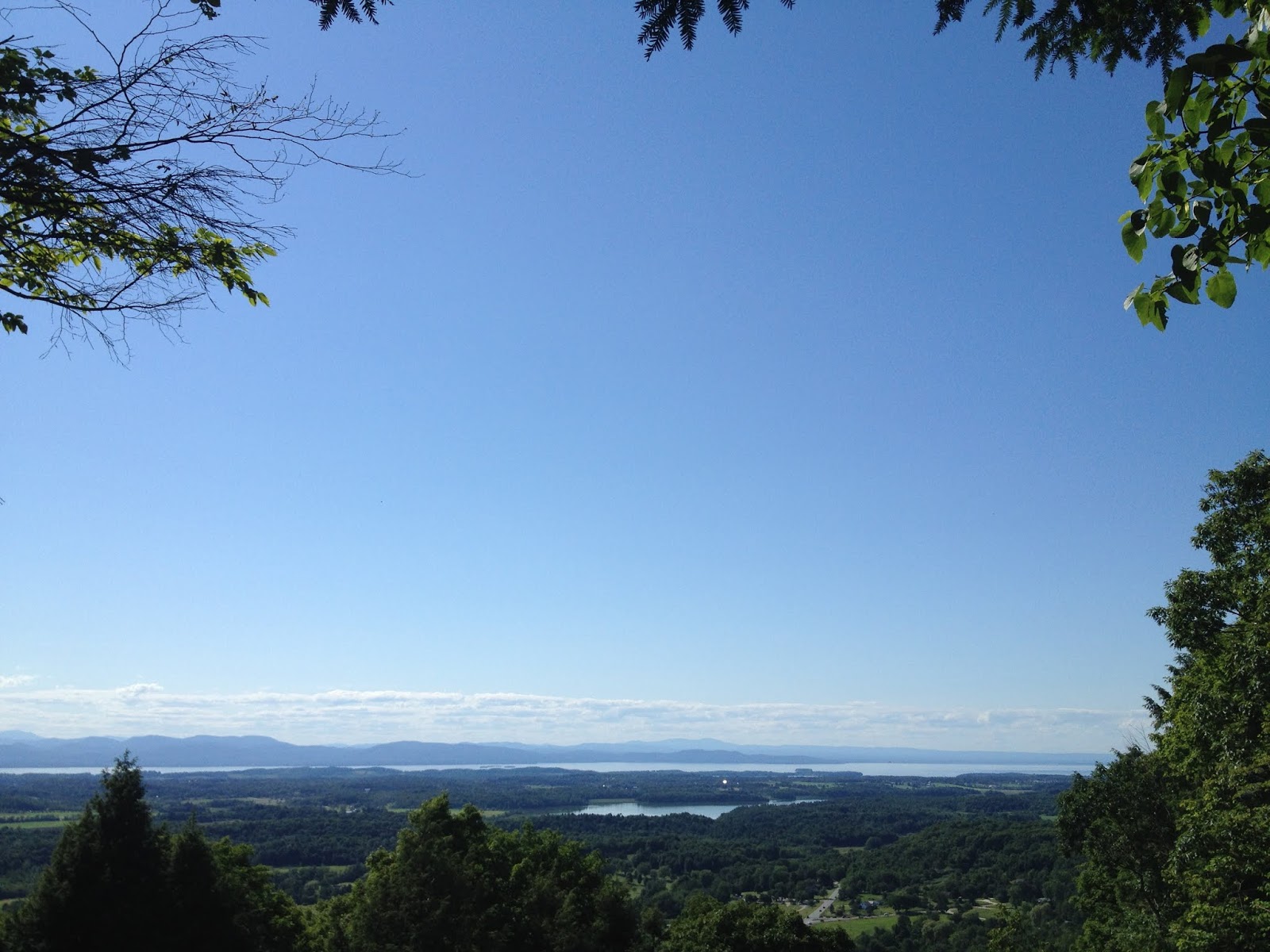
A river, with its waterfalls and meadows, a lake, a hill, a cliff or individual rocks, a forest, and ancient trees standing singly.


January 3

The third considerable snow-storm.

The berries which I celebrate appear to have a range -- most of them — very nearly coterminous with what has been called the Algonquin Family of Indians, whose territories are now occupied by the Eastern, Middle, and Northwestern States and the Canadas, and completely surrounded those of the Iroquois, who occupied what is now the State of New York. These were the small fruits of the Algonquin and Iroquois families. The Algonquins appear to have described this kind of fruits generally by words ending in the syllables meenar.

It is true we have in the Northern States a few wild plums and inedible crab-apples, a few palatable grapes and nuts, but I think that our various species of berries are our wild fruits to be compared with the more celebrated ones of the tropics, and that, taking all things into consideration, New England will bear comparison with the West India Islands. I have not heard of any similar amusement there superior to huckleberrying here, the object not being merely to get a shipload of something which you can eat or sell.

Why should the Ornamental Tree Society confine its labors to the highway only? An Englishman laying out his ground does not regard simply the avenues and walks.

Does not the landscape deserve attention? What are the natural features which make a township handsome? A river, with its waterfalls and meadows, a lake, a hill, a cliff or individual rocks, a forest, and ancient trees standing singly. Such things are beautiful; they have a high use which dollars and cents never represent.

If the inhabitants of a town were wise, they would seek to preserve these things, though at a considerable expense; for such things educate far more than any hired teachers or preachers, or any at present recognized system of school education.

I do not think him fit to be the founder of a state or even of a town who does not foresee the use of these things, but legislates chiefly for oxen, as it were.

Far the handsomest thing I saw in Boxboro was its noble oak wood. I doubt if there is a finer one in Massachusetts. Let her keep it a century longer, and men will make pilgrimages to it from all parts of the country; and yet it would be very like the rest of New England if Boxboro were ashamed of that woodland. I have since heard, however, that she is contented to have that forest stand instead of the houses and farms that might supplant [i ], because the land pays a much larger tax to the town now than it would then. I said to myself, if the history of this town is written, the chief stress is probably laid on its parish and there is not a word about this forest in it.

It would be worth the while if in each town there were a committee appointed to see that the beauty of the town received no detriment.

If we have the largest boulder in the county, then it should not belong to an individual, nor be made into door-steps. As in many countries precious metals belong to the crown, so here more precious natural objects of rare beauty should belong to the public. Not only the channel but one or both banks of every river should be a public highway. The only use of a river is not to float on it. 

Think of a mountain-top in the township -- even to the minds of the Indians a sacred place — only accessible through private grounds! a temple, as it were, which you cannot enter except by trespassing and at the risk of letting out or letting in somebody's cattle! in fact the temple itself in this case private property and standing in a man's cow-yard,-for such is commonly the case! 

New Hampshire courts have lately been deciding-as if it was for them to decide whether the top of Mt. Washington belonged to A or to B; and, it being decided in favor of B, as I hear, he went up one winter with the proper officer and took formal possession of it.

But I think that the top of Mt. Washington should not be private property; it should be left unappropriated for modesty and reverence's sake, or if only to suggest that earth has higher uses than we put her to.

I know it is a mere figure of speech to talk about temples nowadays, when men recognize none, and, indeed, associate the word with heathenism.

It is true we as yet take liberties and go across lots, and steal, or "hook," a good many things, but we naturally take fewer and fewer liberties every year, as we meet with more resistance.

In old countries, as England, going across lots is out of the question. You must walk in some beaten path or other, though it may [ be ] a narrow one.

We are tending to the same state of things here, when practically a few will have grounds of their own, but most will have none to walk over but what the few allow them. Thus we behave like oxen in a flower-garden.

The true fruit of Nature can only be plucked with a delicate hand not bribed by any earthly reward, and a fluttering heart. No hired man can help us to gather this crop.

How few ever get beyond feeding, clothing, sheltering, and warming themselves in this world, and begin to treat themselves as human beings, as intellectual and moral beings! Most seem not to see any further, not to see over the ridge-pole of their barns, - - or to be exhausted and accomplish nothing more than a full barn, though it may be accompanied by an empty head.

They venture a little, run some risks, when it is a question of a larger crop of corn or potatoes; but they are commonly timid and count their coppers, when the question is whether their children shall be educated.

He who has the reputation of being the thriftiest farmer and making the best bargains is really the most thrift less and makes the worst.

It is safest to invest in knowledge, for the probability is that you can carry that with you wherever you go.

But most men, it seems to me, do not care for Nature and would sell their share in all her beauty, as long as they may live, for a stated sum — many for a glass of rum.

Thank God, men cannot as yet fly, and lay waste the sky as well as the earth ! We are safe on that side for the present. 

It is for the very reason that some do not care for those things that we need to continue to protect all from the vandalism of a few.

We cut down the few old oaks which witnessed the transfer of the township from the Indian to the white man, and commence our museum with a cartridge-box taken from a British soldier in 1775! 

He pauses at the end of his four or five thousand dollars, and then only fears that he has not got enough to carry him through, -- that is, merely to pay for what he will eat and wear and burn and for his lodging for the rest of his life. But, pray, what does he stay here for?

Suicide would be cheaper. Indeed, it would be nobler to found some good institution with the money and then cut your throat.

If such is the whole upshot of their living, I think that it would be most profitable for all such to be carried or put through by being discharged from the mouth of a cannon as fast as they attained to years of such discretion.

As boys are sometimes required to show an excuse for being absent from school, so it seems to me that men should show some excuse for being here. Move along; you may come upon the town, sir.

I noticed a week or two ago that one of my white pines, some six feet high with a thick top, was bent under a great burden of very moist snow, almost to the point of breaking, so that an ounce more of weight would surely have broken it. As I was confined to the house by sickness, and the tree had already been four or five days in that position, I despaired of its ever recovering itself; but, greatly to my surprise, when, a few days after, the snow had melted off, I saw the tree almost perfectly upright again.

It is evident that trees will bear to be bent by this cause and at this season much more than by the hand of man. Probably the less harm is done in the first place by the weight being so gradually applied, and perhaps the tree is better able to bear it at this season of the year.

H. D. Thoreau, Journal, January 3, 1861

The berries which I celebrate. See The Whortleberry Family

Thank God, men cannot as yet fly, and lay waste the sky as well as the earth ! See January 21, 1852 ("This winter they are cutting down our woods more seriously than ever. . . Thank God, they cannot cut down the clouds!"

Far the handsomest thing I saw in Boxboro was its noble oak wood. See October 23, 1860 ("[Anthony Wright] tells me of a noted large and so-called primitive wood, Inches Wood, between the Harvard turnpike and Stow, sometimes called Stow Woods"); November 9, 1860 ("There may be a thousand? acres of old oak wood.); November 10, 1860 ("I have lived so long in this neighborhood and but just heard of this noble forest, - - probably as fine an oak wood as there is in New England, only eight miles west of me. Seeing this, I can realize how this country appeared when it was discovered - - a full-grown oak forest stretching uninterrupted for miles, consisting of sturdy trees from one to three and even four feet in diameter, whose interlacing branches form a complete and uninterrupted canopy"); November 16, 1860 ("There being hills, dells, moraines, meadows, swamps, and a fine brook in the midst of all. . . .Nowhere any monotony. It is very pleasant, as you walk in the shade below, to see the cheerful sunlight reflected from the maze of oak boughs above.")

If the inhabitants of a town were wise, they would seek to preserve these things. See January 22, 1852 ("Methinks the town should have more supervision and control over its parks than it has. It concerns us all whether these proprietors choose to cut down all the woods this winter or not."); Walking ("A town is saved by the woods and swamps that surround it.”); October 15, 1859 ("Each town should have a park, or rather a primitive forest, of five hundred or a thousand acres, where a stick should never be cut for fuel, a common possession forever, for instruction and recreation.")

But I think that the top of Mt. Washington should not be private property. See Ownership History of the Mount Washington Summit (2018) ("The State [is now] the fee owner of almost all of the Mount Washington Summit.")

A Book of the Seasons,  by Henry Thoreau, January 3
A Book of the Seasons,  by Henry Thoreau
 "A book, each page written in its own season, 
out-of-doors, in its own locality."
 ~edited, assembled and rewritten by zphx ©  2009-2023

Friday, August 26, 2016

A weather-painted house and barn, with an orchard by its side, in midst of a sandy field surrounded by green woods, with a small blue lake on one side.

August 26

Tuesday. More wind and quite cold this morning, but very bright and sparkling, autumn-like air, reminding of frosts to be apprehended, also tempting abroad to adventure. The fall cricket — or is it alder locust? — sings the praises of the day. 

So about 9 a. m. up river to Fair Haven Pond. 

The flooded meadow, where the grasshoppers cling to the grass so thickly, is alive with swallows skimming just over the surface amid the grass-tops and apparently snapping up insects there. Are they catching the grasshoppers as they cling to bare poles? (I see the swallows equally thick there at 5 p. m. when I return also.) 

River slowly falling. The most conspicuous weed rising above the water is the wool-grass, with its great, rich, seedy heads, which rise from a few inches to a foot above at present, as I push over the uncut meadows. 

I see many white lilies fairly and freshly in bloom after all this flood, though it looks like a resurrection.

The wind is northwest, apparently by west, and I sail before it and under Hubbard's Bridge. 

The red maples of Potter's Swamp show a dull-purple blush and sometimes a low scarlet bough, the effect evidently of the rain ripening them. 

Rice told me about their crossing the causeway from Wayland to Sudbury some sixty years ago in a freshet which he could just remember, in a half-hogs head tub, used for scalding pigs, having nailed some boards on the bottom to keep it from upsetting. It was too deep for a team. 

We begin to apprehend frosts before the melons are ripe! 

A blue heron sails away from a pine at Holden Swamp shore and alights on the meadow above. Again he flies, and alights on the hard Conantum side, where at length I detect him standing far away stake-like (his body concealed), eying me and depending on his stronger vision. 

The desmodium flowers are pure purple, rose-purple in the morning when quite fresh, excepting the two green spots. The D. rotundifolium also has the two green (or in its case greenish) spots on its very large flower. These desmodiums are so fine and inobvious that it is difficult to detect them. I go through a grove in vain, but when I get away, find my coat covered with their pods. They found me, though I did not them. The round-leafed desmodium has sometimes seven pods and large flowers still fresh. 

The Lespedeza Stuvei is very abundant on Black berry Steep, two and a half to three feet high. It has a looser top and less dense spikes than the hirta. It gives a pink hue to the hillside. The L. violacea is smaller and much more violet, the hirta more white. Galium pilosum still common; and Desmodium acuminatum still by rock on Blackberry Steep. This to be added to the desmodiums of this place. 

As I stand there, a young male goldfinch darts away with a twitter from a spear thistle top close to my side, and, alighting near, makes frequent returns as near to me and the thistle as it dares pass, not yet knowing man well enough to fear him. 

I rest and take my lunch on Lee's Cliff, looking toward Baker Farm. 

July 20, 2018

What is a New England landscape this sunny August day? A weather-painted house and barn, with an orchard by its side, in midst of a sandy field surrounded by green woods, with a small blue lake on one side. A sympathy between the color of the weather-painted house and that of the lake and sky. I speak not of a country road between its fences, for this house lies off one, nor do I commonly approach them from this side. The weather-painted house. This is the New England color, homely but fit as that of a toadstool. What matter though this one has not been inhabited for thirty years? 

Methinks I hear the crow of a cock come up from its barn-yard. I think I hear the pine warbler's note in the woods behind me. Hear a plain phebe note from a chickadee. 

Bluets still. 

Epilobium down flies abundantly on hillsides. 

I gather a bundle of pennyroyal; it grows largest and rankest high and close under these rocks, amid the loose stones. I tie my bundle with the purple bark of the poke-weed. 

Sail across to Bee Tree Hill. This hillside, laid bare two years ago and partly last winter, is almost covered with the Aster macrophyllus, now in its prime. It grows large and rank, two feet high. On one I count seventeen central flowers withered, one hundred and thirty in bloom, and half as many buds. 

As I looked down from the hilltop over the sprout-land, its rounded grayish tops amid the bushes I mistook for gray, lichen-clad rocks, such was its profusion and harmony with the scenery, like hoary rocky hilltops amid bushes. There were acres of it, densely planted. Also erechthites as abundant and rank in many places there as if it had been burnt over! So it does not necessarily imply fire. I thought I was looking down on gray, lichen-clad rocky summits on which a few bushes thinly grew. These rocks were asters, single ones a foot over, many prostrate, and making a gray impression. 

Many leaves of shrubs are crisp and withered and fallen there, though as yet no drought nor frost. Nothing but rain can have done it. Aspen leaves are blackened. Stonecrop still. Another monster aphis on a huckleberry leaf. Galium triflorum still. See a great many young oaks and shrub oaks stripped by caterpillars of different kinds now.

H. D. Thoreau, Journal August 26, 1856


The fall cricket — or is it alder locust? — sings the praises of the day. See August 26, 1860 ("The shrilling of the alder locust is the solder that welds these autumn days together."); August 15, 1852 ("That clear ring like an alder locust (is it a cricket ?) for some time past is a sound which belongs to the season.) See also A Book of the Seasons,  by Henry Thoreau, the Cricket in August

A blue heron sails away from a pine at Holden Swamp shore and alights on the meadow above. See note to August 19, 1858 ("Blue herons, which have bred or been bred not far from us (plainly), are now at leisure, or are impelled to revisit our slow stream. I have not seen the last since spring. "); August 22, 1858 ("See one or two blue herons every day now, driving them far up or down the river before me."). See also A Book of the Seasons, by Henry Thoreau, the Blue Heron

These desmodiums are so fine and inobvious that it is difficult to detect them . . . They found me, though I did not them. See note to August 19, 1856 ("I spent my afternoon among the desmodiums and lespedezas, sociably.")

I gather a bundle of pennyroyal . . . I tie my bundle with the purple bark of the poke-weed. See August 11, 1853 ("Evening draws on while I am gathering bundles of pennyroyal on the further Conantum height. I find it amid the stubble mixed with blue-curls and, as fast as I get my hand full, tie it into a fragrant bundle.”);  August 13, 1852 ("Pennyroyal abundant in bloom. I find it springing from the soil lodged on large rocks in sprout-lands, and gather a little bundle, which scents my pocket for many days.") See also A Book of the Seasons, by Henry Thoreau, the Aromatic Herbs

A young male goldfinch darts away with a twitter from a spear thistle top close to my side, and, alighting near, makes frequent returns as near to me and the thistle as it dares. See  August 28, 1856  ("A goldfinch twitters away from every thistle now, and soon returns to it when I am past.") See also A Book of the Seasons, by Henry Thoreau, the Goldfinch

A sympathy between the color of the weather-painted house and that of the lake and skyThe weather-painted house. This is the New England color. See April 3, 1858  ("In the hazy atmosphere yesterday we could hardly see Garfield's old unpainted farmhouse."); April 24, 1857 ("That is a very New England landscape. Buttrick's yellow farmhouse near by is in harmony with it."); June 15, 1859 (“A regular old-fashioned country house, long and low, one story unpainted, with a broad green field, half orchard, for all yard between it and the road, — a part of the hill side, — and much June-grass before it. This is where the men who save the country are born and bred.”); November 26, 1857 ("Minott's is a small, square, one-storied and unpainted house, with a hipped roof and at least one dormer window, a third the way up the south side of a long hill")


Aster macrophyllus, now in its prime . . . making a gray impression.  See  August 30, 1853 ("I am quite bewildered by the beauty and variety of the asters, now in their prime here. Why so many asters and goldenrods now?") See also A Book of the Seasons,  by Henry Thoreau, Asters in August

Another monster aphis on a huckleberry leaf. See August 18, 1856 ("Saw yesterday and some days before a monster aphis some five eighths of an inch long on a huckleberry leaf.")

Sunny August day –
weather-painted house and barn
New England color.

A Book of the Seasons, by Henry Thoreau
"A book, each page written in its own season,
out-of-doors, in its own locality.”
~edited, assembled and rewritten by zphx © 2009-2026

https://tinyurl.com/hdt-560826

Friday, July 11, 2014

A soft fawn-colored light seeming to come from the earth itself.

July 11.
July 11, 2014

By boat to Fair Haven. Handsome now from these rocks the bay (on the south side of Fair Haven at the inlet of river), with its spit of shining pads.

I hear Conant's cradle cronching the rye behind the fringe of bushes in the Indian field. Reaping begun.

Sun sets when I am off Nut Meadow. 

July 11, 2013

A straight edge of massy cloud advances from the south-southeast and now stretches overhead from west-southwest to east-northeast, and after sunset reflects a soft light on the landscape, lighting up with harmonious light the dry parched and shorn hillsides, the soft, mellow, fawn-colored light seeming to come from the earth itself.

H. D. Thoreau, Journal, July 11, 1854

July 11. See A Book of the Seasons, by Henry Thoreau, July 11

A cloud stretches overhead
lighting up the landscape with
soft fawn-colored light.

A Book of the Seasons, by Henry Thoreau,  
"A book, each page written in its own season,
out-of-doors, in its own locality.”
~edited, assembled and rewritten by zphx © 2009-2024
https://tinyurl.com/hdt-540711

Monday, April 28, 2014

The four seasons of greenness.

April 28.

6 A.M. – Dug up two of half a dozen, the only black spruce suitable to transplant that I know hereabouts. 

Rain all day, making the grass look green. Nawshawtuct now in the rain looks about as green as a Roxbury russet –– the russet is yielding to the green. 


April 28, 2019
Perhaps the greenness of the landscape may be said to begin fairly now. 

For the last half of this month, indeed, a tinge of green has been discernible on the sides of hills. Saw yesterday some cows turned out to pasture on such a hillside; thought they would soon eat up all the grass. This is coincident, then, with the leafing of the gooseberry, or earliest native shrub. 

First, you may say, is the starting of a few radical leaves, etc., and grass blades in favorable localities, and the blossoming of the earliest trees and herbs. 

Secondly, during the last half of April the earth acquires a distinct tinge of green, which finally prevails over the russet. 

Third. Then begins the leafing of the earliest shrubs and trees and the decided greenness and floweriness of the earth, in May.

Fourth. Then the decided leafiness in June and the first great crop of the year, the leaf or grass crop.


H. D. Thoreau, Journal, April 28, 1854


The leafing of the gooseberry, or earliest native shrub.
See April 13, 1856 ("The early gooseberry leaf-buds in garden have burst,"); April 17, 1855("The earliest gooseberry leaves are fairly unfolding now, and show some green at a little distance."); April 21, 1855 ("The frost conceals the green of the gooseberry leaves just expanding. "); April 23, 1855 (" The currant and second gooseberry are bursting into leaf"); April 24, 1856 ("The earliest gooseberry leaf has spread a third of an inch or more.") See also A Book of the Seasons,  by Henry Thoreau, Leaf-Out

Perhaps the greenness of the landscape may be said to begin fairly now. See April 4, 1859 ("Brown Season of the spring lasts from the time the snow generally begins to go off. . .through the first week of April this year. Ordinary years it must be somewhat later.")
  • .grass blades in favorable localities. See April 1, 1855 ("When I look out the window I see that the grass on the bank on the south side of the house is already much greener than it was yesterday; April 10, 1855 ("There is the slightest perceptible green on the hill now.")
  • a distinct tinge of green, which finally prevails over the russet. See April 14, 1854 ("There is a general tinge of green now discernible through the russet on the bared meadows and the hills, the green blades just peeping forth amid the withered ones. "); April 23, 1854 ("How thickly the green blades are starting up amid the russet! The tinge of green is gradually increasing in the face of the russet earth."); April 25, 1859 ( "I got to-day and yesterday the first decided impression of greenness beginning to prevail")
  • the decided greenness and floweriness of the earth, in May. See May 18, 1852 ("I doubt if the landscape will be any greener.")
  • the decided leafiness in June. See May 26, 1854 (At sight of this deep and dense field all vibrating with motion and light, winter recedes many degrees in my memory. . . . The season of grass, now everywhere green and luxuriant."); June 9, 1852 ("The general leafiness, shadiness, and waving of grass and boughs in the breeze characterize the season.")
The distinct greenness
of the landscape now prevails
over the russet.

A Book of the Seasons,  by Henry Thoreau
 "A book, each page written in its own season,
out-of-doors, in its own locality."
 ~edited, assembled and rewritten by zphx ©  2009-2024
https://tinyurl.com/hdt-540428

Wednesday, January 8, 2014

The pensive shores of evening skirt the great western continent of the night.


January 8

Gilpin, in his essay on the "Art of Sketching Landscape," says: "When you have finished your sketch therefore with Indian ink, as far as you propose, tinge the whole over with some light horizon hue. It may be the rosy tint of morning; or the more ruddy one of evening; or it may incline more to a yellowish, or a greyish cast . . . By washing this tint over your whole drawing, you lay a foundation for harmony." 

I have often been attracted by this harmonious tint in his and other drawings, and sometimes, especially, have observed it in nature when at sunset I inverted my head. 

We love not so well the landscape represented as in broad noon, but in a morning or evening twilight, those seasons when the imagination is most active, the more hopeful or pensive seasons of the day. Our mood may then possess the whole landscape, or be in harmony with it, as the hue of twilight prevails over the whole scene. 

Are we more than crepuscular in our intellectual and spiritual life? Have we awakened to broad noon? The morning hope is soon lost in what becomes the routine of the day, and we do not recover ourselves again until we land on the pensive shores of evening, shores which skirt the great western continent of the night. 

P. M. — To the Spruce Swamp in front of J. Farmer's. 

Can go across both rivers now. New routes are more practicable. 

Stood within a rod of a downy woodpecker on an apple tree. How curious and exciting the blood-red spot on its hindhead! I ask why it is there, but no answer is rendered by these snow-clad fields. 

It is so close to the bark I do not see its feet. It looks behind as if it had on a black cassock open behind and showing a white undergarment between the shoulders and down the back. 

It is briskly and incessantly tapping all round the dead limbs, but rarely twice in a place, as if to sound the tree and so see if it has any worm in it, or perchance to start them. 

How much he deals with the bark of trees, all his life long tapping and inspecting it! He it is that scatters those fragments of bark and lichens about on the snow at the base of trees. What a lichenist he must be! Or rather, perhaps it is fungi makes his favorite study, for he deals most with dead limbs. 

How briskly he glides up or drops himself down a limb, creeping round and round, and hopping from limb to limb, and now flitting with a rippling sound of his wings to another tree! 

The lower two-thirds of the white spruce has its branches retraced or turned downward, and then curving upward at the extremities, as much as the white pine commonly slants upwards. Above it is so thick that you cannot see through it. All the black spruce that I know hereabouts stand on higher land than this. 

Saw two squirrel-nests in the thick top of a spruce. It was a foot in diameter, of coarse grass and bark fibres, with very thick bottom and sides and a scarcely distinguishable entrance, lined with fine fibres of bark, probably inner bark of maple, very warm. Probably a red squirrel's, for I heard one winding up his clock. Many white pine cones had been eaten in the neighborhood.

H. D. Thoreau, Journal, January 8, 1854

Gilpin. William Gilpin, English writer, printmaker, clergyman and schoolmaster, best known as one of the originators of the idea of the picturesque.

I have often been attracted by this harmonious tint in his and other drawings, and sometimes, especially, have observed it in nature when at sunset I inverted my head. See January 6, 1854 ("There was a low, narrow, clear segment of sky in the west at sunset, or just after (all the rest overcast), of the coppery yellow, perhaps, of some of Gilpin's pictures, all spotted coarsely with clouds like a leopard's skin."); September 18, 1858 ("Some long amber clouds in the horizon, all on fire with gold, were more glittering than any jewelry. . . .And when you looked with head inverted the effect was increased tenfold, till it seemed a world of enchantment.")

The morning hope is soon lost in what becomes the routine of the day, and we do not recover ourselves again until we land on the pensive shores of evening, shores which skirt the great western continent of the night. See July 3, 1840 ("We will have a dawn, and noon, and serene sunset in ourselves"), and Zphx, Against the night.; See also The hour before sunset, and Seasons of the day  and


This Morning


Oh, this life,

the now,

this morning,


which I

can turn

into forever


by simply

loving

what is here,


is gone

by noon.


~ David Budbill (Happy Life)

Probably a red squirrel's [nest] , for I heard one winding up his clock. See March 18, 1857 ("A red squirrel runs nimbly before me along the wall, his tail in the air at a right angle with his body; leaps into a walnut and winds up his clock.");  March 30, 1859 ("He makes so many queer sounds, and so different from one another, that you would think they came from half a dozen creatures."); September 24, 1857 ("A red squirrel chiding you from his concealment in some pine-top. . . . is the sound most native to the locality.");  November 7, 1855 ("A red one runs along the trees to scold at me, boldly or carelessly, with a chuckling, bird like note and that other peculiar sound at intervals, between a purr and a grunt."); January 17, 1860 ("In the fall they construct a nest of grass and bark-fibres, moss, etc., in one of the [white pine] trees for winter use, and so apparently have two resources") See also A Book of the Seasons, by Henry Thoreau, The Red Squirrel

Friday, May 18, 2012

So much light and life in the landscape at this date.

May 18.

The landscape is most beautiful looking towards the sun (in the orchard on Fair Haven) at four.

First, there is this green slope on which I sit, looking down between the rows of apple trees just being clothed with tender green, - sometimes underneath them to the sparkling water, or over through them, or seeing them against the sky.

Secondly, the outline of this bank or hill is drawn against the water far below; the river still high, a beautifully bright sheen on the water there, a fine sparkling shimmer in front, owing to the remarkable clearness of the atmosphere (clarified by the May storm?).

Thirdly, on either side of the wood beyond the river are patches of bright, tender, yellowish, velvety green grass in meadows and on hillsides. Those great fields of green affect me as did those early green blades by the Corner Spring -like a fire flaming up from the earth. 

Fourthly, the forest, the dark-green pines, wonderfully distinct, near and erect, with their distinct dark stems, spiring tops, regularly disposed branches, and silvery light on their needles . They seem to wear an aspect as much fresher and livelier as the other trees, - though their growth can hardly be perceptible yet, - as if they had been washed by the rains and the air.They are now being invested with the light, sunny, yellowish-green of the deciduous trees. 

May 18, 2022

This tender foliage, putting so much light and life into the landscape, is the remarkable feature at this date. The week when the deciduous trees are generally and conspicuously expanding their leaves.

H. D. Thoreau, Journal, May 18, 1852

This tender foliage, putting so much light and life into the landscape. See May 18, 1851 ("The landscape has a new life and light infused into it. And to the eye the forest presents the tenderest green."); 
May 18, 1852 ("Combined with the tender fresh green, you have this remarkable clearness of the air. I doubt if the landscape will be any greener."); See also May 17, 1852 ("Now the sun has come out after the May storm, how bright, how full of freshness and tender promise and fragrance is the new world!"); May 17, 1853 ("Now is the time to admire the very young and tender leaves")May 17, 1854 (“The wooded shore is all lit up with the tender, bright green of birches fluttering in the wind and shining in the light”)

Friday, July 23, 2010

By boat to Conantum.

July 23

The late rose is now in prime along the river, a pale rose-color but very delicate, keeping up the memory of roses.

One of the most noticeable phenomena of this green-leaf season is the conspicuous reflection of light in clear breezy days from the silvery under sides of some leaves. All trees and shrubs which have light-colored or silvery under sides to their leaves, but especially the swamp white oak and the red maple, are now very bright and conspicuous in the strong wind after the rain of the morning.

In a maple swamp every maple-top stands now distinguished from the birches in their midst. Before they were confounded, but a wind comes and lifts their leaves, showing their lighter under sides, and suddenly, as by magic, the maple stands out from the birch.

There is a great deal of life in this landscape. What an airing the leaves get
!

H. D. Thoreau, Journal, July 23, 1860

The late rose is now in prime along the river, a pale rose-color but very delicate. See July 18, 1853 ("The late, or river, rose spots the copses over the water, — a great ornament to the river's brink now.”) See also Farewell, my friend:

All trees and shrubs which have light-colored or silvery under sides to their leaves, but especially the swamp white oak and the red maple, are now very bright and conspicuous in the strong wind after the rain of the morning. See June 11, 1860 ("I now first begin to notice the silvery under sides of the red maple and swamp white oak leaves, turned up by the wind.")

July 23. See A Book of the Seasons, by Henry Thoreau, July 23


Along the river
the memory of roses --
late rose now in prime.

A Book of the Seasons, by Henry Thoreau
"A book, each page written in its own season,
out-of-doors, in its own locality.” 
~edited, assembled and rewritten by zphx © 2009-2021


Thursday, July 22, 2010

To Annursnack

July 22.

Yesterday having been a rainy day, the air is now clear and cool. Rarely is the horizon so distinct. 

I stand in Heywood's pasture and, leaning over the wall, look westward. The surface of the earth, - grass grounds, pastures, and meadows, - is remarkably beautiful. All things are peculiarly fresh on account of the copious rains.

The next field, as I look over the wall, is a sort of terrestrial rainbow. First dark-green, where white clover has been cut; next along the edge of the meadow is a strip of red-top, uncut, perfectly distinct; then the cheerful bright-yellow sedge of the meadow; then a corresponding belt of red-top on its upper edge, quite straight and rectilinear like the first; then a glaucous-green field of grain still quite low; and, in the further corner of the field, a much darker square of green than any yet -- all brilliant in this wonderful light.

First locust heard.

H. D. Thoreau, Journal, July 22, 1860

A sort of terrestrial rainbow all brilliant in this wonderful light. See July 15, 1860 (“The rich green of young grain now, of various shades; the flashing blades of corn; the yellowing tops of ripening grain; the dense uniform red of red-top; the purple of the fowl-meadow along the low river-banks; the very dark and shadowy green of herd's-grass as if clouds were always passing over it; the fresh light green where June-grass has been cut; the fresh dark green where clover has been cut; the hard, dark green of pastures; the cheerful yellowish green of the meadows where the sedges prevail, with darker patches and veins of grass in the higher and drier parts.”)

First locust heard. See June 14, 1854 ("Harris's other kind, the dog-day cicada (canicularis), or harvest-fly. He says it begins to be heard invariably at the beginning of dog-days; he (Harris) heard it for many years in succession with few exceptions on the 25th of July."); July 17, 1856 (“A very warm afternoon. Thermometer at 97° at the Hosmer Desert. I hear the early locust.”); July 18, 1851 ("I first heard the locust sing, so dry and piercing, by the side of the pine woods in the heat of the day.”); July 19, 1854 ("The more smothering, furnace-like heats are beginning, and the locust days."); July 26, 1854 ("It is a windy day like yesterday, yet almost constantly I hear borne on the wind from far, mingling with the sound of the wind, the z-ing locust, scarcely like a distinct sound.”); July 26, 1853 (“I mark again, about this time when the first asters open, the sound of crickets or locusts that makes you fruitfully meditative, helps condense your thoughts, like the mel dews in the afternoon. This the afternoon of the year.”); July 31, 1856 (“This dog-day afternoon [a]s I make my way amid rank weeds still wet with the dew, the air filled with a decaying musty scent and the z-ing of small locusts, I hear the distant sound of a flail, and thoughts of autumn occupy my mind, and the memory of past years.”); August 14, 1853 ("Locust days, — sultry and sweltering. I hear them even till sunset. The usually invisible but far-heard locust."); August 16, 1852 ("These are locust days. I hear them on the elms in the street, but cannot tell where they are."). See also A Book of the Seasons, by Henry Thoreau, Locust, Dogdayish Days

Sunday, July 4, 2010

Sweeping waves of light and Shade

July 4, 2022

July 4, 2017


July 4 

Standing on J. P . Brown's land, south side,

 I observe his rich and luxuriant uncut grass-lands northward, now waving under the easterly wind. Sweeping waves of light and shade over the whole breadth of his land, imparting wonderful life to the landscape, waves of light and shade pursuing each other over the whole breadth of the landscape like waves hastening to break on a shore. 

We are wading and navigating at present in a sort of sea of grass, which yields and undulates under the wind like water; and so, perchance, the forest is seen to do from a favorable position.

None of his fields is cut yet. 

Early, there was that flashing light of waving pine in the horizon; now, the Camilla on grass and grain. 

In that hollow in the woods south of Ledum Swamp, the sedge is fresh and yellowish-green, falling every way like cow-licks on an unkempt head, a soft, dry bed to recline on. When we enter it from the west, with the sun shining between thundery clouds, it is all lit with a blaze of yellow light.


H. D. Thoreau, Journal, July 4, 1860

Navigating a sea of grass... See July 6, 1859 ("Grass now for a week or more has been seriously in the way of the walker,... It requires skillful tacking, a good deal of observation, and experience to get across the country now.”) See also July 2, 1851 ("Miles of waving grass adorning the surface of the earth, inconceivably fine and silvery far away, - light reflects from the grass blades.”)

July 4. See A Book of the Seasons, by Henry Thoreau, July 4

Rich uncut grass-lands 
now waving under the wind

waves of light and shade 
sweeping the breadth of the land

waves of light and shade
imparting life to the landscape

waves of light and shade 
over the breadth of the landscape

pursuing each other like 
waves hastening to break on a shore. 

A Book of the Seasons,  by Henry Thoreau
 "A book, each page written in its own season,
out-of-doors, in its own locality."
 ~edited, assembled and rewritten by zphx ©  2009-2024
tinyurl.com/hdt600704

Standing on J. P. Brown's land, south side, I observed his rich and luxuriant uncut grass-lands north ward, now waving under the easterly wind. It is a beautiful Camilla, sweeping like waves of light and shade over the whole breadth of his land, like a low steam curling over it, imparting wonderful life to the landscape, like the light and shade of a changeable garment, waves of light and shade pursuing each other over the whole breadth of the landscape like waves hastening to break on a shore.

Thursday, July 1, 2010

To Well Meadow


July 1.

While reclining on the sedge at end of town-bound path, I see a warbler deliberately investigating the smooth sumachs and their old berrybunches, in various positions. It is a slaty blue above, with a bright-yellow front-head and much yellow on the wings, a very distinct black throat, triangularwise, with a broad black line through the eyes, a forked tail dark beneath; belly white or whitish.


It is undoubtedly the golden-winged warbler, which I think must be breeding here.


I see young partridges not bigger than robins fly three or four rods, not squatting fast, now.

Returning over the causeway, the light of the sun was reflected from the awns of a grain-field by Abiel Wheeler's house so brightly and in such a solid mass as to at first impress you as if it were whiter than the densest whiteweed thereabouts, but in fact it was not white, but a very bright sunny gleam from the waving phalanx of awns, more calculated to reflect the light than any object in the landscape.

H. D. Thoreau , Journal, July 1, 1860


Golden-winged warbler. See July 24, 1860 ("The carpenter working for Edward Hoar in Lincoln caught, two or three clays ago, an exhausted or half-furnished golden-winged warbler alive in their yard. It was within half a mile that I saw one a few weeks ago. It is a sufficiently well-marked bird, by the large yellow spot on the wing (the greater coverts), yellow front and crown, and the very distinct black throat and, I should say, upper breast, above which white divided by a broad black line through the eye. Above blue-gray, with much yellowish-green dusting or reflection, i.e. edging, to the feathers.”); May 6, 1855 (“ Bright-yellow head and shoulders and beneath, and dark legs and bill catching insects along base of pitch pine plumes, some, what creeper-like; very active and restless, darting from tree to tree; darts at and drives off a chickadee. I find I have thus described its colors last year at various times, viz.: black throat, this often with dark and light beneath; again, black streak from eyes, slate-colored back (?), forked tail, white beneath (?)”)

I see young partridges not bigger than robins .See June 26, 1857 ("See a pack of partridges as big as robins at least.”);July 5, 1856 ("Young partridges (with the old bird), as big as robins, make haste into the woods from off the railroad.") See also A Book of Seasons,  by Henry Thoreau,the Partridge

Popular Posts Last 30 Days.

The week ahead in Henry’s journal

The week ahead in Henry’s journal
A journal, a book that shall contain a record of all your joy.
"A stone fruit. Each one yields me a thought." ~ H. D. Thoreau, March 28, 1859


I sit on this rock
wrestling with the melody
that possesses me.