Showing posts with label lycopus. Show all posts

Sunday, July 12, 2020

The green-flowered lanceolate-leafed orchis at Azalea Brook.

July 12. 

White vervain. 

Checkerberry, maybe some days. 

Spikenard, not quite yet. 

The green-flowered lanceolate-leafed orchis at Azalea Brook will soon flower. Either 
Gymnadenia tridentata or Platanthera flava.

Platanthera clavellata


Circæa alpina (?) there, but nearly eighteen inches high. 

Lycopus Virginicus, not open in shade; probably in a day or two. 

Wood horse-tail very large and handsome there.

H. D. Thoreau, Journal, July 12, 1853

White vervain. See July 12, 1856 (“White vervain.”) See also July 28, 1853 ("Saw lower leaves of the white vervain turned a reddish lake or claret."); August 6, 1853 ("lower leaves of some catnip and a white vervain have turned. "); August 29, 1856 ("An apparent white vervain with bluish flowers, as blue as bluets even or more so.")

The green-flowered lanceolate-leafed orchis : Platanthera clavellata (Small Green Wood Orchid) aka Gymnadeniopsis clavellata, Habenaria clavellata , Gymnadenia tridentata (Green Woodland Orchid, Club-spur Orchid, Little Club Spur Bog Orchid). See August 14, 1856 ("Gymnadenia nearer the brook, how long?") Compare the TUBERCLED ORCHIS June 18, 1854 ("Platanthera flava at the Harrington Bathing - Place, possibly yesterday , — an unimportant yellowish - green spike of flowers."); June 21, 1852 ("The dwarf orchis Platanthera flava (Gray) at the bathing-place in Hubbard's meadow, not remarkable.")

Checkerberry, maybe some days. See July 16, 1856 (“Checkerberry, a day or two”). Note: “checkerberry" is another name for American wintergreen (Gaultheria procumbens).See A Book of the Seasons, by Henry Thoreau: Checkerberry.


July 12. See A Book of the Seasons,  by Henry Thoreau, July 12

A Book of the Seasons,  by Henry Thoreau
"A book, each page written in its own season,
out-of-doors, in its own locality.”
~edited, assembled and rewritten by zphx © 2009-2021

Saturday, December 24, 2016

Walking before the storm is over, in the soft, subdued light.


December 24

December  24, 2016
More snow in the night and to-day, making nine or ten inches. 

P. M. — To Walden and Baker Farm with Ricketson, it still snowing a little. 

Turn off from railroad and went through Wheeler, or Owl, Wood. The snow is very light, so that sleighs cut through it, and there is but little sleighing. 

It is very handsome now on the trees by the main path in Wheeler Wood; also on the weeds and twigs that rise above the snow, resting on them just like down, light towers of down with the bare extremity of the twig peeping out  above. 

We push through the light dust, throwing it before our legs as a husbandman grain which he is sowing. It is only in still paths in the woods that it rests on the trees much. 

Am surprised to find Walden still open in the middle. When I push aside the snow with my feet, the ice appears quite black by contrast. 

There is considerable snow on the edge of the pine woods where I used to live. It rests on the successive tiers of boughs, perhaps weighing them down, so that the trees are opened into great flakes from top to bottom. 

The snow collects and is piled up in little columns like down about every twig and stem, and this is only seen in perfection, complete to the last flake, while it is snowing, as now. 

Return across the pond and go across to Baker Farm. 

Notice, at east end of westernmost Andromeda Pond, the slender spikes of lycopus with half a dozen distant little spherical dark-brown whorls of pungently fragrant or spicy seeds, somewhat nutmeg-like, or even like flagroot (?), when bruised. I am not sure that the seeds of any other mint are thus fragrant now. It scents your handkerchief or pocketbook finely when the crumbled whorls are sprinkled over them. 

It is very pleasant walking thus before the storm is over, in the soft, subdued light. We are also more domesticated in nature when our vision is confined to near and familiar objects. 

Do not see a track of any animal till returning near the Well Meadow Field, where many foxes (?), one of whom I have a glimpse of, had been coursing back and forth in the path and near it for three quarters of a mile. They had made quite a path. 

I do not take snuff. In my winter walks, I stoop and bruise between my thumb and finger the dry whorls of the lycopus, or water horehound, just rising above the snow, stripping them off, and smell that. That is as near as I come to the Spice Islands. That is my smelling-bottle, my ointment.

H. D. Thoreau, Journal, December 24, 1856

The snow collects and is piled up in little columns like down about every twig and stem, and this is only seen in perfection, complete to the last flake, while it is snowing, as now. See December 26, 1853  ("It has fallen so gently that it forms an upright wall on the slenderest twig. And every twig thus laden is as still as the hillside itself. The sight . . . would tempt us to begin life again.”); January 14, 1853 ("White walls of snow rest on the boughs of trees, in height two or three times their thickness.”); February 21, 1854 ("You cannot walk too early in new-fallen snow to get the sense of purity, novelty, and unexploredness.") 

Foxes . . . one of whom I have a glimpse of . . . See February 10, 1856 ("I saw a fox on the railroad. . . He coursed, or glided, along easily, appearing not to lift his feet high, leaping over obstacles, with his tail extended straight behind. He leaped over the ridge of snow . . . between the tracks, very easily and gracefully.”)

Tuesday, July 26, 2016

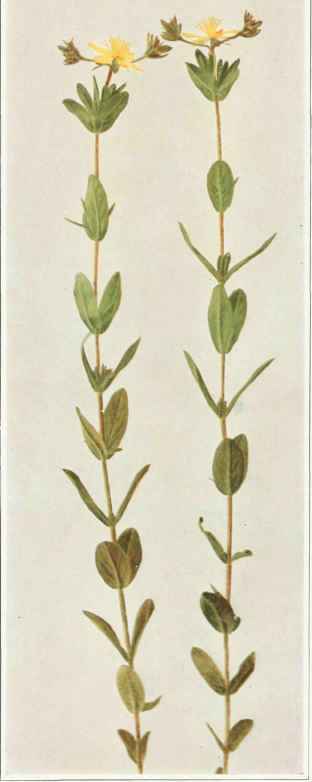
Arranged the hypericums in bottles this morning and watched their opening. The pod of the ellipticum, when cut, smells like a bee.


July 26 

Saturday. 5 a.m. — Up Assabet. 

July 26, 2026 7:20AM

July 26, 2019 8:18 PM

The sun's disk is seen round and red for a long distance above the horizon, through the thick but cloudless atmosphere, threatening heat, — hot, dry weather. 


At five the lilies had not opened, but began about 5.15 and were abundantly out at six. 


Arranged the hypericums in bottles this morning and watched their opening. 

The H. angulosum (?) has a pod one-celled (with three parietal placentae), conical, oblong, acute, at length longer than the sepals, purple. (The Canadense has from three to five (!) placentae and the mutilum three to four (!), as I find, notwithstanding Gray.) Styles three, short, distinct, and spreading; stamens twenty, more or less, obscurely clustered. Petals oblong. (Do not see the single lateral tooth mentioned by Eaton.) Corolla twelve to fourteen fortieths of an inch in diameter.
It is strict, slender, ten to twenty inches high; stem sharply four-angled, like Canadense, and cyme as naked or more so. The large ones make a singularly compact (flat-topped) corymb, of many narrow pods at last. Leaves oblong-lanceolate or linear-lanceolate, commonly blunt, but often gradually tapering and acute, broadest near the base and clasping, one to one and a half inches long by one eighth to three eighths wide, black-dotted beneath. Ground neither very dry nor very moist. 
It differs from Canadense, which it resembles, in being a larger plant every way, narrower in proportion to height, having more stamens, and in the form of its leaves.
Corolla of mutilum nine to eleven fortieths of an inch in diameter; Canadense, twelve to thirteen fortieths; corymbosum eighteen fortieths.
The corymbosum in chamber shut up at night. All but Sarothra, which may not be advanced enough, (I have no elodea), opened by 5 a. m., corymbosum and angulosum very fairly; but mutilum, Canadense, and angulosum curled and shut up by 9 a. m. !! 
The corymbosum shut up in afternoon. The perforatum and ellipticum alone were open all day. The four lesser ones are very shy to open and remain open very little while, this weather at least. I suspect that in the fields, also, they are open only very early or on cloudy days. 
H. Canadense and mutilum are often fifteen inches high. 
The largest and most conspicuous purple pods are those of the ellipticum. Those of the angulosum and Canadense are smaller and more pointed; are also purple, and the mutilum perhaps duller purple and less conspicuous. 
Pale St. John's-wort
Hypericum ellipticum
The pod of the ellipticum, when cut, smells like a bee. The united styles arm it like a beak or spine. This appears to be the most nearly out of bloom of all. I am surprised that Gray says it is somewhat four-angled. It is distinctly two-angled and round between. 


The Hubbard aster may be the A. Tradescanti. 

The large potamogeton off Dodd's seems to be the natans, from size of nutlets, etc. Then there is the second, off Clamshell, a long time out. And the third, heterophyllus (?), or what I have called hybridus, also long out. 

Drank up the last of my birch wine. It is an exceedingly grateful drink now, especially the aromatic, mead like, apparently checkerberry-flavored one, which on the whole I think must be the black birch. It is a surprisingly high-flavored drink, thus easily obtained, and considering that it had so little taste at first. Perhaps it would have continued to improve.

P. M. — To Poorhouse Pasture. 

Nettle, some time. Ambrosia botrys, apparently a few days. A. Radula, ditch by pasture, several days apparently. Lycopus sinuatus, some time. 

I see young larks fly pretty well before me. 

Smaller bur-reed (Sparganium Americanum), judging from form of stigma (ovate and oblique), yet the leaves are almost entirely concave (!), Stow's ditch. Is this the same with that in river? How long? 

It is very still and sultry this afternoon, at 6 p. m. even. I cannot even sit down in the pasture for want of air, but must keep up and moving, else I should suffocate. Thermometer ninety-seven and ninety-eight to-day. The pig pants and melts in his pen, and water must be cast on him.

Agassiz says he has discovered that the haddock, a deep-sea fish, is viviparous.

H. D. Thoreau, Journal, July 26, 1856

Arranged the hypericums in bottles this morning. See July 25, 1856 ("Up river to see hypericums out.") See also A Book of the Seasons,  by Henry Thoreau, St. Johns-wort (Hypericum)

The largest and most conspicuous purple pods are those of the ellipticum. See July 14, 1854 ("The red capsules of the Hypericum ellipticum, here and there. This one of the fall-ward phenomena in still rainy days.");  July 19, 1856 ("It is the Hypericum ellipticum and Canadense (linear- leaved) whose red pods are noticed now.")

The pod of the ellipticum, when cut, smells like a bee. See August 19, 1856 ("The small hypericums have a peculiar smart, somewhat lemon-like fragrance, but bee-like."); August 30, 1856 ("Bruised, [sarothra] has the fragrance of sorrel and lemon, rather pungent or stinging, like a bee."); See also June 13, 1858 ("The ledum . . . has a rather agreeable fragrance, between turpentine and strawberries. It is rather strong and penetrating, and some times reminds me of the peculiar scent of a bee. The young leaves, bruised and touched to the nose, even make it smart"); October 16, 1859 (“The ledum smells like a bee, — that peculiar scent they have. C, too, perceives it.”) and also June 21, 1852 ("The adder's-tongue arethusa smells exactly like a snake.")

July 26. See A Book of the Seasons, by Henry Thoreau, July 26

From GoBotany: 

Family

Hypericaceae (st. john’s-wort family)

The latin name Hypericum derives from ancient Greek hyper, meaning 'above' and eikon meaning 'picture'. This refers to the traditional practice of placing flowers above an image in the house to ward off evil spirits at the midsummer festival that later became the Feast of St. John, thus the common name.

This Genus’s Species in New England:


 When cut, the pod of
ellipticum – Pale St. John's-
wort – smells like a bee.

Sun's disk round and red
seen well above horizon
through thick atmosphere
 
A Book of the Seasons, by Henry Thoreau
"A book, each page written in its own season,
out-of-doors, in its own locality."
~edited, assembled and rewritten by zphx © 2009-2026

Monday, July 25, 2016

A cock crows at noon.

July 25

Friday. A. M. — Up river to see hypericums out. 

Lycopus Virginicus, with its runners, perhaps some days, in Hosmer Flat Meadow. 

Whorled utricularia very abundantly out, apparently in its prime. 

Lysimachia ciliata some days. 

The Hieracium Canadense grows by the road fence in Potter's hydrocotyle field, some seven or eight inches high, in dense tufts! 

The haymakers getting in the hay from Hubbard's meadow tell me the cock says we are going to have a long spell of dry weather or else very wet.  
"Well, there 's some difference between them," I answer; "how do you know it? " 
"I just heard a cock crow at noon, and that 's a sure sign it will either be very dry or very wet." 

The Hypericum perforatum, corymbosum, and ellipticum are not open this forenoon, but the angulosum, Canadense, mutilum, and Sarothra are partly curled up (their petals) even by 9 a.m.; perhaps because it is very warm, for day before yesterday, methinks, I saw the mutilum and Sarothra open later. 

The street is now strewn with bark under the buttonwood at the brick house. Has not the hot weather taken the bark off? 

The air begins to be thick and almost smoky.

H. D. Thoreau, Journal, July 25, 1856


The Hypericum perforatum, corymbosum, and ellipticum are not open this forenoon, but the angulosum, Canadense, mutilum, and Sarothra are partly curled up (their petals) even by 9 a.m
. See July 26, 1856 ("Arranged the hypericums in bottles this morning and watched their opening.")  See also A Book of the Seasons,  by Henry Thoreau, St. Johns-wort (Hypericum)Compare August 21, 1851 (" I have now found all the hawkweeds. Singular these genera of plants, plants manifestly related yet distinct. They suggest a history to nature, a natural history in a new sense.”)

Popular Posts Last 30 Days.

The week ahead in Henry’s journal

The week ahead in Henry’s journal
A journal, a book that shall contain a record of all your joy.
"A stone fruit. Each one yields me a thought." ~ H. D. Thoreau, March 28, 1859


I sit on this rock
wrestling with the melody
that possesses me.