Showing posts with label heart leaf. Show all posts

Monday, July 13, 2020

The St. John's-worts begin to bloom..


July 13. 

July 13, 2020

Purslane, probably to-day.

Chenopodium album.

Pontederias in prime.

Purple bladderwort (Utricularia purpurea), not long, near Hollowell place, the buds the deepest-colored, the stems rather loosely leaved or branched, with whorls of five or six leaves.

On the hard, muddy shore opposite Dennis’s, in the meadow, Hypericum Sarothra in dense fields, also Canadense, both a day or two, also ilysanthes, sium with leaves a third of an inch wide, and the cardinal flower, probably the 11th.

Hypericum mutilum in the meadow, maybe a day or two.

Whorled bladderwort, for some time, even gone to seed; this, the purple, and the common now abundant amid the pads and rising above them.

Potamogeton compressus (?) immersed, with linear leaves. I see no flower.

I believe it is the radical leaves of the heart-leaf, — large, waved, transparent, — which in many places cover the bottom of the river where five or six feet deep, as with green paving-stones. Did not somebody mistake these for the radical leaves of the kalmiana lily?


H. D. Thoreau, Journal, July 13, 1853


Hypericum Sarothra in dense fields, also Canadense, both a day or two, also Hypericum mutilum in the meadow, maybe a day or two
. See  July 14, 1854 ("The red capsules of the Hypericum ellipticum, here and there. This one of the fall-ward phenomena in still rainy days."); July 15, 1856 ("Both small hypericums, Canadense and mutilum, apparently some days at least by Stow's ditch."); July 19, 1856 ("It is the Hypericum ellipticum and Canadense (linear- leaved) whose red pods are noticed now."); July 25, 1856 ("Up river to see hypericums out."); July 26, 1856 ("Arranged the hypericums in bottles this morning and watched their opening. . . . The pod of the ellipticum, when cut, smells like a bee."); August 19, 1856 ("The small hypericums have a peculiar smart, somewhat lemon-like fragrance, but bee-like."); August 12, 1856 (“The sarothra — as well as small hypericums generally — has a lemon scent.”)  See also July 19, 1851 ("First came the St. John's-wort and now the goldenrod to admonish us. . . .Yesterday it was spring, and to-morrow it will be autumn. Where is the summer then?") See also A Book of the Seasons,  by Henry Thoreau, St. Johns-wort (Hypericum)

Whorled bladderwort, the purple, and the common now abundant. .See  July 13, 1852 ("The pool by Walden is now quite yellow with the common utricularia (vulgaris).") See also August 3, 1856 ("The purple utricularia abundant "); August 5, 1854 ("I see very few whorled or common utricularias, but the purple ones are exceedingly abundant on both sides the river"); September 1, 1857 ("On the west side of Fair Haven Pond, an abundance of the Utricularia purpurea and of the whorled, etc., whose finely dissected leaves are a rich sight in the water")

Did not somebody mistake these for the radical leaves of the kalmiana lily?  See July 27, 1856 ("I am surprised to find kalmiana lilies scattered thinly all along the Assabet, a few small, commonly reddish pads in middle of river, but I see no flowers. It is their great bluish waved (some green) radical leaves which I had mistaken for those of the heart-leaf, the floating leaves being so small. . . .The radical leaves of the heart-leaf are very small and rather triangular.")

July 13. See A Book of the Seasons, by Henry Thoreau, July 13.

A Book of the Seasons by Henry Thoreau
"A book, each page written in its own season,
out-of-doors, in its own locality." 
~edited, assembled and rewritten by zphx © 2009-2021


Saturday, September 15, 2018

Southeast wind with clouds hummingbird in the garden I suspect a storm.


September 15.

September 15, 2018

I have not seen not heard a bobolink for some days at least, numerous as they were three weeks ago, and even fifteen days. They depart early. 

I hear a nuthatch occasionally, but it reminds me of winter. 

P. M. — To Walden. I paddle about the pond, for a rarity. 

The eriocaulon, still in bloom there, standing thinly about the edge, where it is stillest and shallowest, in the color of its stern and radical leaves is quite in harmony with the glaucous water. Its radical leaves and fine root-fibres form a peculiar loose but thick and continuous carpet or rug on the sandy bottom, which you can lift up in great flakes, exposing the fine white beaded root-fibres. This evidently affords retreats for the fishes, musquash, etc., etc., and you can see where it has been lifted up into galleries by them. 

I see one or two pickerel poised over it. They, too, are singularly greenish and transparent, so as not to be easily detected, only a little more yellowish than the water and the eriocaulon; ethereal fishes, not far from the general color of heart-leaf and target-weed, unlike the same fish out of water.  

I notice, as I push round the pond close to the shore, with a stick, that the weeds are eriocaulon, two or three kinds of potamogeton, — one with a leaf an inch or two long, one with a very small, floating leaf, a third all immersed, four or five inches high and yellowish-green (this (vide press) is apparently an immersed form of P. hybridus),— target-weed, heart-leaf, and a little callitriche. There is but little of any of them, however, in the pond itself. 

It is truly an ascetic pond, and lives very sparingly on vegetables at any rate. 

I gather quite a lot of perfectly fresh high blueberries overhanging the south side, and there are many green ones among them still. They are all shrivelled now in swamps commonly. 

The target-weed still blooms a little in the Pout’s Nest, though half the leaves have turned a reddish orange, are sadly eaten, and have lost nearly all their gelatinous coating. But perfect fresh green leaves have expanded and are still expanding in their midst. The whole pool is covered, as it were, with one vast shield of reddish and green scales. As these leaves change and decay, the firmer parts along the veins retain their life and color longest, as with the heart-leaf. The leaves are eaten in winding lines about a tenth of an inch wide, scoring them all over in a curious manner, and also in spots. These look dark or black because they rest on the dark water. 

Looking closely, I am surprised to find how many frogs, mostly small, are resting amid these target leaves,  with their green noses out. Their backs and noses are exactly the color of this weed. They retreat, when disturbed, under this close shield. It is a frog’s paradise. 

I see, in the paths, pitch pine twigs gnawed off, where no cones are left on the ground. Are they gnawed off in order to come at the cones better? 

I find, just rising above the target-weed at Pout’s Nest, Scirpus subterminalis, apparently recently out of bloom. The culms two to three feet along, appearing to rise half an inch above the spikes. The long, linear immersed leaves coming off and left below. 

At entrance of the path (on Brister’s Path) near Staples and Jarvis found, apparently the true Danthonia spicata, still green. It is generally long out of bloom and turned straw-color. I will call the other (which I had so named), of Hosmer’s meadow, for the present, meadow oat grass, as, indeed, I did at first. 

A hummingbird in the garden. There is a southeast wind, with clouds, and I suspect a storm brewing. It is very rare that the wind blows from this quarter.

H. D. Thoreau, Journal, September 15, 1858

I hear a nuthatch occasionally, but it reminds me of winter.  See October 20, 1856 (“Think I hear the very faint gnah of a nuthatch. Thus, of late, when the season is declining, many birds have departed, and our thoughts are turned towards winter . . . the nuthatch is heard again”); November 26, 1860 ("I hear the faint note of a nuthatch . . .a phenomenon of the late fall or early winter; for we do not hear them in summer that I remember. ...”); December 1, 1857 ("I thus always begin to hear this bird on the approach of winter, as if it did not breed here, but wintered here.”). See also A Book of the Seasons, by Henry Thoreau, The Nuthatch

I see one or two pickerel, singularly greenish and transparent ethereal fishes. See July 12, 1854 ("Observe a pickerel in the Assabet, about a foot long, headed up stream, quasi-transparent (such its color), with darker and lighter parts contrasted, very still while I float quite near ..”)   See also A Book of the Seasons, by Henry Thoreau, Pickerel

I gather quite a lot of perfectly fresh high blueberries overhanging the south side. See September 5, 1858  ("I find many high blueberries, quite fresh, overhanging the south shore of Walden.”)

A hummingbird in the garden. See September 5, 1854 ("A hummingbird about a cardinal-flower over the water’s edge.")

There is a southeast wind, with clouds, and I suspect a storm brewing. It is very rare that the wind blows from this quarter. See September, 16, 1858 ("A southeast storm. . . . The trees are unprepared to resist a wind from this quarter. "); see also March 24, 1860 ("During the year the wind [at Cambridge] was southwest 130 days, northwest 87, northeast 59, south 33, west 29, east 14, southeast 10, north 3 days.")

I hear a nuthatch 
occasionally but it 
 reminds of winter. 

A Book of the Seasons,  by Henry Thoreau
"A book, each page written in its own season,
out-of-doors, in its own locality.”
~edited, assembled and rewritten by zphx © 2009-2024

Saturday, July 16, 2016

A copious rain, raising the river a little

July 16

Sium out not long. 

I see many young shiners (?) (they have the longitudinal bar), one to two and a half inches long, and young breams two or three inches long and quite broad.

Geum Virginianum, apparently two or three days.

July 16.

See several bullfrogs lying fully out on pads at 5 p. m. They trump well these nights. 

It is remarkable how a copious rain, raising the river a little, flattens down the heart-leaf and other weeds at bathing-places.

H. D.  Thoreau, Journal, July 16, 1856

Shiners (they have the longitudinal bar), See March 29, 1854 ("poised over the sand on invisible fins, the outlines of a shiner". . . "distinct longitudinal light-colored line midway along their sides and a darker line below it”); July 17, 1856 ("They have brighter golden irides, all the abdomen conspicuously pale-golden, the back and half down the sides pale-brown, a broad, distinct black band along sides (which methinks marks the shiner), and comparatively transparent beneath behind vent."); December 18, 1858 (“They are little shiners with the dark longitudinal stripe”)

Bullfrogs. See July 17, 1860 ("Clean and handsome bullfrogs . . . sit imperturbable out on the stones all around the pond.”)

Several bullfrogs 
lying fully out on pads.
They trump well these nights.

Sunday, June 23, 2013

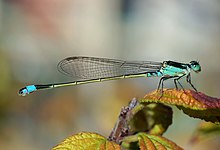
Devil's-needles hovering with rustling wing

June 23

Sultry  dogdayish weather, with moist mists or low clouds hanging about, the first of this kind we have had . . . a fresh, cool moisture and a suffocating heat are strangely mingled


Devil's-needles of various kinds abundant, now perhaps as much as ever. Some smaller ones a brilliant green with black wings. 

At Apple-Hollow Pond, the heart-leaf grows in small solid circles from a centre, now white with its small delicate flowers somewhat like minute water-lilies. Here are thousands of devil's-needles of all sizes hovering over the surface of this shallow pond in the woods, in pursuit of one another and their prey, and from time to tune alighting on the bushes around the shore, - I hear the rustling of their wings, - while swallows are darting about in a similar manner twenty feet higher.

There is another small, shallow Heart-leaf Pond, west of White, which countless devil's-needles are hovering over with rustling wing, and swallows and pewees no doubt are on hand. 


That very handsome cove in White Pond at the south end, surrounded by woods. Looking down on it through the woods in middle of this sultry dogdayish afternoon, the water is a misty bluish-green. 

I every year, as to-day, observe the sweet, refreshing fragrance of the swamp-pink, when threading the woods and swamps in hot weather. It is positively cool. Now in its prime. 

H. D. Thoreau, Journal, June 23, 1853

Devil's-needles of various kinds abundant, . . .thousands of devil's-needles of all sizes hovering over the surface of this shallow pond in the woods,. . . - I hear the rustling of their wings. . . See June 19, 1860 ("The devil's-needles now abound in wood-paths and about the Ripple Lakes. Even if your eyes were shut you would know they were there, hearing the rustling of their wings as they flit by in pursuit of one another.") See also A Book of the Seasons,  by Henry Thoreau,, the Devil's-needle.

In middle of this sultry dogdayish afternoon, the water is a misty bluish-green. See January 24, 1852 ("Walden and White Ponds are a vitreous greenish blue, like patches of the winter sky seen in the west before sundown.")

June 23. See A Book of the Seasons, by Henry Thoreau, June 23


A Book of the Seasons
, by Henry Thoreau, 
Devil's-needles hovering with rustling wing


A Book of the Seasons, by Henry Thoreau
"A book, each page written in its own season,
out-of-doors, in its own locality."

~edited, assembled and rewritten by zphx © 2009-2024


Popular Posts Last 30 Days.

The week ahead in Henry’s journal

The week ahead in Henry’s journal
A journal, a book that shall contain a record of all your joy.
"A stone fruit. Each one yields me a thought." ~ H. D. Thoreau, March 28, 1859


I sit on this rock
wrestling with the melody
that possesses me.