Showing posts with label scirpus. Show all posts

Monday, July 20, 2020

Great numbers of pollywogs have apparently just changed into frogs.


July 20.

2 P. M. – To Walden.

Warm weather, — 86 at 2 P. M. (not so warm for a good while).

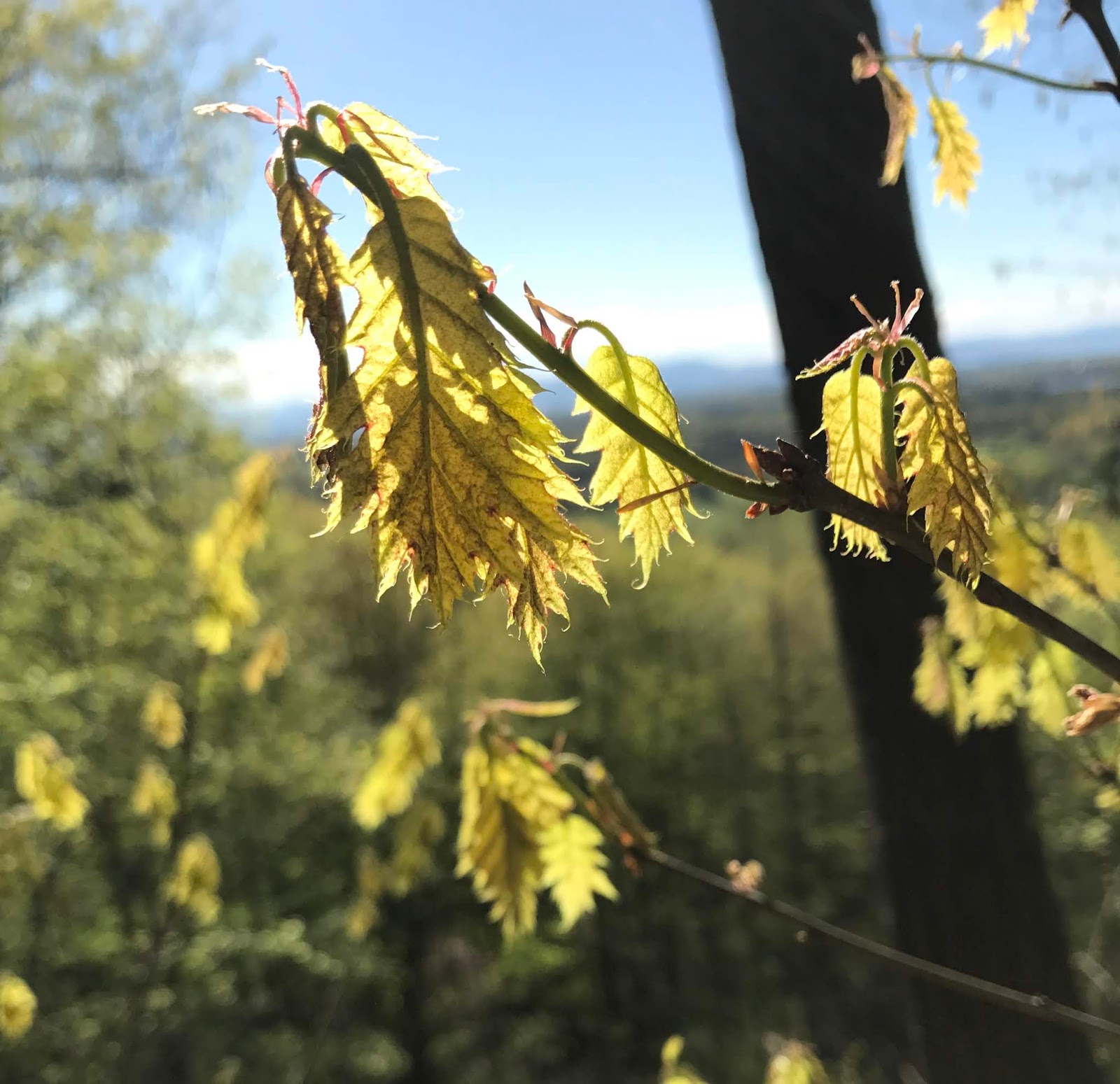
Emerson’s lot that was burnt, between the railroad and the pond, has been cut off within the last three months, and I notice that the oak sprouts have commonly met with a check after growing one or two feet, and small reddish leafets have again put forth at the extremity within a week or so, as in the spring.

Some of the oak sprouts are five to six feet high already. On his hill near by, where the wood was cut about two years ago, this second growth of the oaks, especially white oaks, is much more obvious, and commenced longer ago.

The shoots of this year are generally about two feet long, but the first foot consists of large dark green leaves which expanded early, before the shoot met with a check.

This is surmounted by another foot of smaller yellowish-green leaves. This is very generally the case, and produces a marked contrast. Dark green bushes surmounted by a light or yellowish-green growth.

Sometimes, in the first-mentioned sprout-land, you see where the first shoot withered, as if frost-bitten at the end, and often only some large buds have formed there as yet.

Many of these sprouts, the rankest of them, are fated to fall, being but slightly joined to the stump, riddled by ants there; and others are already prostrated.

Bathing on the side of the deep cove, I noticed just below the high-water line (of rubbish) quite a number of little pines which have just sprung up amid the stones and sand and wreck, some with the seed atop.

This, then, is the state of their coming up naturally. They have evidently been either washed up, or have blown across the ice or snow to this shore. If pitch pine, they were probably blown across the pond, for I have often seen them on their way across.

Both Scirpus subterminalis and debilis are now in bloom at the Pout’s Nest, the former the longest time, the water being very low and separated from the pond. The former out for some time, the latter not long.

Great numbers of pollywogs have apparently just changed into frogs.

At the pondlet on Hubbard’s land, now separated from the main pond by a stony bar, hundreds of small frogs are out on the shore, enjoying their new state of existence, masses of them, which, with constant plashing, go hopping into the water a rod or more before me, where they are very swift to conceal themselves in the mud at the bottom. Their bodies may be one and a half inches long or more.

I have rarely seen so many frogs together. Yet I hardly see one pollywog left in this pool.

Yet at the shore against Pout’s Nest I see many pollywogs, and some, with hind legs well grown beside tails tails, lie up close to the shore on the sand with their heads out like frogs, apparently already breathing air before losing their tails. They squat and cower there as I come by, just like frogs.

H. D. Thoreau, Journal, July 20, 1860


Both Scirpus subterminalis [water bulrush]and debilis [weakstalk bulrush]are now in bloom at the Pout’s Nest.
 See July 19, 1859 ("Scirpus subterminalis, river off Hoar's and Cheney's, not long."); August 31,,1858 ("At the Pout’s Nest, Walden, I find the Scirpus debilis, apparently in prime, generally aslant");  September 15, 1858 ("I find, just rising above the target-weed at Pout’s Nest, Scirpus subterminalis, apparently recently out of bloom. The culms two to three feet along, appearing to rise half an inch above the spikes. The long, linear immersed leaves coming off and left below. ")

 "Pout’s Nest": HDT's name for Wyman's Meadow near Walden. See June 7, 1858 and note to July 26, 1860 (I see a bream swimming about in that smaller pool by Walden in Hubbard's Wood. . . So they may be well off in the Wyman meadow or Pout's Nest.") The pout referred to is the Brown Bullhead (Ameiurus nebulosus), also known as Horned Pout, Mud Pout or Mud Cat. See Place Names of Henry David Thoreau in Concord,

Wednesday, May 20, 2020

Abundant fine and light seed, buoyed up and wafted far through the atmosphere.


May 20

A strong, cold west wind. 60° at 2 P. M. 

To Walden. 

The Carex vulgaris is more glaucous than the stricta.

Mouse-ear down at last. 

Scirpus planifolius — how long? — apparently in prime in woods about the bottom of the long south bay of Walden, say two rods southwest. 

Judging from Hind's Report of his survey of the region between the Assiniboine and Saskatchewan Rivers, the prevailing trees — and they are small — are aspens and willows, which, if let alone, i. e., if the prairies were not burned by the Indians, might at last make a soil for nobler forests. 

No wonder that these small trees are so widely dispersed; their abundant fine and light seed, being buoyed up and wafted far through the atmosphere, speedily clothe the burnt tracts of British America. Heavy-seeded trees are slow to spread themselves, but both air and water combine to transport the seeds of these trees.

H. D. Thoreau, Journal, May 20, 1860

The Carex vulgaris is more glaucous than the stricta. See May 10, 1860 ("A sedge darker than the stricta and not in tufts, quite short. Is it the C. vulgaris? Its leading spikes are effete. ")

Scirpus planifolius  apparently in prime. See May 11, 1859 ("Scirpus planifolius in bloom on Smith's wooded hill, side of Saw Mill Brook.")

Mouse-ear down at last. See May 26, 1855 ("Already the mouse-ear down begins to blow in the fields and whiten the grass.")

No wonder that these small trees are so widely dispersed, See  December 30, 1855 ("For a few days I have noticed the snow sprinkled with alder and birch scales. . . .The high wind is scattering them over the snow there."); February 14, 1856 ("I was struck to-day by the size and continuousness of the natural willow hedge on the east side of the rail road causeway, at the foot of the embankment, next to the fence. Some twelve years ago, when that causeway was built through the meadows, there were no willows there or near there, but now, just at the foot of the sand-bank, where it meets the meadow, and on the line of the fence, quite a dense willow hedge has planted itself. [T]he seeds have been blown hither from a distance, and lodged against the foot of the bank, just as the snow-drift accumulates there. "); March 2, 1856 ("How unwearied Nature is, spreading her seeds.");  May 26, 1857 ("Some of the earliest willows about warm edges of woods are gone to seed and downy"); July 9, 1857 ("I think I see how this [willow]tree is propagated by its seeds. Its countless minute brown seeds, just perceptible to the naked eye in the midst of their cotton, are wafted with the cotton to the water, — most abundantly about a fortnight ago, — and there they drift . . ."); October 16, 1860 (Looking from a hilltop, I observe that pines, white birches, red maples, alders, etc., often grow in more or less regular rounded or oval or conical patches, while oaks, chestnuts, hickories, etc., simply form woods of greater or less extent, whether by themselves or mixed, and do not naturally spring up in an oval form. This is a consequence of the different manner in which trees which have winged seeds and those which have not are planted")

Wednesday, June 19, 2019

A flying squirrel's nest and young.


June 19. 


Sunday. P. M. — To Heywood Meadow and Well Meadow. 

June 19, 2020

In Stow's meadow by railroad, Scirpus Eriophorum, with blackish bracts, not long out. 

A flying squirrel's nest and young on Emerson's hatchet path, south of Walden, on hilltop, in a covered hollow in a small old stump at base of a young oak, covered with fallen leaves and a portion of the stump; nest apparently of dry grass. Saw three young run out after the mother and up a slender oak. The young half-grown, very tender-looking and weak-tailed, yet one climbed quite to the top of an oak twenty-five feet high, though feebly. Claws must be very sharp and early developed. The mother rested quite near, on a small projecting stub big as a pipe-stem, curled cross wise on it. Have a more rounded head and snout than our other squirrels. The young in danger of being picked off by hawks. 

Find by Baker Rock the (apparently) Carex Muhlenbergii gone to seed, dark-green, as Torrey says. Resembles the stipata

Blackbirds nest in the small pond there, and generally in similar weedy and bushy pond-holes in woods. 

The prevailing sedge of Heywood Meadow by Bartlett Hill-side, that which showed yellow tops in the spring, is the Carex stricta. On this the musquash there commonly makes its stools. A tall slender sedge with conspicuous brown staminate spikes. Also some C. lanuginosa with it. C. canescens, too, grows there, less conspicuous, like the others gone to seed. 

Scare up young partridges; size of chickens just hatched, yet they fly. The old one in the woods near makes a chuckling sound just like a red squirrel's bark, also mewing. 

Flies rain about my head. 

Notice green berries, — blueberries and huckleberries. 

Is that red-top, nearly out on railroad bank? 

Eriophorum polystachyon of Torrey, Bigelow, and Gray, the apparently broadish-leaved, but Gray makes the wool too long. In Pleasant and Well Meadow; at height. 

Carex polytrichoides in fruit and a little in flower, Heywood Meadow in woods and Spanish Meadow Swamp. 

Trisetum palustre (?), Well Meadow Head, in wet; apparently at height.

H. D. Thoreau, Journal, June 19, 1859


The young half-grown climbed quite to the top of an oak twenty-five feet high, though feebly. See June 23, 1855 ("Hear of flying squirrels now grown."); March 23, 1855 ("It sprang off from the maple at the height of twenty-eight and a half feet, and struck the ground at the foot of a tree fifty and a half feet distant, measured horizontally.")

The prevailing sedge of Heywood Meadow by Bartlett Hill-side, that which showed yellow tops in the spring, is the Carex stricta.  See April 22, 1859 ("Within a few days I pricked my fingers smartly against the sharp, stiff points of some sedge coming up. At Heywood's meadow, by the railroad, this sedge, rising green and dense with yellow tips above the withered clumps, is very striking, suggesting heat, even a blaze, there.")

Scare up young partridges; size of chickens just hatched, yet they fly. See June 23, 1854 (" Disturb three different broods of partridges in my walk this afternoon in different places. One in Deep Cut Woods, big as chickens ten days old, went flying in various directions a rod or two into the hillside. Another by Heywood's meadow, the young two and a half inches long only, not long hatched, making a fine peep. Held one in my hand, where it squatted without winking. A third near Well Meadow Field. We are now, then, in the very midst of them. Now leading forth their young broods. ") See also A Book of Seasons, by Henry Thoreau, the Partridge.

Notice green berries, — blueberries and huckleberries. See June 6, 1852 ("The earliest blueberries are now forming as greenberries.”)

Is that red-top, nearly out on railroad bank? See July 13, 1860 ("First we had the June grass reddish-brown, and the sorrel red, of June; now the red-top red of July.")

Saturday, May 11, 2019

Youn fresh-expanding, oak leaves form a leafy mist throughout the forest.

May 11. 

Wednesday. 

Golden robin yesterday.

Fir-balsam well out in the rain; so say 9th. 

P. M. — To Flint's Pond. 

Arum triphyllum out. Almost every one has a little fly or two concealed within. One of the handsomest- formed plants when in flower. 

Sorrel out in rain, apparently a day or two, — say 9th. 

A blue heron flies away from the shore of the pond. 

Scirpus planifolius in bloom on Smith's wooded hill, side of Saw Mill Brook. 

A partridge-nest, with eleven fresh eggs, at foot of a chestnut, one upon another. It is quite a deep cavity amid the leaves, with some feathers of the bird in it.

Young, or fresh-expanding, oak leaves are very handsome now, showing their colors. It is a leafy mist throughout the forest. 


May 12, 2017
Uvularia perfoliata out in rain; say, then, the 9th. Just after plucking it I perceived what I call the meadow fragrance, though in the woods; but I afterward found that this flower was peculiarly fragrant, and its fragrance like that, so it was probably this which I had perceived. S. was reminded of the lily-of-the-valley by it. 

The witch-hazel has one of the broadest leaves now.

In the path in Stow's wood-lot, I find apparently Thaspium aureum (Zizia aurea), which will open the first fair day. Shows quite yellow now. 

Found in the path in the woods by the Mill Brook ditch, Flint's Pond, dead, the Coluber punctatus13 1/4 inches long, but no row of spots in middle of abdomen. The head above blackish with a blackish ring behind the yellow. Tail 3 inches long; breadth of body 5/16 ; plates 162; scales 55. Above, uniform glossy slate-color, with a yellowish-white band across the occiput; the head above blackish, and a blackish band close behind the yellowish one. Beneath, yellow or buff (whitish under head), with a row of small slanting black spots, one on each side of each abdominal plate except the first 3/4 inch behind the head. In the midst of the path in the woods. I admired the iridescence from its glossy belly. It differs from Storer's C. punctatus, for it is not brown above, nor "reddish yellow" beneath, and has no row of spots in middle of the abdomen. 

In that first thunder-shower, the evening of the 9th, the grass evidently erected itself and grew darker, as  it were instantaneously. Was it the effect of electricity in the air? It looked very differently from what it had ten minutes before.

H. D. Thoreau, Journal, May 11, 1859

Golden robin yesterday. See. May 10, 1853 (“Hear higher the clear whistle of the oriole. New days, then, have come, ushered in by the warbling vireo, yellowbird, Maryland yellow-throat, and small pewee, and now made perfect by the twittering of the kingbird and the whistle of the oriole amid the elms, which are but just beginning to leaf out, thinking of his nest there, -. . .The warbling vireo promised warmer days, but the oriole ushers in summer heats.”); May 10, 1858 ("The oriole is seen darting like a bright flash with clear whistle from one tree-top to another over the street.”)

Arum triphyllum out. See May 1, 1857 ("Plucked the Arum triphyllum, three inches high, with its acrid corm.”);  May 19, 1851 ("Find the Arum triphyllum . .   in Conant's Swamp.")

Young, or fresh-expanding, oak leaves are very handsome now, showing their colors. It is a leafy mist throughout the forest.  See May 15, 1854 ("The aspect of oak and other woods at a distance is somewhat like that of a very thick and reddish or yellowish mist about the evergreens. . . . Oak leaves are as big as a mouse's ear.”); May 15, 1860 ("Looking from the Cliffs through the haze, the deciduous trees are a mist of leaflets.”);  May 18, 1851 ("The oak leaves of all colors are just expanding, and are more beautiful than most flowers"); May 23, 1860 ("The quarter-grown red oak leaves between you and the sun, how yellow-green! "); May 26, 1857 ("Very interesting now are the red tents of expanding- oak leaves, as you go through sprout-lands, — the crimson velvet of the black oak and the more pinkish white oak. The salmon and pinkish-red canopies or umbrellas of the white oak")

Uvularia perfoliata out in rain; say, then, the 9th. See September 22, 1852 ("Sophia has in her herbarium and has found in Concord these which I have not seen this summer ...Uvularia perfoliata);  May 30, 1857 ("By the path near the northeast shore of Flint's Pond, just before reaching the wall by the brook, I . . .am surprised to find ... the Uvularia perfoliata, which I have not found hereabouts before.  . . . It is considerably past its prime”); May 3, 1858 ("Ride to Flint's Pond to look for Uvularia perfoliata. ... It apparently will not bloom within ten days”); May 16, 1858 (“The Uvularia perfoliata, which did not show itself at all on the 3d, is now conspicuous, and one is open but will not shed pollen before to-morrow. It has shot up about ten inches in one case and bloomed within thirteen days!!”)

Just after plucking it I perceived what I call the meadow fragrance,  but I afterward found that this flower was peculiarly fragrant. See May 6, 1855 ("that unaccountable fugacious fragrance, as of all flowers,”); May 27, 1855 ("The meadow fragrance to-day.”); May 15, 1856 ("Perceive some of that delicious meadow fragrance coming over the railroad causeway”); May 27, 1855 ("The meadow fragrance to-day”); May 27, 1856 ("perceived the meadow fragrance”); May 27, 1857 ("I perceived that rare meadow fragrance on the 25th.”); June 3, 1860 ("I perceive the meadow fragrance.”)

The Coluber punctatus [ringneck snake],  uniform glossy slate-color above, with a yellowish-white band across the occiput; the head above blackish, and a blackish band close behind the yellowish one. Beneath, yellow or buff (whitish under head), with a row of small slanting black spots. Nnot brown above, nor "reddish yellow" beneath,. Compare and see note to May 1, 1859 (“a little snake . . . uniformly brown (or reddish-brown) above except a yellowish ring on the occiput, the head also lighter than the body; beneath vermilion, with apparently a row of light dots along each side.”)

Saturday, October 27, 2018

We have a cool, white sunset, Novemberish, and no redness to warm our thoughts.

October 27. 

P. M. — Sail to Fair Haven Pond. 

A moderate northerly wind and pleasant, clear day. 

There is a slight rustle from the withered pontederia.

The Scirpus lacustris, which was all conspicuously green on the 16th, has changed to a dull or brownish yellow. 

The bayonet rush also has partly changed, and now, the river being perhaps lower than before this season, shows its rainbow colors, though dull. It depends, then, on the river being low at an earlier period, say a month ago at least, when this juncus is in its full vigor, — though then, of course, you would not get the yellow!——that the colors may be bright. 

I distinguish four colors now, perfectly horizontal and parallel bars, as it were, six or eight inches wide as you look at the side of a dense patch along the shallow shore. The lowest is a dull red, the next clear green, then dull yellowish, and then dark brown. These colors, though never brilliant, are yet noticeable, and, when you look at a long and dense patch, have a rainbow-like effect. 

The red (or pinkish) is that part which has been recently submerged; the green, that which has not withered; the yellowish, what has changed; and the brown, the withered extremity, since it dies downward gradually from the tip to the bottom. The amount of it is that it decays gradually, beginning at the top, and throughout a large patch one keeps pace with another, and different parts of the plant being in different stages or states at the same time and, moreover, the whole being of a uniform height, a particular color in one plant corresponds exactly to the same in another, and so, though a single stalk would not attract attention, when seen in the mass they have this singular effect. 

I call it, therefore, the rainbow rush. When, moreover, you see it reflected in the water, the effect is very much increased. 

The leaves of the Salix cordata are now generally withered and many more fallen. They are light-brown, and many remain on the twigs, so many that this willow and the tristis I think must be peculiar in this respect as well as its  turning scarlet. Some others, as the sericea, are still yellow and greenish and have not been touched by frost. They must be tougher. 

At the east shore of Fair Haven Pond I see that clams have been moving close to the water’s edge. They have just moved a few feet toward the deeper water, but they came round a little, like a single wheel on its edge. 

Alders are fallen without any noticeable change of color. 

The leaves of young oaks are now generally withered, but many leaves of large oaks are greenish or alive yet. Many of them fall before withering. I see some now three quarters bare, with many living leaves left. Is it not because on larger trees they are raised above the effect of frost? 

We have a cool, white sunset, Novemberish, and no redness to warm our thoughts. 

Not only the leaves of trees and shrubs and flowers have been changing and withering, but almost countless sedges and grasses. They become pale-brown and bleached after the frost has killed them, and give that peculiar light, almost silvery, sheen to the fields in November. 

The colors of the fields make haste to harmonize with the snowy mantle which is soon to invest them and with the cool, white twilights of that season which is itself the twilight of the year. 

They become more and more the color of the frost which rests on them. 

Think of the interminable forest of grasses which dies down to the ground every autumn! What a more than Xerxean army of wool-grasses and sedges without fame lie down to an ignominious death, as the mowers esteem it, in our river meadows each year, and become “old fog” to trouble the mowers, lodging as they fall, that might have been the straw beds of horses and cattle, tucked under them every night! The fine-culmed purple grass, which lately we admired so much, is now bleached as light as any of them.

Culms and leaves robbed of their color and withered by cold. This is what makes November—and the light reflected from the bleached culms of grasses and the bare twigs of trees! When many hard frosts have formed and melted on the fields and stiffened grass, they leave them almost as silvery as themselves. There is hardly a surface to absorb the light. 

It is remarkable that the autumnal change of our woods has left no deeper impression on our literature yet. There is no record of it in English poetry, apparently because, according to all accounts, the trees acquire but few bright colors there. Neither do I know any adequate notice of it in our own youthful literature, nor in the traditions of the Indians. One would say it was the very phenomenon to have caught a savage eye, so devoted to bright colors. In our poetry and science there are many references to this phenomenon, but it has received no such particular attention as it deserves. High-colored as are most political speeches, I do not detect any reflection, even, from the autumnal tints in them. They are as colorless and lifeless as the herbage in November. The year, with these dazzling colors on its margin, lies spread open like an illustrated volume. The preacher does not utter the essence of its teaching. 

A great many, indeed, have never seen this, the flower, or rather ripe fruit, of the year, — many who have spent their lives in towns and never chanced to come into the country at this season. I remember riding with one such citizen, who, though a fortnight too late for the most brilliant tints, was taken by surprise, and would not believe that the tints had been any brighter. He had never heard of this phenomenon before. 

October has not colored our poetry yet. 

Not only many have never witnessed this phenomenon, but it is scarcely remembered by the majority from year to year.

It is impossible to describe the infinite variety of hues, tints, and shades, for the language affords no names for them, and we must apply the same term monotonously to twenty different things. If I could exhibit so many different trees, or only leaves, the effect would be different. When the tints are the same they differ so much in purity and delicacy that language, to describe them truly, would have not only to be greatly enriched, but as it were dyed to the same colors herself, and speak to the eye as well as to the ear. And it is these subtle diflerences which especially attract and charm our eyes. Where else will you study color under such advantages? What other school of design can vie with this?

To describe these colored leaves you must use colored words. How tame and ineffectual must be the words with which we attempt to describe that subtle difference of tint, which so charms the eye? Who will undertake to describe in words the difference in tint between two neighboring leaves on the same tree? or of two thousand? — for by so many the eye is addressed in a glance. 

In describing the richly spotted leaves, for instance, how often we find ourselves using ineffectually words which merely indicate faintly our good intentions, giving them in our despair a terminal twist toward our mark, — such as reddish, yellowish, purplish, etc. We cannot make a hue of words, for they are not to be compounded like colors, and hence we are obliged to use such ineffectual expressions as reddish brown, etc. They need to be ground together.

H. D. Thoreau, Journal, October 27, 1858

The leaves of the Salix cordata are now generally withered and many more fallen. They are light-brown, and many remain on the twigs, so many that this willow and the tristis I think must be peculiar in this respect as well as its turning scarlet. See October 16, 1858 ("It is remarkable among our willows for turning scarlet, and I can distinguish this species now by this,. . .. It is as distinctly scarlet as the gooseberry, though it may be lighter.")

We have a cool, white sunset, Novemberish, and no redness to warm our thoughts. See October 25, 1858 ("Call these November Lights. Hers is a cool, silvery light.”); November 18, 1857 (“The sunlight is a peculiarly thin and clear yellow, falling on the pale-brown bleaching herbage of the fields at this season. There is no redness in it. This is November sunlight.”)

The cool, white twilights of that season which is itself the twilight of the year. See August 31, 1852 ("The evening of the year is colored like the sunset.”); October 24, 1858 (“the sky before the end of the day, and the year near its setting. October is the red sunset sky, November the later twilight. ); ;November 2, 1853("We come home in the autumn twilight. . . — clear white light, which penetrates the woods”); November 14, 1853 ("the clear, white, leafless twilight of November”)

Saturday, September 22, 2018

From Salem to Cape Ann on foot.


A clear cold day, wind northwest. 


Cape Ann
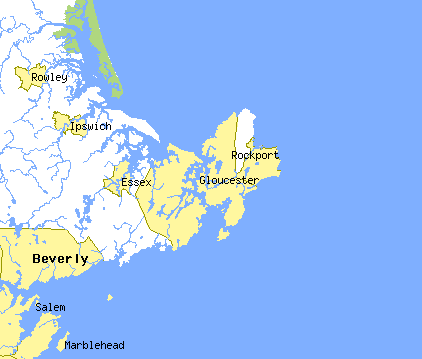
Leave Salem for the Cape on foot. Near Beverly Bridge, crossed over that low and flat part of Salem where the first settlement was made and Arabella Stewart is supposed to have been buried. 

Soon struck off to the shore in Beverly. See the discolor thistle on a sandy beach, and Phaseolus diversifolius (three-lobed bean vine), with pretty terete long pods, some ripe, but a few flowers still. Aster linifolius, perhaps still in prime, — though it has a flexuous stem, — in a marsh, and lyme-grass, apparently like ours, along edge of marsh. 

Dined on the edge of a high rocky clifl', quite perpendicular, on the west side of entrance of Manchester Harbor. 

One mile southeast of the village of Manchester, struck the beach of “musical sand,” just this side of a large, high, rocky point called Eagle Head. This is a curving sandy beach, maybe a third of a mile long by some twelVe rods wide. (We also found it on a similar but shorter beach on the east side of Eagle Head.) 

We first perceived the sound when we scratched with our umbrella or finger swiftly and forcibly through the sand; also still louder when we struck forcibly with our heels “scuffing” along. The wet or damp sand yielded no peculiar sound, nor did that which lay loose and deep next the bank, but only the more compact and dry. 

The sound was not at all musical, nor was it loud. Fishermen might walk over it all their lives, as indeed they have done, without noticing it. R., who had not heard it, was about right when he said it was like that made by rubbing on wet glass with your fingers. I thought it as much like the sound made in waxing a table as anything. It was a squeaking sound, as of one particle rubbing on another. I should say it was merely the result of the friction of peculiarly formed and constituted particles. 

The surf was high and made a great noise, yet I could hear the sound made by my companion’s heels two or three rods distant, and if it had been still, probably could have heard it five or six rods. 

We kept thence along the rocky shore to Kettle Cove, where, however, I did not find any rocks like Lewis’s.

Somewhere thereabouts Scirpus maritimus, with its great spikes now withered. In the marsh at Kettle Cove, Gerardia maritima, apparently in prime, four or five inches high; Euphorbia polygonifolia, six inches in diameter. Spartina glabra in the salt water of the cove.

The shore, thus far, from Beverly Bridge had been a succession of bold rocky points half a mile apart, with sometimes curving sandy beaches between, or else rocks. 

We now kept the road to Gloucester, leaving the shore a mile or more to the right, wishing to see the magnolia swamp. This was perhaps about a mile and a half beyond Kettle Cove. After passing over a sort of height of land in the woods, we took a path to the left, which within a few rods became a corduroy road in the swamp. Within three or four rods on the west side of this, and perhaps ten or fifteen from the highroad, was the magnolia. 

It was two to seven or eight feet high, but distinguished by its large and still fresh green leaves, which had not begun to fall. I saw last year's shoots which had died down several feet, and probably this will be the fate of most which has grown this year. 

The swamp was an ordinary one, not so wet but we got about very well. The bushes of this swamp were not generally more than six feet high. There was another locality the other side of the road. 

Cooked our supper in a salt marsh some two miles this side of Gloucester, in view of the town. We had cooked our tea for dinner with dead bayberry bushes; now we used the chips and bark which the tide had deposited in little parcels on the marsh, having carried water in our dippers from a brook, a quarter of a mile. 

There was a large patch of samphire turned a bright crimson, very conspicuous, near by on the flat marsh, the more conspicuous because large and in the midst of the liquid green of the marsh. 

We sat on some stones which we obtained flat in the marsh till starlight. 

I had seen in this day’s walk an abundance of Aster cordifolius (but no A. undulatus); also saw A. corymbosus, which is a handsome white wood aster; and, very common, what I called A. longifolius, with shorter thick, clasping leaves and growing in drier ground than ours, methinks; also, all along the road, the up-country hard, small, mulberry-shaped high blackberry, and many still holding on. This may be due to the cool air of the Cape. They were quite sweet and good. Vide a specimen. 

The foliage had but just fairly begun to change. Put up in Gloucester.

H. D. Thoreau, Journal, September 22, 1858

September 22, 2018

Saturday, September 15, 2018

Southeast wind with clouds hummingbird in the garden I suspect a storm.


September 15.

September 15, 2018

I have not seen not heard a bobolink for some days at least, numerous as they were three weeks ago, and even fifteen days. They depart early. 

I hear a nuthatch occasionally, but it reminds me of winter. 

P. M. — To Walden. I paddle about the pond, for a rarity. 

The eriocaulon, still in bloom there, standing thinly about the edge, where it is stillest and shallowest, in the color of its stern and radical leaves is quite in harmony with the glaucous water. Its radical leaves and fine root-fibres form a peculiar loose but thick and continuous carpet or rug on the sandy bottom, which you can lift up in great flakes, exposing the fine white beaded root-fibres. This evidently affords retreats for the fishes, musquash, etc., etc., and you can see where it has been lifted up into galleries by them. 

I see one or two pickerel poised over it. They, too, are singularly greenish and transparent, so as not to be easily detected, only a little more yellowish than the water and the eriocaulon; ethereal fishes, not far from the general color of heart-leaf and target-weed, unlike the same fish out of water.  

I notice, as I push round the pond close to the shore, with a stick, that the weeds are eriocaulon, two or three kinds of potamogeton, — one with a leaf an inch or two long, one with a very small, floating leaf, a third all immersed, four or five inches high and yellowish-green (this (vide press) is apparently an immersed form of P. hybridus),— target-weed, heart-leaf, and a little callitriche. There is but little of any of them, however, in the pond itself. 

It is truly an ascetic pond, and lives very sparingly on vegetables at any rate. 

I gather quite a lot of perfectly fresh high blueberries overhanging the south side, and there are many green ones among them still. They are all shrivelled now in swamps commonly. 

The target-weed still blooms a little in the Pout’s Nest, though half the leaves have turned a reddish orange, are sadly eaten, and have lost nearly all their gelatinous coating. But perfect fresh green leaves have expanded and are still expanding in their midst. The whole pool is covered, as it were, with one vast shield of reddish and green scales. As these leaves change and decay, the firmer parts along the veins retain their life and color longest, as with the heart-leaf. The leaves are eaten in winding lines about a tenth of an inch wide, scoring them all over in a curious manner, and also in spots. These look dark or black because they rest on the dark water. 

Looking closely, I am surprised to find how many frogs, mostly small, are resting amid these target leaves,  with their green noses out. Their backs and noses are exactly the color of this weed. They retreat, when disturbed, under this close shield. It is a frog’s paradise. 

I see, in the paths, pitch pine twigs gnawed off, where no cones are left on the ground. Are they gnawed off in order to come at the cones better? 

I find, just rising above the target-weed at Pout’s Nest, Scirpus subterminalis, apparently recently out of bloom. The culms two to three feet along, appearing to rise half an inch above the spikes. The long, linear immersed leaves coming off and left below. 

At entrance of the path (on Brister’s Path) near Staples and Jarvis found, apparently the true Danthonia spicata, still green. It is generally long out of bloom and turned straw-color. I will call the other (which I had so named), of Hosmer’s meadow, for the present, meadow oat grass, as, indeed, I did at first. 

A hummingbird in the garden. There is a southeast wind, with clouds, and I suspect a storm brewing. It is very rare that the wind blows from this quarter.

H. D. Thoreau, Journal, September 15, 1858

I hear a nuthatch occasionally, but it reminds me of winter.  See October 20, 1856 (“Think I hear the very faint gnah of a nuthatch. Thus, of late, when the season is declining, many birds have departed, and our thoughts are turned towards winter . . . the nuthatch is heard again”); November 26, 1860 ("I hear the faint note of a nuthatch . . .a phenomenon of the late fall or early winter; for we do not hear them in summer that I remember. ...”); December 1, 1857 ("I thus always begin to hear this bird on the approach of winter, as if it did not breed here, but wintered here.”). See also A Book of the Seasons, by Henry Thoreau, The Nuthatch

I see one or two pickerel, singularly greenish and transparent ethereal fishes. See July 12, 1854 ("Observe a pickerel in the Assabet, about a foot long, headed up stream, quasi-transparent (such its color), with darker and lighter parts contrasted, very still while I float quite near ..”)   See also A Book of the Seasons, by Henry Thoreau, Pickerel

I gather quite a lot of perfectly fresh high blueberries overhanging the south side. See September 5, 1858  ("I find many high blueberries, quite fresh, overhanging the south shore of Walden.”)

A hummingbird in the garden. See September 5, 1854 ("A hummingbird about a cardinal-flower over the water’s edge.")

There is a southeast wind, with clouds, and I suspect a storm brewing. It is very rare that the wind blows from this quarter. See September, 16, 1858 ("A southeast storm. . . . The trees are unprepared to resist a wind from this quarter. "); see also March 24, 1860 ("During the year the wind [at Cambridge] was southwest 130 days, northwest 87, northeast 59, south 33, west 29, east 14, southeast 10, north 3 days.")

I hear a nuthatch 
occasionally but it 
 reminds of winter. 

A Book of the Seasons,  by Henry Thoreau
"A book, each page written in its own season,
out-of-doors, in its own locality.”
~edited, assembled and rewritten by zphx © 2009-2024

Sunday, September 2, 2018

Lyme grass or wild rye

September 2

Up Assabet. 


September 2, 2018
The common light-sheathed Scirpus Eriophorum still.

At the Pokelogan, apparently Cinna arundinacea (?) in prime (one stamen); also Elymus Virginias (?).

Lyme grass or wild rye, apparently lately done. 

That rich, close, erect-panicled grass of the meadows, apparently for a month in bloom, seems to be Glyceria obtusa. Very common in the meadow west of Brooks Clark’s.

H. D. Thoreau, Journal, September 2, 1858

That rich, close, erect-panicled grass very common in the meadow west of Brooks Clark’s. See September 14, 1858 ("The Glyceria obtusa, about eighteen inches high, quite common, in the meadow west of Brooks Clark’s, has turned a dull purple, probably on account of frosts")


A Book of the Seasons
,  by Henry Thoreau,

A Book of the Seasons
,  by Henry Thoreau
 "A book, each page written in its own season,
out-of-doors, in its own locality."
 ~edited, assembled and rewritten by zphx ©  2009-2025

Popular Posts Last 30 Days.

The week ahead in Henry’s journal

The week ahead in Henry’s journal
A journal, a book that shall contain a record of all your joy.
"A stone fruit. Each one yields me a thought." ~ H. D. Thoreau, March 28, 1859


I sit on this rock
wrestling with the melody
that possesses me.