Showing posts with label Acton. Show all posts

Saturday, January 27, 2024

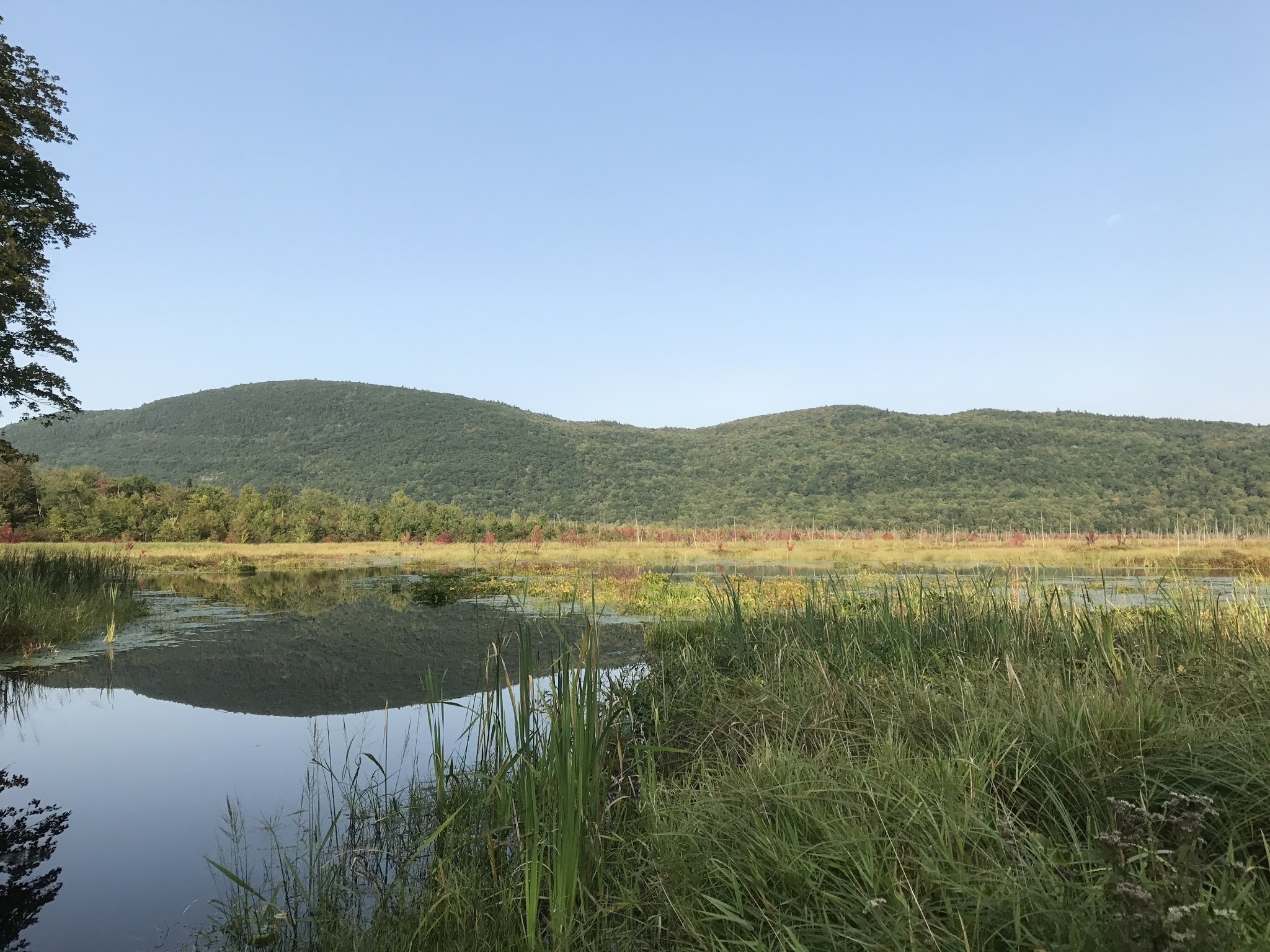
Mill road south of Ministerial Swamp, 3 P. M. the cellar-holes are more numerous than the houses

January 27.

As I stand under the hill beyond J. Hosmer's and look over the plains westward toward Acton and see the farmhouses nearly half a mile apart, few and solitary, in these great fields between these stretching woods, out of the world, where the children have to go far to school;

  •  the still, stagnant, heart-eating, life-everlasting, and gone-to-seed country, so far from the postoffice where the weekly paper comes, wherein the newmarried wife cannot live for loneliness, and the young man has to depend upon his horse for society; 
  • see young J. Hosmer's house, whither he returns with his wife in despair after living in the city, –– I  standing in Tarbell's road, which he alone cannot break out, –– 
  • the world in winter for most walkers reduced to a sled track winding far through the drifts, all springs sealed up and no digressions; 
  • where the old man thinks he may possibly afford to rust it out, not having long to live, but the young man pines to get nearer the post-office and the Lyceum, is restless and resolves to go to California, because the depot is a mile off (he hears the rattle of the cars at a distance and thinks the world is going by and leaving him); 
  • where rabbits and partridges multiply, and muskrats are more numerous than ever, and none of the farmer's sons are willing to be farmers, and the apple trees are decayed, and the cellar-holes are more numerous than the houses, and the rails are covered with lichens, and the old maids wish to sell out and move into the village, and have waited twenty years in vain for this purpose and never finished but one room in the house, never plastered nor painted, inside or out, lands which the Indian was long since dispossessed [of], and now the farms are run out, and what were forests are grain-fields, what were grain-fields, pastures;
  •  dwellings which only those Arnolds of the wilderness, those coureurs de bois, the baker and the butcher visit, to which at least the latter penetrates for the annual calf, –– and as lie returns the cow lows after; –– whither the villager never penetrates, but in huckleberry time, perchance, and if he does not, who does?
  •  where some men's breaths smell of rum, having smuggled in a jugful to alleviate their misery and solitude; 
  • where the owls give a regular serenade; –– 

I say, standing there and seeing these things, I cannot realize that this is that hopeful young America which is famous throughout the world for its activity and enterprise, and this is the most thickly settled and Yankee part of it. What must be the condition of the old world! The sphagnum must by this time have concealed it from the eye. 

In new countries men are scattered broadcast; they do not wait for roads to place their houses on, but roads seek out the houses, and each man is a prince in his principality and depends on himself.  Perchance when the virgin soil is exhausted, a reaction takes place, and men concentrate in villages again, become social and commercial, and leave the steady and moderate few to work the country's mines.

H. D. Thoreau, Journal, January 27, 1852

The cellar-holes are more numerous than the houses.
See November 30, 1851 ("My eye rested with pleasure on the white pines."); May 18, 1857 ("There is a very grand and picturesque old yellow birch in the old cellar northwest the yellow birch swamp. . . . In woods close behind Easterbrook's place. . . a wild apple tree in the old cellar there . . .Call it Malus cellaris, that grows in an old cellar-hole."); November 6, 1857 ("As for the yellow birch cellar-hole, Ephraim Brown told him that old Henry Flint (an ancestor of Clark's wife) dug it, and erected the frame of a house there, but never finished it, selling out, going to live by the river. It was never finished.")


January 27. 
 See 
A Book of the Seasons, by Henry Thoreau,  January 27

\

A Book of the Seasons, by Henry Thoreau, The cellar-holes are more numerous than the houses

A Book of the Seasons
,  by Henry Thoreau 
"A book, each page written in its own season,
out-of-doors, in its own locality.”
~edited, assembled and rewritten by zphx © 2009-2025

Tuesday, September 6, 2022

From Strawberry Hill the first glimpse of Nagog Pond.


September 6

September 6, 2022


2 P. M. — To Hapgood's in Acton direct, returning via Strawberry Hill and Smith's Road.

The ripening grapes begin to fill the air with their fragrance.

The vervain will hardly do for a clock, for I perceive that some later and smaller specimens have not much more than begun to blossom, while most have done.

Saw a tall pear tree by the roadside beyond Harris's in front of Hapgood's.

Saw the lambkill (Kalmia angustifolia) in blossom – a few fresh blossoms at the ends of the fresh twigs-on Strawberry Hill, beautiful bright flowers. Apparently a new spring with it, while seed vessels apparently of this year, hung dry below.

From Strawberry Hill the first, but a very slight, glimpse of Nagog Pond by standing up on the wall. That is enough to relate of a hill, methinks, that its elevation gives you the first sight of some distant lake.

The horizon is remarkably blue with mist this afternoon. Looking from this hill over Acton, successive valleys filled with blue mist appear, and divided by darker lines of wooded hills.

The shadows of the elms are deepened, as if the whole atmosphere were permeated by floods of ether.

Annursnack never looked so well as now seen from this hill.

The ether gives a velvet softness to the whole landscape. The hills float in it. A blue veil is drawn over the earth.

The elecampane (Inula Helenium) with its broad leaves wrinkled underneath and the remains of sunflower-like blossoms, in front of Nathan Brooks's, Acton, and near J. H. Wheeler's.

Prenanthes alba; this Gray calls Nabalus albus, white lettuce or rattlesnake-root. Also I seem (?) to have found Nabalus Fraseri, or lion's foot.

Every morning for a week there has been a fog which all disappeared by seven or eight o'clock.

A large field of sunflowers for hens now in full bloom at Temple's, surrounding the house, and now, at 6 o'clock P. M., facing the east.

The larches in the front yards, both Scotch and American, have turned red. Their fall has come.

H. D. Thoreau, Journal, September 6, 1851

The ripening grapes begin to fill the air with their fragrance. See August 29, 1853 ("Walking down the street in the evening, I detect my neighbor’s ripening grapes by the scent twenty rods off"); August 29, 1859 ("The very earliest ripe grapes begin to be scented in the cool nights "); September 8, 1854 (I bring home a half-bushel of grapes to scent my chamber with"; September 8, 1858 (“Gather half my grapes, which for some time have perfumed the house.”)

The vervain will hardly do for a clock
. Compare August 21, 1851 ("It is very pleasant to measure the progress of the season by this and similar clocks. So you get, not the absolute time, but the true time of the season.") See also A Book of the Seasons, by Henry Thoreau, the Blue Vervain

Saw the lambkill (Kalmia angustifolia) in blossom. See September 10, 1857 ("I see lambkill ready to bloom a second time. Saw it out on the 20th; how long?"); September 19, 1852 ("The Viola lanceolata has blossomed again, and the lambkill. "); September 28, 1852 ("This is the commencement, then, of the second spring. Violets, Potentilla Canadensis, lambkill, wild rose, yellow lily, etc., etc., begin again"); September 29, 1853 ("Lambkill blossoms again.") See also A Book of the Seasons, by Henry Thoreau, Lambkill (Kalmia augustifolia)

Nabalus albus, white lettuce or rattlesnake-root. Also I seem (?) to have found Nabalus Fraseri, or lion's foot. See August 27, 1858 ("The Nabalus albus has been out some ten days, but N. Fraseri at Walden road will not open, apparently, for some days yet."); September 13, 1857 ("Nabalus Fraseri, top of Cliffs, — a new plant, — yet in prime and not long out. The nabalus family generally, apparently now in prime")

From Strawberry Hill the first, but a very slight, glimpse of Nagog Pond . See July 6, 1851 ("The distant hills look unusually near in this atmosphere. Acton meeting-houses seen to stand on the side of some hills, Nagog or Nashoba, beyond, as never before."); August 15, 1854 ("Cross from top of Annursnack to top of Strawberry Hill. The locomotive whistle, far southwest, sounds like a bell. From Strawberry Hill we steer northeast . . . We are completely lost, and see not one familiar object. At length see steeples which we think Westford, but the monument proves it Acton."); January 30, 1860 ("I see, when I look over our landscape from any eminence as far as the horizon, certain rounded hills, amid the plains and ridges and cliffs, which have a marked family likeness, like eggs that belong to one nest though scattered. They suggest a relation geologically. Such are, for instance, Nashoba, Annursnack, Nawshawtuct, and Ponkawtasset, all which have Indian names, as if the Indian, too, had regarded them as peculiarly distinct. There is also Round Hill in Sudbury, and perhaps a hill in Acton")

Looking from this hill over Acton, successive valleys filled with blue mist appear, and divided by darker lines of wooded hills. See November 9, 1851 ("To-day the mountains seen from the pasture above are dark blue, so dark that they look like new mountains and make a new impression, and the intervening town of Acton is seen against them in a new relation, a new neighborhood.")

The shadows of the elms are deepened. See June 2, 1852 ("The elms now hold a good deal of shade and look rich and heavy with foliage. You see darkness in them.")

Monday, April 25, 2022

The year is stretching itself, is waking up.


April 25.


1.30 P. M. — Up railroad, returning through Acton via powder-mills and Second Division.

The frogs peep at midday.

The bees are on the pistillate flowers of the early willows, – the honey-bee, a smaller, fly-like bee with very transparent wings and bright-yellow marks on the abdomen, and also a still smaller bee, more like the honey-bee. They all hum like summer.

The water in the meadow beyond J. Hosmer's is still and transparent, and I hear the more stertorous sound or croak of frogs from it, such as you associate with sunny, warmer, calm, placid spring weather.

The tortoises are out sunning. The painted tortoise on a tussock. A spotted tortoise on the rail road hisses when I touch it with my foot and draws its [head] in.

What is that bird on the willows, size of a vireo, yellow below, with darker lines, chestnut crown, whitish (?) line over eye, two white feathers in tail, yellow - olive back, darker tail?

Yarrow is started.

Saw the first kingfisher, and heard his most unmusical note.

That warmer, placid pool and stertorous sound of frogs must not be forgotten, - beneath the railroad causeway.

The bees hum on the early willows that grow in the sand.

They appear to have nearly stripped the sterile flowers of their pollen, and each has its little yellow parcel.

The year is stretching itself, is waking up.
. . .

What different tints of blue in the same sky! It requires to be parted by white clouds that the delicacy and depth of each part may appear.  Beyond a narrow wisp or feather of mist, how different the sky! Sometimes it is full of light, especially toward the horizon.

The sky is never seen to be of so deep and delicate a blue as when it is seen between downy clouds.


H. D. Thoreau, Journal, April 25, 1852

The year is stretching itself, is waking up. See April 25, 1854 ("I hear the woods filled with the hum of insects, as if my hearing were affected; and thus the summer's quire begins. The silent spaces have begun to be filled with notes of birds and insects and the peep and croak and snore of frogs, even as living green blades are everywhere pushing up amid the sere ones.")

Sunday, April 4, 2021

All the farmers have pretty much the same stories of this kind .


April 4.

All day surveying a wood-lot in Acton for Abel Hosmer. He says that he has seen the small slate colored hawk pursue and catch doves, i.e. the sharp shinned.

Has found some trouble in driving off a large slate-colored hawk from a hen in his yard, at which he pounced again close by him, — undoubtedly a goshawk.

Has also noticed the butcher-bird catching other birds. Calls him the "mock-bird.”

I observe that all the farmers have pretty much the same stories of this kind to tell. They will describe a large, bold slate-colored hawk ( the goshawk ) about here some two years ago, which caught some of their hens, and the like.

The afternoon very pleasant.

H. D. Thoreau, Journal, April 4, 1854

Abel Hosmer says that he has seen the small slate colored hawk pursue and catch doves, i.e. the sharp shinned. See May 14, 1853("What is that small slate-colored hawk with black tips to wings?"); March 28, 1854 (“See a small slate-colored hawk, with wings transversely mottled beneath, — probably the sharp-shinned hawk.”)

A large slate-colored hawk — undoubtedly a goshawk.  See April 29, 1853 ("At Natural History Rooms in Boston . . . . The American goshawk is slate above, gray beneath; the young spotted dark and white beneath, and brown above."); April 24, 1854 ("Saw a very large hawk, slaty above and white beneath, low over river. Was it not a goshawk? ")

The butcher-bird catching other birds. See A Book of the Seasons,  by Henry Thoreau, The  Northern Shrike


All the farmers have pretty much the same stories of this kind. See June 13, 1853 ("I would rather save one of these hawks than have a hundred hens and chickens.")

Wednesday, September 16, 2020

Select men.


Met the selectmen of Sudbury, ____and ____. I trust that towns will remember that they are supposed to be fairly represented by their select men.

From the specimen which Acton sent, I should judge that the inhabitants of that town were made up of a mixture of quiet, respectable, and even gentlemanly farmer people, well to do in the world, with a rather boisterous, coarse, and a little self-willed class; 


that the inhabitants of Sudbury are farmers almost exclusively, exceedingly rough and countrified and more illiterate than usual, very tenacious of their rights and dignities and difficult to deal with; 

that the inhabitants of Lincoln yield sooner than usual to the influence of the rising generation, and are a mixture of rather simple but clever with a well-informed and trustworthy people; 

that the inhabitants of Bedford are mechanics, who aspire to keep up with the age, with some of the polish of society, mingled with substantial and rather intelligent farmers.

____of Sudbury thinks the river would be still lower now if it were not for the water in the reservoir pond in Hopkinton running into it.


H. D. Thoreau, Journal, September 16, 1851


Tuesday, September 15, 2020

Commenced perambulating the town bounds.


September 15.

Monday.

Ice in the pail under the pump, and quite a frost.

September 15, 2017


Commenced perambulating the town bounds.

At 7. 30 A. M. rode in company with — and Mr. — to the bound between Acton and Concord near Paul Dudley's.

Mr. — told a story of his wife walking in the fields somewhere, and, to keep the rain off, throwing her gown over her head and holding it in her mouth, and so being poisoned about her mouth from the skirts of her dress having come in contact with poisonous plants.

At Dudley's, which house is handsomely situated, with five large elms in front, we met the selectmen of Acton,
  and  

Here were five of us.  It appeared that we weighed,  — I think about 160,  155,  about 140, —  130, myself 127.

—  described the wall about or at Forest Hills Cemetery in Roxbury as being made of stones upon which they were careful to preserve the moss, so that it cannot be distinguished from a very old wall.

Found one intermediate bound-stone near the powder mill drying-house on the bank of the river.

The work men there wore shoes without iron tacks.

He said that the kernel-house was the most dangerous, the drying house next, the press-house next. One of the powder mill buildings in Concord? 


The potato vines and the beans which were still green are now blackened and flattened by the frost.

H. D. Thoreau, Journal, September 15, 1851


Ice in the pail under the pump, and quite a frost. See September 15, 1859 ("This morning the first frost in the garden, killing some of our vines."); September 15, 1851("The potato vines and the beans which were still green are now blackened and flattened by the frost."); See also September 14, 1852 ("This morning the first frost"); September 21, 1854 ("The first frost in our yard last night,")

Found one intermediate bound-stone.
See September 12, 1851 ("And the old selectmen tell me that, before the present split stones were set up in 1829, the bounds were marked by a heap of stones, and it was customary for each selectman to add a stone to the heap.")

He said that the kernel-house was the most dangerous. See January 7, 1853 ("The kernel-mill had blown up first, and killed three men who were in it, said to be turning a roller with a chisel. In three seconds after, one of the mixing-houses exploded.")

Monday, November 11, 2019

Notes from late October

November 11. 

I observed, October 23d, wood turtles copulating in the Assabet, and a flock of goldfinches on the top of a hemlock, — as if after its seeds? 

Also, October 24th, riding home from Acton, I saw the withered leaves blown from an oak by the roadside dashing off, gyrating, and surging upward into the air, so exactly like a flock of birds sporting with one another that, for a minute at least, I could not be sure they were not birds; and it suggested how far the motions of birds, like those of these leaves, might be determined by currents of air, i. e., how far the bird learns to conform to such currents. 

The flat variety of Lycopodium dendroideum shed pollen on the 25th of October. That 's a lycopodium path on north side of Colburn Hill.

H. D. Thoreau, Journal, November 11, 1859

I observed, October 23d, wood turtles copulating in the Assabet.  See September 15, 1855 ("An Emys insculpta which I mistook for dead, under water near shore; head and legs and tail hanging down straight. Turned it over, and to my surprise found it coupled with another. It was at first difficult to separate them with a paddle"); October 21, 1857 (" I saw wood tortoises coupled up the Assabet, the back of the upper above water. It held the lower with its claws about the head, and they were not to be parted. ") See also September 16, 1854 ("I see a wood tortoise in the woods. Why is it there now?"); November 9, 1855 ("See a painted tortoise and a wood tortoise in different places out on the bank still!”); November 14, 1855 ("A clear, bright, warm afternoon. A painted tortoise swimming under water and a wood tortoise out on the bank.”) and A Book of the Seasons, by Henry Thoreau, the Wood Turtle (Emys insculpta)

A flock of goldfinches on the top of a hemlock, — as if after its seeds?  See November 15, 1859 (“About the 23d of October I saw a large flock of goldfinches (judging from their motions and notes) on the tops of the hemlocks up the Assabet, apparently feeding on their seeds, then falling. They were collected in great numbers on the very tops of these trees and flitting from one to another. Rice has since described to me the same phenomenon ”); See alao January 5, 1860 ("I see where a flock of goldfinches in the morning had settled on a hemlock's top, by the snow strewn with scales, literally blackened or darkened with them for a rod.")

The withered leaves blown from an oak by the roadside dashing off, gyrating, and surging upward into the air, so exactly like a flock of birds. See October 26, 1860 ("This is the season of the fall when the leaves are whirled through the air like flocks of birds.")

Thursday, September 5, 2019

A millstone for my lead-mill.

September 5. 

Spent a part of the forenoon in the woods in the northwest part of Acton, searching for a stone suitable for a millstone for my lead-mill.

H. D. Thoreau, Journal, September 5, 1859

The Thoreaus gave up making pencils in 1853, and instead sold ground graphite, plumbago, for electrotyping. When John Thoreau  died in 1859, Henry took over the business. See New England Historical Society, How the Thoreau Pencil Wrote, and Paid for, Walden;  See also February 3, 1859 (Five minutes before 3 P. M., Father died")

Searching for a stone 
suitable for a millstone 
for my lead-mill.


Thursday, April 18, 2019

So each man looks at things from his own point of view.

April 18.

8 a. m. — To the south part of Acton, surveying, with Stedman Buttrick. 

When B. came to see me the other evening, and stood before the door in the dark, my mother asked, 
"Who is it?"
 to which he replied, quite seriously,
 "Left-tenant Stedman Buttrick.” 

B. says that he shot some crossbills which were opening pine cones in the neighborhood of the Easterbrook place some years ago, that he saw two dildees here as much as a month ago at least, and that they used to breed on that island east of his house, — I think he called it Burr's Island. 

He sees the two kinds of telltale here. 

Once shot an eider duck here. Has often shot the pintail (he calls it spindle-tail) duck here. Thinks he has killed four (? !) kinds of teal here. 

Once shot a sheldrake which had a good-sized sucker in its throat, the tail sticking out its bill, so that, as he thought, it could not have flown away with it. It was a full-plumaged male. 

Once, in the fall, shot a mackerel gull on what I call Dove Rock. 

Once shot a whole flock of little ducks not more than two thirds the size of a pigeon, yet full-grown, near the junction of the two rivers. Also got two ducks, the female all white and the male with a long and conspicuous bottle-green crest above the white. looked through Audubon, but could find no account of them. 

Sees two kinds of gray ducks, one larger than a black duck. Has seen the summer duck here carrying its young to the water in her bill, as much as thirty rods. Says that teal have bred here. 

His boy found, one February, as much as a peck of chestnuts in different parcels within a short distance of one another, just under the leaves in Hildreth's chestnut wood, placed there, as he says, by the chip-squirrel, which they saw eating them. 

He has seen the cross fox here. 

I am looking for acorns these days, to sow on the Walden lot, but can find very few sound ones. Those which the squirrels have not got are mostly worm-eaten and quite pulverized or decayed. A few which are cracked at the small [end], having started last fall, have yet life in them, perhaps enough to plant. Even these look rather discolored when you cut them open, but Buttrick says they will do for pigeon-bait. 

So each man looks at things from his own point of view. 

I found by trial that the last or apparently sound acorns would always sink in water, while the rotten ones would float, and I have accordingly offered five cents a quart for such as will sink. You can thus separate the good from the bad in a moment. I am not sure, however, but the germs of many of the latter have been injured by the frost. 

Hear a field sparrow. 

Ed. Emerson shows me his aquarium. 

  • He has two minnows from the brook, which I think must be the banded minnow; a little more than an inch long with very conspicuous broad black transverse bars. 
  • Some Rana sylvatica spawn just begun to flat out. 
  • Also several kinds of larvae in the water, — one very like a dragon fly, with three large feather-like appendages to the tail, small gyrinus, which he says nibbled off the legs of the skater (?), etc., etc., but no dragon fly grubs. 
  • Two salamanders, one from Ripple Lake and the other from the pool behind my house that was 
  • One some four inches long, with a carinated and waved (crenated) edged tail as well as light-vermilion spots on the back, evidently the Salamandra dorsalis. (This I suspect is what I called S. symmetrica last fall.) (This is pale-brown above.)
  • The other two thirds as large, a very handsome bright orange salmon, also with vermilion spots, which must be the true S. symmetrica. Both thickly sprinkled with black dots. The latter's tail comparatively thick and straight-edged. 


Haynes (Heavy) says that trout spawn twice in a year, — once in October and again in the spring. 

Saw snow ice a yard across to-day under the north side of a wood.

H. D. Thoreau, Journal, April 18, 1859


Hear a field sparrow.
See April 18, 1855 ("The rush sparrows tinkle now at 3 P. M. far over the bushes, and hylodes are peeping in a distant pool.”); April 18, 1857 ("Hear the huckleberry-bird”). See also A Book of the Seasons, by Henry Thoreau, The Field Sparrow (Fringilla juncorum)

Ed. Emerson shows me his aquarium. See April 29, 1859 (“E. Emerson's Salamandra dorsalis has just lost its skin.”)

Some Rana sylvatica spawn just begun to flat out
. See April 18, 1858 ("The Rana sylvatica tadpoles have mostly wiggled away from the ova")

This I suspect is what I called S. symmetrica last fall. See December 3, 1858 ("The salamander above named, found in the water of the Pout’s Nest, is the Salamandra symmetrica It is some three inches long, brown (not dark-brown) above and yellow with small dark spots beneath, and the same spots on the sides of the tail; a row of very minute vermilion spots, not detected but on a close examination, on each side of the back”); see also note to April 21, 1859 (“The vermilion-spotted salamanders are darting at the various grotesque-formed larvae of the lake.”)

He has seen the cross fox here
. See note to May 20, 1858 (“This appears to be nearest to the cross fox of Audubon”)

Sunday, March 3, 2019

How imperceptibly the first springing takes place!

March 3

Going to Acton this morning, I saw some sparrows on the wall, which I think must have been the F. hyemalis (?). 

P. M. — Up river to Nut Meadow Brook. 

It is nearly as cold as yesterday. The piers of the bridge by the railroad bridge are adorned with very handsome salver or waiter shaped ice three or four feet in diameter (bottom upward), the crenate edges all around being adorned with bell-shaped pendants (produced by the melting (?) or perchance the water dashed against them). 

Going by the solidago oak at Clamshell Hill bank, I heard a faint rippling note and, looking up, saw about fifteen snow buntings sitting in the top of the oak, all with their breasts toward me, — sitting so still and quite white, seen against the white cloudy sky, they did not look like birds but the ghosts of birds, and their boldness, allowing me to come quite near, enhanced this impression. These were almost as white as snow balls, and from time [to time] I heard a low, soft rippling note from them. I could see no features, but only the general outline of plump birds in white. It was a very spectral sight, and after I had watched them for several minutes, I can hardly say that I was prepared to see them fly away like ordinary buntings when I advanced further. At first they were almost concealed by being almost the same color with the cloudy sky. 

I see in that ditch (call it Grassy Ditch) near John Hosmer's second spring south of Nut Meadow Brook much grass which has lately grown an inch or more and lies flat on the water. Is it the Glyceria fluitans? It is somewhat frost-bitten too. It fills the ditch like moss, as seen at a little distance. It must be a very springy ditch to be thus open entirely. 

Also, pretty near the spring, I see a tuft of carex (?) whose stiff glaucous points have risen several inches above the surface. 

See two small water-bugs at the spring; none elsewhere. I see apparently some callitriche, fresh, in the spring. 

We recross the river at Grindstone Meadow, but probably cannot to-morrow or next day there. The ice is spotted with dark crescents, — we tread on the white parts, — and it is puffed up along the middle, being at least six inches high in the middle where we cross. 

All the lower part of steep southern slopes of hills is now commonly bare, — though the snow may be pretty deep on the brow, — especially the springy bases where the skunk-cabbage, etc., grow. 

How imperceptibly the first springing takes place! 

In some still, muddy springs whose temperature is more equable than that of the brooks, while brooks and ditches are generally thickly frozen and concealed and the earth is covered with snow, and it is even cold, hard, and nipping winter weather, some fine grass which fills the water like a moss begins to lift its tiny spears or blades above the surface, which directly fall flat for half an inch or an inch along the surface, and on these (though many are frost-bitten) you may measure the length to which the spring has advanced, — has sprung. 

Very few indeed, even of botanists, are aware of this growth. 

Some of it appears to go on even under ice and snow, or, in such a place as I have described, if it is also sheltered by alders, or the like, you may see (as March 2d) a little green crescent of caltha leaves, raised an inch or so above the water, with leaves but partially unrolled and looking as if it would withdraw beneath the surface again at night. 

This, I think, must be the most conspicuous and forward greenness of the spring. 

The small reddish radical leaves of the dock, too, are observed flat on the moist ground as soon as the snow has melted there, as if they had grown beneath it. 

The mossy bank along the south side of Hosmer's second spring ditch is very interesting. There are many coarse, hair-like masses of that green and brown moss on its edge, hanging over the ditch, alternating with withered-looking cream-colored sphagnum tinged with rose-color, in protuberances, or mammae, a foot across on the perpendicular side of the ditch. Cast water on their cheeks, and they become much more reddish, yet hardly so interesting. This is while the top of the bank and all the hillside above is covered deep with snow. 

The pretty fingers of the Lycopodium clavatum, peeping out here and there amid the snow and hanging down the ditch-side, contrasting with the snow, are very interesting. 

Channing tells me he has met with a sassafras tree in New Bedford woods, which, according to a string which he put round it, is eleven and three quarters feet in circumference at about three feet from the ground. They consider them very good for rails there, they are so light and durable.


Talk about reading! — a good reader! 


It depends on how he is heard. There may be elocution and pronunciation (recitation, say) to satiety, but there can be no good reading unless there is good hearing also. It takes two at least for this game, as for love, and they must cooperate. The lecturer will read best those parts of his lecture which are best heard. Sometimes, it is true, the faith and spirits of the reader may run a little ahead and draw after the good hearing, and at other times the good hearing runs ahead and draws on the good reading. The reader and the hearer are a team not to be harnessed tandem, the poor wheel horse supporting the burden of the shafts, while the leader runs pretty much at will, while the lecture lies passive in the painted curricle behind. 

I saw some men unloading molasses-hogsheads from a truck at a depot the other day, rolling them up an inclined plane. The truckman stood behind and shoved, after putting a couple of ropes one round each end of the hogshead, while two men standing in the depot steadily pulled at the ropes. The first man was the lecturer, the last was the audience. 

It is the duty of the lecturer to team his hogshead of sweets to the depot, or Lyceum, place the horse, arrange the ropes, and shove; and it is the duty of the audience to take hold of the ropes and pull with all their might. The lecturer who tries to read his essay without being abetted by a good hearing is in the predicament of a teamster who is engaged in the Sisyphean labor of rolling a molasses-hogshead up an inclined plane alone, while the freight-master and his men stand indifferent with their hands in their pockets. 

I have seen many such a hogshead which had rolled off the horse and gone to smash, with all its sweets wasted on the ground between the truckman and the freight-house, — and the freight-masters thought that the loss was not theirs. 


Read well! 


Did you ever know a full well that did not yield of its refreshing waters to those who put their hands to the windlass or the well-sweep? Did you ever suck cider through a straw? Did you ever know the cider to push out of the straw when you were not sucking, — unless it chanced to be in a complete ferment? An audience will draw out of a lecture, or enable a lecturer to read, only such parts of his lecture as they like. 

A lecture is like a barrel half full of some palatable liquor. You may tap it at various levels, — in the sweet liquor or in the froth or in fixed air above. If it is pronounced good, it is partly to the credit of the hearers; if bad, it is partly their fault. Some 11 times a lazy audience refuses to cooperate and pull on the ropes with a will, simply because the hogshead is full and therefore heavy, when if it were empty, or had only a little sugar adhering to it, they would whisk it up the slope in a jiffy. The lecturer, therefore, desires of his audience a long pull, a strong pull, and all pull together. 

I have seen a sturdy truckman, or lecturer, who had nearly broken his back with shoving his lecture up such an inclined plane while the audience were laughing at him, at length, as with a last effort, set it a-rolling in amid the audience and upon their toes, scattering them like sheep and making them cry out with pain, while he drove proudly away. Rarely it is a very heavy freight of such hogsheads stored in a vessel's hold that is to be lifted out and deposited on the public wharf, and this is accomplished only after many a hearty pull all together and a good deal of heave-yo-ing.

H. D Thoreau, Journal, March 3, 1859

I saw some sparrows on the wall, which I think must have been the F. hyemalis. See  February 16, 1854 ("I have not seen F . hyemalis since last fall."): March 6, 1860 ("Going by Messer's, I hear the well-known note and see a flock of F. hyemalis flitting in a lively manner about trees, weeds, walls, and ground, by the roadside, showing their two white tail-feathers. They are more fearless than the song sparrow. These attract notice by their numbers and incessant twittering in a social manner. ");  March 14, 1858 ("Fringilla hyemalis, the first bird . . . which is an evidence of spring . . . They are now getting back earlier than our permanent summer residents. It flits past with a rattling or grating chip, showing its two white tail-feathers.") See also  Book of the Seasonsby Henry Thoreau, Signs of the Spring, the note of the dark-eyed junco going northward and A Book of the Seasons, by Henry Thoreau, the Dark-eyed Junco (Fringilla hyemalis)

I heard a faint rippling note and, looking up, saw about fifteen snow buntings sitting in the top of the oak. See March 2, 1858 (“See a large flock of snow buntings, the white birds of the winter, rejoicing in the snow”); February 27, 1858 ("I see a snow bunting, though it is pleasant and warm.”); February 1, 1857 ("Warm as it is, I see a large flock of snow buntings on the railroad causeway.”); January 6, 1856  ("While I am making a path to the pump, I hear hurried rippling notes of birds, look up, and see quite a flock of snow buntings coming to alight amid the currant-tops in the yard.). Compare January 2, 1856"("They have come with this deeper snow and colder weather. ") See also A Book of Seasons, by Henry Thoreau, the Snow Bunting

How imperceptibly the first springing takes place!  See  March 2, 1860 ("Two or three tufts of carex have shot up in Hosmer’s cold spring ditch and been frost-bitten."); March 15, 1857 (“An early dawn and premature blush of spring, at which I was not present.”);March 5, 1853   (" The day before went to the Corner Spring to look at the tufts of green grass. "); March 17, 1857 (" No mortal is alert enough to be present at the first dawn of the spring, but he will presently discover some evidence that vegetation had awaked some days at least before."); See also March 8, 1860 ("You cannot say that vegetation absolutely ceases at any season in this latitude; for there is grass in some warm exposures and in springy places, always growing more or less, and willow catkins expanding and peeping out a little further every warm day from the very beginning of winter, and the skunk cabbage buds being developed and actually flowering sometimes in the winter, and the sap flowing [in] the maples in midwinter in some days,. . .There is something of spring in all seasons."). See also A Book of the Seasons,  by Henry Thoreau, Signs of the Spring, greening grasses and sedges

You may see (as March 2d) a little green crescent of caltha leaves, raised an inch or so above the water. See March 2, 1859 ("The caltha leaves have grown decidedly. They make nearly a handful in one place, above the surface of the springy water, the leaves not yet quite flatted out, but curled up into a narrow ellipse. They barely peep above the water. ");  March 25, 1860 ("The grass is dense and green as ever, and the caltha blooms in sheltered springy places, being protected from frosts in the night, probably, by a vapor arising from the warm water."); See March 30, 1856 ("[I]n this warm recess at the head of the meadow, though the rest of the meadow is covered with snow a foot or more in depth, I am surprised to see . . . the Caltha palustris bud, which shows yellowish; and the golden saxifrage, green and abundant")


The small reddish radical leaves of the dock, too, are observed flat on the moist ground as soon as the snow has melted there, as if they had grown beneath it. See February 22, 1855 (“You see fresh upright green radical leaves of some plants — the dock, probably water dock, for one — in and about water now the snow is gone there, as if they had grown all winter.”); March 10, 1853 (“The radical leaves of innumerable plants (as here [John Hosmer’s ditch] a dock in and near the water) are evidently affected by the spring influences”); March 19, 1853 ("Observed the leaves of a dock in the water, more forward than any vegetation I have noticed.")

Talk about reading! On the evening of March 2, 1859 HDT had delivered “Autumn Tints” in Concord. “Father said there were constant spontaneous bursts of laughter and Mr. Thoreau was applauded,” wrote Ellen Tucker Emerson. See Thoreau's Lectures after Walden. 297

March 3.  See A Book of the Seasons,  by Henry Thoreau March 3

Very few indeed –
even of botanists – are 
aware of this growth.

A Book of the Seasons,  by Henry Thoreau,  Imperceptibly the first springing takes place

A Book of the Seasons
,  by Henry Thoreau
"A book, each page written in its own season,
out-of-doors, in its own locality.”
~edited, assembled and rewritten by zphx © 2009-2025

Friday, January 18, 2019

Four days of fog in midwinter; beauty become visible

January 18
January 18, 2019

That wonderful frostwork of the 13th and 14th was too rare to be neglected, —succeeded as it was, also, by two days of glaze, —but, having company, I lost half the advantage of it. 

It was remarkable to have a fog for four days in midwinter without wind. We had just had sudden severe cold weather, and I suspect that the fog was occasioned by a warmer air, probably from the sea, coming into contact with our cold ice-and-snow-clad earth. 

The hoar frost formed of the fog was such a one as I do not remember on such a scale. Apparently as the fog was coarser and far more abundant, it was whiter, less delicate to examine, and of far greater depth than a frostwork formed of dew. 

We did not have an opportunity to see how it would look in the sun, but seen against the mist or fog it was too fair to be remembered. The trees were the ghosts of trees appearing in their winding sheets, an intenser white against the comparatively dusky ground of the fog. 

I rode to Acton in the after noon of the 13th, and I remember the wonderful avenue of these faery trees which everywhere over arched my road. The elms, from their form and size, were particularly beautiful. As far as I observed, the frostwork was deepest in the low grounds, especially on the Salix alba there. 

I learn from the papers that this phenomenon prevailed all over this part of the country and attracted the admiration of all. The trees on Boston Common were clad in the same snow-white livery with our Musketaquid trees. 

Perhaps the most unusual thing about this phenomenon was its duration. 

The air seemed almost perfectly still the first day, and I did not perceive that the frosting lost anything; nay, it evidently grew during the first half of the day at least, for it was cold at the same time that it was foggy.

Every one, no doubt, has looked with delight, holding his face low, at that beautiful frostwork which so frequently in winter mornings is seen bristling about the throat of every breathing-hole in the earth’s surface. In this case the fog, the earth’s breath made visible, was in such abundance that it invested all our vales and hills, and the frostwork, accordingly, instead of being confined to the chinks and crannies of the earth, covered the mightiest trees, so that we, walking beneath them, had the same wonderful prospect and environment that an insect would have in the former case. 

We, going along our roads, had such a prospect as an insect would have making its way through a chink in the earth which was bristling with hoar frost. 

That glaze! I know what it was by my own experience; it was the frozen breath of the earth upon its beard. 

But to remember still that frostwork, I do not know why it should build out northward alone, while the twig is perfectly bare on the south side. Is not the phenomenon electrical? You might Twig have guided your self night or day by observing on which side the twigs it was. Closely examined, it is a coarse aggregation of thin flakes or leafets. 

Standing a little east or west of an evergreen, you saw considerable of its-greenness, especially the second day, when much had fallen; but in each case successively you were agreeably disappointed when you arrived exactly north of the tree and saw it to best advantage. Take the most rigid tree, the whole effect is peculiarly soft and spirit-like, for there is no marked edge or outline. 

How could you draw the outline of these snowy fingers seen against the fog, without exaggeration? There is no more a boundary-line or circumference that can be drawn, than a diameter. 

Hardly could the New England farmer drive to market under these trees with out feeling that his sense of beauty was addressed. He would be aware that the phenomenon called beauty was become visible, if one were at leisure or had had the right culture to appreciate it. 

A miller with whom I rode actually remarked on the beauty of the trees; and a farmer told me in all sincerity that, having occasion to go into Walden Woods in his sleigh, he thought he never saw anything so beautiful in all his life, and if there had been men there who knew how to write about it, it would have been a great occasion for them. 

Many times I thought that if the particular tree, commonly an elm, under which I was walking or riding were the only one like it in the country, it would  worth a journey across the continent to see it. Indeed, I have no doubt that such journeys would be under taken on hearing a true account of it. But, instead of being confined to a single tree, this wonder was as cheap and common as the air itself. 

Every man’s wood lot was a miracle and surprise to him, and for those who could not go so far there were the trees in the street and the weeds in the yard. It was much like (in effect) that snow that lodges on the fine dead twigs on the_ lower part of a pine wood, resting there in the twilight commonly only till it has done snowing and the wind arises. But in this case it did not rest on the twig, but grew out from it horizontally, and it was not confined to the lowest twigs, but covered the whole forest and every surface. 

Looking down the street, you might say that the scene differed from the ordinary one as frosted cake differs from plain bread. In some moods you might suspect that it was the work of enchantment. Some magician had put your village into a crucible and it had crystallized thus. 

The weeping willow, with its thickened twigs, seemed more precise and regularly curved than ever, and as still as if it were carved of alabaster. 

The maples, with their few long shoots, were rather set and still. 

It was remarkable that when the fog was a little thinner, so that you could see the pine woods a mile or more off, they were a distinct dark blue. If any tree is set and stiff, it was now more stiff, if airy and graceful, it was now more graceful. 

The birches especially were a great ornament.

 As usual in the winter, where a rock rises above the ice it was a mere hillock covered with a white counterpane, and often where one end, perhaps the higher, of the rock was' bare on one side it looked like a seal or walrus slowly lifting itself above the surface, or resting there. 

One suggested a bonfire under the elms in the street at night. 


P. M. — Up Assabet to bridge. Two or more inches of snow fell last night. In the expanse this side Mantatuket Rock I see the tracks of a crow or crows in and about the button-bushes and willows. They have trampled and peeked much in some spots under the button-bushes where these seeds are still left and dibbled into the snow by them. It would seem, then, that they eat them. 

The only other seeds there can be there are those of the mikania, for I look for them. You will see a crow’s track beginning in the middle of the river, where one alighted. I notice such a track as this, where one alighted, and apparently struck its spread tail into the snow at the same time with its feet. 

I see afterward where a wing’s quills have marked the snow much like a partridge’s. The snow is very light, so that the tracks are rarely distinct, and as they often advance by hops some might mistake it  for a squirrel’s or mink’s track. 

I suspect that they came here yesterday after minnows when the fishermen were gone, and that has brought them here to-day in spite of the snow. They evidently look out sharp for a morsel of fish.

I see where, by the red maple above Pinxter Swamp, they have picked over the fine dark-greenish moss from button-bush, and the leaves which had formed a squirrel’s nest, knocking it down on to the river and there treading about and pecking a small piece, apparently for some worms or insects that were in it, as if they were hard pushed. 

I am pretty sure to find tracks under the last-named bank, in the edge of the low swamp white oak wood, either of rabbits or mice, crows or fox. The two former generally keep close under the bank, as the safest beat for them, but sometimes I see where they hopped across the river several times last night, and I can imagine how shyly they looked back from the opposite side. The mice occasionally hop out a rod and back, making a semicircle; more rarely quite across. 

In my walk of the 16th, I noticed that almost all the way after leaving the railroad till I reached the high way near Hubbard’s Bridge I was on the track of a fox. My beat was nearly identical with its (or there may have been several), —lengthwise through the Cassandra Ponds and Hollows by the lowest and most open path, along the narrow grown-up hillside path to Pleasant Meadow, and just along the edge of the button bushes, visiting every musquash-house, and crossing the river from time to time. 

I notice in midstream, opposite the cooper’s shore, where an opening has been made for ice, some eighteen feet square, and has not frozen over again, but the water is seen passing with a swift current and disappearing quickly under the thin edge of the newly formed ice. I notice one of those fine unaccountable cobweb like lines, nearly straight though undulating, stretched from side to side of this opening, about eight inches from the edge of the ice on the lower side. 

It looked at first as if the water, compared with the ice, was higher, in fact heaped up at that point on account of the obstruction which the lower side offered, and that it then suddenly descended and passed under the thin edge of the newly formed ice! 

The ridge of the watery dam was a narrow light line, and there were on the upper side, parallel with it, eight or ten other light lines or ripples alternating with dark within the breadth of three or four inches, growing less and less distinct; and on the lower side there was a sudden slope (apparently to the level of the water below) about one inch wide. 

It was remarkable that the current  and all that it carried with it passed incessantly through and over these lines without in the least disturbing them, or rather breaking them, only producing that slight undulation. I describe it as it appears. 

Of the large black oaks on the north bank near Prescott Barrett’s, some are quite bare, others have about as many leaves on their lower parts as a white oak. The swamp white oaks opposite are all bare. I notice in two places where a musquash has been out on the snow-covered ice, and has travelled about a rod or less, leaving the sharp mark of its tail.

To-day, an average winter day, I notice no vapor over the open part of the river below the Island, as I did the very cold afternoon of the 10th. The air and water are probably now too nearly of the same temperature. That, then, in the winter, is a phenomenon of very cold weather.

H. D. Thoreau, Journal, January 18, 1859

That wonderful frostwork of the 13th and 14th. See January 13, 1859 ("There is built out horizontally on the north side of every twig and other surface a very remarkable sort of hoar frost, the crystallized fog, which is still increasing.. . . already full an inch deep on many trees, and gets to be much more, perhaps an inch and a half even, on some in the course of the day. It is quite rare here, at least on this scale."); January 14, 1859 ("The fog-frosts and the fog continue . . . The fog turns to a fine rain at noon, and in the evening and night it produces a glaze,")

When the fog was a little thinner, so that you could see the pine woods a mile or more off, they were a distinct dark blue. Compare January 18, 1852 ("The pines, some of them, seen through this fine driving snow, have a bluish hue.") See also note to January 13, 1859 ("The woods, the pine woods, at a distance are a dark-blue color")

I see the tracks of a crow or crows in and about the button-bushes and willows. I notice where one alighted, and apparently struck its spread tail into the snow at the same time with its feet. See January 19, 1859 ("Where one walked yesterday, I see, notwithstanding the effect of the sun on it, not only the foot-tracks, but the distinct impression of its tail where it alighted, counting distinctly eleven (of probably twelve) feathers,—about four inches of each, — the whole mark being some ten inches wide and six deep, or more like a semicircle than that of yesterday.")

In my walk of the 16th, I noticed that almost all the way after leaving the railroad till I reached the high way near Hubbard’s Bridge I was on the track of a fox. My beat was nearly identical with its (or there may have been several), —lengthwise through the Cassandra Ponds and Hollows by the lowest and most open path. See December 25, 1858 ("I notice that a fox has taken pretty much my own course along the Andromeda Ponds.")

A musquash has been out on the snow-covered ice, and has travelled about a rod or less, leaving the sharp mark of its tail. See January 3, 1860 ("[Melvin] speaks of the mark of the tail, which is dragged behind them, in the snow."); February 28, 1857 ("I see the track, apparently of a muskrat (?), — about five inches wide with very sharp and distinct trail of tail, — on the snow and thin ice over the little rill in the Miles meadow.") See also  A Book of the Seasons, by Henry Thoreau, the Musquash

January 18.  See A Book of the Seasons, by Henry Thoreau, January 18; also  A Book of the Seasons, by Henry Thoreau Between me and the sky. 

Beautiful frostwork,
the earth's breath made visible,
covers the forest.

The distinct dark blue
of pine woods seen through thin fog
a mile or more off.

 Crow tracks – One begins
in the middle of the river
where it alighted.


 A Book of the Seasons, by Henry Thoreau, Four days of fog in midwinter 

 A Book of the Seasons, by Henry Thoreau
"A book, each page written in its own season,
out-of-doors, in its own locality.”
~edited, assembled and rewritten by zphx © 2009-2026

Popular Posts Last 30 Days.

The week ahead in Henry’s journal

The week ahead in Henry’s journal
A journal, a book that shall contain a record of all your joy.
"A stone fruit. Each one yields me a thought." ~ H. D. Thoreau, March 28, 1859


I sit on this rock
wrestling with the melody
that possesses me.