Showing posts with label july 5. Show all posts

Sunday, July 27, 2025

A Book of the Seasons: The Cricket in July

I came here to live . . .
 Always there was the sound of 
the morning cricket. 
Henry Thoreau, July 5, 1845 


*****

July 5.  Saturday. Walden. - Yesterday I came here to live . . . Always there was the sound of the morning cricket. July 5, 1845 

July 7. It is a mark of serenity and health of mind when a person hears the sound of the cricket. Be ever so little distracted, your thoughts so little confused, your engagements so few, your attention so free, your existence so mundane, that in all places and in all hours you can hear the sound of crickets in those seasons when they are to be heard.  July 7, 1851

July 9. The crickets appear to have received a reinforcement during the sultry night. July 9, 1852

July 14. The creaking of the crickets seems at the very foundation of all sound. At last I cannot tell it from a ringing in my ears. It is a sound from within, not without. You cannot dispose of it by listening to it. In proportion as I am stilled I hear it. It reminds me that I am a denizen of the earth. July 14, 1851

July 15. The robin sings still, but the goldfinch twitters over oftener, and I hear the link link of the bobolink, and the crickets creak more as in the fall. All these sounds dispose our minds to serenity. July 15, 1854

July 16. The earliest corn begins to tassel out. The lark sings in the meadow; the very essence of the afternoon is in his strain. This is a New England sound, but the cricket is heard under all sounds. July 16, 1851

July 16. Many men walk by day; few walk by night. It is a very different season. Instead of the sun, there are the moon and stars; instead of the wood thrush, there is the whip-poor-will;. . . Instead of singing birds, the croaking of frogs and the intenser dream of crickets  .July 16, 1860

July 19. Beyond the bridge there is a goldenrod partially blossomed. First came the St. John's-wort and now the goldenrod to admonish us. I hear, too, a cricket amid these stones under the blackberry vines, singing as in the fall. Yesterday it was spring, and to-morrow it will be autumn. Where is the summer then?  July 19, 1851

July 19. I hear now that very fine pittering sound of a locust or cricket in the grass. July 19, 1860

July 20. The light of the moon is a cold, almost frosty light, white on the ground. There are a few fireflies about. Green, their light looks sometimes, and crickets are heard. You are pretty sure also to hear some human music, vocal or instrumental, far or near. July 20, 1853

July 21. There are few sounds but the slight twittering of swallows, and the springy note of the sparrow in the grass or trees, and a lark in the meadow (now at 8 A.M.), and the cricket under all to ally the hour to night. Day is, in fact, about as still as night. July 21, 1851

July 24. The corn now forms solid phalanxes, though the ears have not set, and, the sun going down, the shadows, even of corn-fields, fall long over the meadows, and a sweetness comes up from the shaven grass, and the crickets creak more loud in the new-springing grass. July 24, 1852

July 24.  I hear incessantly a cricket or locust, inspired by the damp, cool shade, telling of autumn. July 24, 1853

July 26. Dog-days, - sultry, sticky weather, - now when the corn is topped out. Clouds without rain. Rains when it will. Old spring and summer signs fail . . . I mark again, about this time when the first asters open, the sound of crickets or locusts that makes you fruitfully meditative, helps condense your thoughts, like the mel dews in the afternoon. This the afternoon of the year. How apt we are to be reminded of lateness, even before the year is half spent! July 26, 1853 

July 27. New creaking or shrilling from crickets (?) for a long time past, more fine and piercing than the other. July 27, 1852

July 28. Last evening it was much cooler, and I heard a decided fall sound of crickets. July 28, 1854

July 29. The sight of the small rough sunflower about a dry ditch bank and hedge advances me at once further toward autumn. At the same time I hear a dry, ripe, autumnal chirp of a cricket. It is the next step to the first goldenrod. July 29, 1853

July 31. Returning home last evening, I heard that exceedingly fine z-ing or creaking of crickets (?), low in the grass in the meadows. You might think it was a confused ringing in your head, it is so fine. Heard it again toward evening. Autumnalish. July 31, 1859

See also:
The Cricket in November (Listening for the last cricket)


 A Book of the Seasons, by Henry Thoreau
"A book, each page written in its own season,
out-of-doors, in its own locality."
~edited, assembled and rewritten by zphx ©  2009-2025

https://tinyurl.com/hdt-julycricket


Wednesday, July 5, 2023

A Book of the Seasons: July 5 (eternal summer, cows in pasture, fruits as well as flowers, a good place to walk by moonlight)


The year is but a succession of days,
and I see that I could assign some office to each day
which, summed up, would be the history of the year.
Henry Thoreau, August 24, 1852


July 5, 2016

I came here to live.
 Always there was the sound of 
the morning cricket. 

The sun getting low
cool wind blows up the valley
and we sit a while. 

We watch as cows pass
before our line of vision
to look between them.

Shadows of pine stems
fall across the small wood path
red with pine-needles.

Here is a small road 
along the edge of the wood
to walk by moonlight. 


July 5, 2015

 Saturday. Walden. - Yesterday I came here to live . . . Always there was the sound of the morning cricket. July 5, 1845 

Another very hot night, and scarcely any dew this morning.   July 5, 1854

There is a handsome wood-path on the east side of White Pond. The shadows of the pine stems and branches fall across the path, which is perfectly red with pine-needles. July 5, 1851

The glory of the world is seen only by a chaste mind. To whomsoever this fact is not an awful but beautiful mystery, there are no flowers in nature. July 5, 1852

The deepest part of the river is generally rather toward one side, especially where the stream is energetic. On a curve it is generally deepest on the inside bank, and the bank most upright. July 5, 1859 

We are favored in having two rivers, flowing into one, whose banks afford different kinds of scenery, the streams being of different characters; one a dark, muddy, dead stream, full of animal and vegetable life, with broad meadows and black dwarf willows and weeds, the other comparatively pebbly and swift, with more abrupt banks and narrower meadows.  To the latter I go to see the ripple, and the varied bottom with its stones and sands and shadows; to the former for the influence of its dark water resting on invisible mud, and for its reflections. July 5 1852

For some days I have seen great numbers of blackish spiny caterpillars stripping the black willows, some full-grown on June 30th and some now not more than three quarters of an inch long. When looking at a blackbird's nest I pricked my hand smartly on them several times; in fact the nest was pretty well protected by this chevaux-de-frise. Are they the caterpillars of the Vanessa Antiopa? Yes; according to Harris's description, they are. July 5, 1857

There has been, amid the chips where a wood-pile stood, in our yard, a bumblebee's nest for ten days or more. Near it there was what I should have called a mouse's nest of withered grass, but this was mainly of different material and perhaps was made by the bee. It was a little heap two inches high, six long, and four wide, made of old withered grass and small bits of rags, brown paper, cotton-wool, strings, lint, and whole feathers, with a small half-closed hole at one end, at which the [bee] buzzed and showed himself if you touched the nest. I saw the cat putting out her paw there and starting back, and to-day I find the remains, apparently, of the bee dead at the entrance. On opening, I find nothing in the nest.  July 5, 1857

Some fields are quite yellow with johnswort now, — a pleasing motley hue, which looks autumnal. July 5, 1852

Pink-colored yarrow. July 5, 1856

How fitting to have every day in a vase of water on your table the wild-flowers of the season which are just blossoming! Can any house [be] said to be furnished without them ? July 5, 1852

It is growing warm again, but the warmth is different from that we have had.
  • We lie in the shade of locust trees. 
  • Haymakers go by in a hay-rigging. 
  • I am reminded of berrying. 
  • I scent the sweet-fern and the dead or dry pine leaves. 
July 5, 185/

The warmth is something more normal and steady, ripening fruits. July 5, 1852

It begins to be such weather as when people go a-huckle-berrying. July 5, 1852

Raspberries, some days. July 5, 1853

Plucked some large luscious purple pyrus berries. july 5, 1856

Nature offers fruits now as well as flowers. We have become accustomed to the summer. It has acquired a certain eternity. July 5, 1852

Some birds are poets and sing all summer. They are the true singers. Any man can write verses during the love season. I am reminded of this while we rest in the shade on the Major Heywood road and listen to a wood thrush, now just before sunset. We are most interested in those birds who sing for the love of the music and not of their mates; who meditate their strains, and amuse themselves with singing; the birds, the strains, of deeper sentiment; not bobolinks, that lose their plumage, their bright colors, and their song so early. The robin, the red-eye, the veery, the wood thrush, etc., etc.  The wood thrush's is no opera music; it is not so much the composition as the strain, the tone, — cool bars of melody from the atmosphere of everlasting morning or evening. It is the quality of the song, not the sequence. In the peawai's note there is some sultriness, but in the thrush's, though heard at noon, there is the liquid coolness of things that are just drawn from the bottom of springs. The thrush alone declares the immortal wealth and vigor that is in the forest. Here is a bird in whose strain the story is told, though Nature waited for the science of aesthetics to discover it to man. Whenever a man hears it, he is young, and Nature is in her spring. Wherever he hears it, it is a new world and a free country, and the gates of heaven are not shut against him. Most other birds sing from the level of my ordinary cheerful hours — a carol; but this bird never fails to speak to me out of an ether purer than that I breathe, of immortal beauty and vigor. He deepens the significance of all things seen in the light of his strain. He sings to make men take higher and truer views of things. He sings to amend their institutions ; to relieve the slave on the plantation and the prisoner in his dungeon, the slave in the house of luxury and the prisoner of his own low thoughts.  July 5, 1852

 The robin, the red-eye, the veery, the wood thrush, etc., etc. July 5, 1852

 A kingbird’s nest in fork of a button—bush five feet high on shore (not saddled on); three young just hatched and one egg.  July 5, 1856 

  A phoebe's nest with four eggs half hatched, at stone bridge. July 5, 1857

 Cherry-birds alight on a neighboring tree.July 5, 1852

One hundred and nine swallows on telegraph-wire at bridge within eight rods, and others flying about.  July 5, 1854

That new ravine at Clamshell is so enlarged that bank swallows already use its sides, and I feel some young there. July 5, 1857

Young partridges (with the old bird), as big as robins, make haste into the woods from off the railroad.  July 5, 1856

Partridges big as quails July 5, 1857 

How many virtues have cattle in the fields! They do not make a noise at your approach, like dogs; they rarely low, but are quiet as nature, — merely look up at you July 5, 1852 

Such a habit have cows in a pasture of moving forward while feeding that, in surveying on the Great Fields to-day, I was interrupted by a herd of a dozen cows, which successively passed before my line of vision, feeding forward, and I had to watch my opportunity to look between them. Sometimes, however, they were of use, when they passed behind a birch stake and made a favorable background against which to see it. July 5, 1853

I push up Well Meadow Brook a few rods, through the weeds. I see by the commotion that great numbers of fishes fled before me and concealed themselves amid the weeds or in the mud. The mud is all stirred up by them. Some ran partly ashore. Higher up, when I leave the boat and walk up the brook on the quaking shore, I find a bay and pool connected with the brook all alive with them, and observe two or three caught partly high and dry by their heedless haste, in a shallow and very weedy place. These are young pickerel two or three inches long. I suspect that all, or the greater part, are pickerel, and that they commonly breed in such still weedy basins in deep muddy meadows. July 5, 1857


Many pickerel dart away from amidst the pads, and in one place I see one or two great snap-turtles. July 5, 1856

 I hear my hooting owl now just before sunset. You can fancy it the most melancholy sound in Nature, as if Nature meant by this to stereotype and make permanent in her quire the dying moans of a human being, made more awful by a certain gurgling melodiousness. It reminds of ghouls and idiots and insane howlings. One answers from far woods in a strain made really sweet by distance. Some poor weak relic of mortality who has left hope behind, and howls like an animal, yet with human sobs, on entering the dark valley. I find myself beginning with the letters gl when I try to imitate it. Yet for the most part it is a sweet and melodious strain to me. July 5, 1852

The large evening-primrose below the foot of our garden. . . was not open when I went to bathe, but freshly out in the cool of the evening at sundown, as if enjoying the serenity of the hour. July 5, 1856

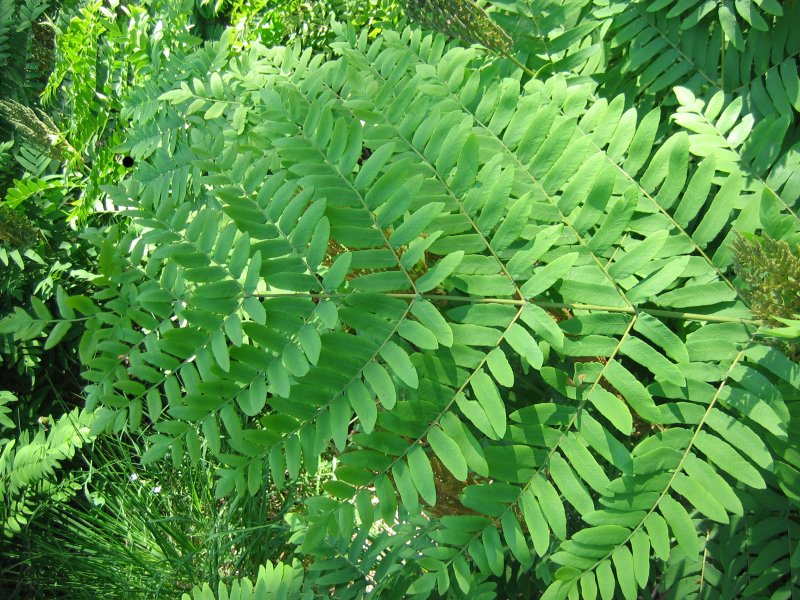
I notice of late the Osmunda regalis fully grown, fresh and handsome. July 5, 1860

As we come over Hubbard's Bridge between 5 and 6 P.M., the sun getting low, a cool wind blowing up the valley, we sit a while.  July 5, 1851

This retired bridge is a favorite spot with me. I have witnessed many a fair sunset from it. July 5, 1851

The sun has set. . . Some fine clouds, which have just escaped being condensed in dew, hang on the skirts of day and make the attraction in our western sky . . .  soon to be gilded by his parting rays. They are remarkably finely divided clouds, a very fine mackerel sky, or, rather, as if one had sprinkled that part of the sky with a brush, the outline of the whole being that of several large sprigs of fan coral. C, as usual, calls it a Mediterranean sky. They grow darker and darker, and now are reddened, while dark-blue bars of clouds of wholly different character lie along the northwest horizon.  July 5, 1852 

 Here is a small road running north and south along the edge of the wood, which would be a good place to walk by moonlight.  July 5, 1851 

July 5, 2017


June 11, 1851 ("The woodland paths are never seen to such advantage as in a moonlight night, opening before me almost against expectation as I walk, as if it were not a path, but an open, winding passage through the bushes, which my feet find")
June 15, 1858 ("The Osmunda regalis, growing in very handsome hollow circles, or sometimes only crescents or arcs of circles, is now generally a peculiarly tender green.")
June 20, 1856 ("Five young phoebes in a nest . . .just ready to fly.")
June 25, 1855 ("A phoebe’s nest, with two birds ready to fly.")
June 29, 1857 ("At Lee's Cliff, a phoebe has built her nest, and it now has five eggs in it, nearly fresh") 
July 1, 1852 ("The path by the wood-side is red with the effete staminiferous flowers of the white pine")
July 2, 1851("Some of the raspberries are ripe, the most innocent and simple of fruits”)


July 6, 1857 (“Rubus triflorus well ripe.”)
July 9, 1859 ("See young kingbirds which have lately flown perched in a family on the willows, — the airy bird, lively, twittering");
July 29, 1858 ("I see nowadays . . . young swallows on the telegraph wire.")
August 27, 1859 ("I often see yarrow with a delicate pink tint, very distinct from the common pure-white ones.") 


July 5, 2020

If you make the least correct 
observation of nature this year,
 you will have occasion to repeat it
 with illustrations the next, 
and the season and life itself is prolonged.
July 4 <<<<< July 5  >>>>> July 6
A Book of the Seasons,  by Henry Thoreau, July 5
A Book of the Seasons,  by Henry Thoreau
 "A book, each page written in its own season,
out-of-doors, in its own locality."
 ~edited, assembled and rewritten by zphx ©  2009-2023


https://tinyurl.com/HDT05JULY 

Monday, July 5, 2021

Surveying on the Great Fields to-day.


July 5. 

Raspberries, some days.

Such a habit have cows in a pasture of moving forward while feeding that, in surveying on the Great Fields to-day, I was interrupted by a herd of a dozen cows, which successively passed before my line of vision, feeding forward, and I had to watch my opportunity to look between them. 

Sometimes, however, they were of use, when they passed behind a birch stake and made a favorable background against which to see it.

H. D. Thoreau, Journal, July 5, 1853

Raspberries, some days. See June 30, 1854 ("Rubus triflorus berries, some time, — the earliest fruit of a rubus.The berries are very scarce, light red, semitransparent, showing the seed, — a few (six to ten) large shining grains and rather acid. "); July 2, 1851("Some of the raspberries are ripe, the most innocent and simple of fruits”); July 6, 1857 (“Rubus triflorus well ripe.”)  See also A Book of the Seasons,  by Henry Thoreau, the Raspberry

Such a habit have cows in a pasture of moving forward while feeding.   See August ("?") 1850 ("I notice that cows never walk abreast , but in single file commonly  making a narrow cow-path "); September 27, 1851 ("The cows have been turned on to the meadow, but they gradually desert it, all feeding one way.") See also July 5, 1852 ("How many virtues have cattle in the fields! They do not make a noise at your approach, like dogs ; they rarely low, but are quiet as nature, — merely look up at you"); See also May 15, 1853 ("Here are ten cows feeding on the hill beside me. Why do they move about so fast as they feed? They have advanced thirty rods in ten minutes"); July 12, 1857 (“It is exceedingly sultry this afternoon, and . . . cows stand up to their bellies in the river, lashing their sides with their tails from time to time.”); July 16, 1851 ("The color of the cows on Fair Haven Hill, how fair a contrast to the hillside! How striking and wholesome their clean brick-red!"); July 17, 1856 ("Cows in their pasture, going to water or elsewhere, make a track four or five inches deep and frequently not more than ten inches wide."); November 15, 1859 ("As I returned over the Corner Bridge I saw cows in the sun half-way down Fair Haven Hill next the Cliff, half a mile off, the declining sun so warmly reflected from their red coats that I could not for some time tell if they were not some still bright-red shrub oaks."); October 5, 1856 (" I think I would rather watch the motions of these cows in their pasture for a day, which I now see all headed one way and slowly advancing, — watch them and project their course carefully on a chart, and report all their behavior faithfully, — than wander to Europe or Asia and watch other motions there; for it is only ourselves that we report in either case, and perchance we shall report a more restless and worthless self in the latter case than in the first.")

To have the leisure
to see the parallax of
cows in a pasture.
zphx20220705

See also January 11, 1852 ("We cannot live too leisurely. Let me . . . ; have leisure to attend to every phenomenon of nature, and to entertain every thought that comes."); December 28, 1852 ("A broad margin of leisure is as beautiful in a man's life as in a book . . . How much, what infinite, leisure it requires, as of a lifetime, to appreciate a single phenomenon! You must camp down beside it as for life, having reached your land of promise, and give yourself wholly to it. It must stand for the whole world to you, symbolical of all things")

I watch as cows pass 
before my line of vision 
to look between them.

Friday, July 5, 2019

Sounding the River.


July 5. 

P. M. — To Ball's Hill, sounding river.

JULY 5, 2015


***

Many a farmer living near the river will tell you of some deep hole which he thinks the deepest in all the river, and which he says has never been sounded (which may have been true, and hence its reputation), where he has chanced to fish, or possibly bathed, or somebody has been drowned. It only need to be considerably over his head to acquire this reputation. If you tell him you have sounded it, and it was not very deep, he will think that you did not find the right spot. 

The deep places in the river are not so obvious as the shallow ones and can only be found by carefully probing it. So perhaps it is with human nature. Fair Haven Pond, though not very deep generally, is a kind of deep hole, to be referred to Fair Haven and Lee's Cliff, etc. The deepest part of the river is generally rather toward one side, especially where the stream is energetic. On a curve it is generally deepest on the inside bank, and the bank most upright.

***
H. D. Thoreau, Journal, July 5, 1859

See April 16, 1852 ("[Concord River is a] succession of bays . . . a chain of lakes,. . . There is just stream enough for a flow of thought; that is all. . . . Many a foreigner who has come to this town has worked for years on its banks without discovering which way the river runs.")

Thursday, July 5, 2018

Ossipee Mountain


July 5

July 5, 2018


Monday. Continue on through Senter Harbor and ascend Red Hill in Moultonboro. 

On this ascent I notice the Erigercm annuus, which we have not, me thinks, i. e. purple fleabane (for it is commonly purplish), hairy with thin leaves and broader than the strigosus. Notice the Comandra umbellata, with leaves in three very regular spiral lines. 

Dr. Jackson says that Red Hill is so called from the uva-ursi on it turning red in the fall. 

On the top we boil a dipper of tea for our dinner and spend some hours, having carried up water the last half-mile. Enjoyed the famous view of Winnepiseogee and its islands southeasterly and Squam Lake on the west, but I was as much attracted at this hour by the wild mountain view on the northward. 

Chocorua and the Sandwich Mountains a dozen miles off seemed the boundary of cultivation on that side, as indeed they are. They are, as it were, the impassable southern barrier of the mountain region, themselves lofty and bare, and filling the whole northerly horizon, with the broad vale or valley of Sandwich between you and them; and over their ridges, in one or two places, you detected a narrow, blue edging or a peak of the loftier White Mountains proper (or so called). 

Ossipee Mountain is on the east, near by; Chocorua (which the inhabitants pronounce She-corway or Corway), in some respects the wildest and most imposing of all the White Mountain peaks, north of northeast, bare rocks, slightly flesh-colored; some large mountains, perhaps the Franconia, far north westerly; Ragged (??) Mountain, south of west; Kearsarge, southwest; Monadnock (?), dim and distant blue, and some other mountains as distant, more easterly; Suncook Mountain, south—southeast, and, beyond the lake, south of southeast, Copple-Crown Mountain (?). 

Then I looked at the near Ossipee Mountain (and some others), I saw first smooth pastures around the base or extending part way up, then the light green of deciduous trees (probably oak, birch, maple, etc.), looking dense and shrubby, and above all the rest, looking like permanent shadows, dark saddles of spruce or fir or both on the summits. 

Jackson says larch, spruce, and birch reach to the summit of Ossipee Mountain. The landscape is spotted, like a leopard-skin, with large squarish patches of light-green and darker forests and blue lakes, etc., etc. 

On the top I found Potentilla tridentaia, out a good while, choke-berry, red lily, dwarfish red oaks, Caren: N owe-Anglia? (?), and a carex scoparia-like. Apparently the common Vaccinium Pennsylvanicum, and just below, in the shrubbery, the Vaccinium Canadense was the prevailing one. Just below top, a clematis, and, as you descended, the red oak, growing larger, canoe birch, some small white birch, red maple, rock maple, Populus tremuliformis, diervilla (very common), etc., etc.

Heard the chewink on the summit, and saw an ant hill there, within six rods of apex, about seven by six feet in diameter and sixteen inches high, with grass growing on all sides of it. This reminded me of the great ant-hills I saw on Chesterfield Mountain, opposite Brattleboro. 

Descended, and rode along the west and northwest side of Ossipee Mountain. Sandwich, in a large level space surrounded by mountains, lay on our left. Here first, in Moultonboro, I heard the tea-lee of the white throated sparrow. We were all the afternoon riding along under Ossipee Mountain, which would not be left behind, unexpectedly large still, louring over your path. 

Crossed Bearcamp River, a shallow but  unexpectedly sluggish stream, which empties into Ossipee Lake. Have new and memorable views of Chocorua, as we get round it eastward. 

Stop at Tamworth village for the night. We are now near the edge of a wild and unsettlable mountain region, lying northwest, apparently including parts of Albany and Waterville. The landlord said that bears were plenty in it; that there was a little interval on Swift River that might be occupied, and that was all. Norcross gets his lumber in that region, on Mad and Swift Rivers, as I understood; and on Swift River, as near as I could learn, was the only road leading into it.

H. D. Thoreau, Journal, July 5, 1858

Heard the chewink on the summit. See A Book of the Seasons, by Henry Thoreau, the Chewink (Rufous-sided Towhee)

Wednesday, July 5, 2017

Caterpillars of the mourning cloak / a promethea moth emerges.


July 5
July 5, 2017

A. M. — To Lee's Cliff by boat. 

Potentilla arguta abundantly out. 

Partridges big as quails. 

At Clamshell I found three arrowheads and a small Indian chisel for my guests. 

Rogers determined the rate of the boat's progress by observing by his second-hand how long the boat was going its length past a pad, calling the boat's length so much. 

For some days I have seen great numbers of blackish spiny caterpillars stripping the black willows, some full-grown on June 30th and some now not more than three quarters of an inch long. Are they the caterpillars of the Vanessa Antiopa? [Yes; according to Harris's description, they are.] 

When looking at a blackbird's nest I pricked my hand smartly on them several times; in fact the nest was pretty well protected by this chevaux-de-frise

That new ravine at Clamshell is so enlarged that bank swallows already use its sides, and I feel some young there. 

After leaving my companions at the Lee Bridge road, I push up Well Meadow Brook a few rods, through the weeds. I see by the commotion that great numbers of fishes fled before me and concealed themselves amid the weeds or in the mud. The mud is all stirred up by them. Some ran partly ashore.

Higher up, when I leave the boat and walk up the brook on the quaking shore, I find a bay and pool connected with the brook all alive with them, and observe two or three caught partly high and dry by their heedless haste, in a shallow and very weedy place. These are young pickerel two or three inches long. I suspect that all, or the greater part, are pickerel, and that they commonly breed in such still weedy basins in deep muddy meadows. 

Comara palustris apparently in prime. 

A phoebe's nest with four eggs half hatched, at stone bridge. 

There has been, amid the chips where a wood-pile stood, in our yard, a bumblebee's nest for ten days or more. Near it there was what I should have called a mouse's nest of withered grass, but this was mainly of different material and perhaps was made by the bee. It was a little heap two inches high, six long, and four wide, made of old withered grass and small bits of rags, brown paper, cotton-wool, strings, lint, and whole feathers, with a small half-closed hole at one end, at which the [bee] buzzed and showed himself if you touched the nest. I saw the cat putting out her paw there and starting back, and to-day I find the remains, apparently, of the bee dead at the entrance. On opening, I find nothing in the nest.

There came out this morning, apparently from one of those hard stem-wound cocoons on a black birch in my window, a moth whose wings are spread four and a quarter inches, and it is about an inch and three quarters long. It is black, wings and body, with two short, broad feathery antennae. The wings all have a clay-colored border behind, with a distinct black waving line down the middle of it, and, about midway the wings, a less distinct clay-colored line. Near the point of each forward wing, a round black spot or eye, with a bluish crescent within its forward edge, and beyond this spot, a purple tinge with a short whitish waving line continued through it from the crescent. The rear wings have a row of oblong roundish black spots along the clay-colored border, within the black line. There is a very faint light line on the fore wings on each side of the head. Beneath, on wings and body, dark purplish brown takes the place of the black above. It is rather handsomer and higher-colored beneath than above. There is a very small light or clay-colored triangular spot near the middle of wing beneath; also a row of brown spots on a white band along each side of the body. 

This is evidently the male Attacus Promethea. The rich purplish brown beneath — a sort of chocolate purple — makes the figure of a smaller moth of different form. 

The cocoon, about an inch long, is surrounded by the now pale withered leaf of the birch, which is wrapped almost quite around it and extends beneath, and it is very hard and firm, the light silk being wound thickly about the petiole, and also, afterward, the twig itself for half an inch or more both above and beneath the petiole. Sometimes there is no real petiole for a core, but the silky sheath can be slid up and down the twig.

H. D. Thoreau, Journal, July 5, 1857

Partridges big as quails. See July 5, 1856  ("Young partridges . . .as big as robins")  See also A Book of the Seasons,  by Henry Thoreau, the Partridge

At Clamshell I found three arrowheads and a small Indian chisel for my guests. See July 5, 1854 ("On Lupine Knoll pick up a dark-colored spear-head three and a half inches long, lying on the bare sand; so hot that I can not long hold it tight in my hand."); May 25, 1856 ("I found five arrowheads at Clamshell Hill.")

The caterpillars of the Vanessa Antiopa.  See  March 21, 1853 (" On the warm, dry cliff, looking south over Beaver Pond, I am surprised to see a large butterfly, black with buff-edged wings, so tender a creature to be out so early, and, when alighted, opening and shutting its wings. What does it do these frosty nights? Its chrysalis must have hung in some sunny nook of the rocks. Born to be food for some early bird."); April 11, 1853 ("Dr. Harris says that that early black-winged, buff-edged butterfly is the Vanessa Antiopa, and is introduced from Europe, and is sometimes found in this state alive in winter."); October 1, 1860.(Water was prepared for ice, and C. saw the first Vanessa Antiopa since spring."); November 1,1860 ("The butterflies are out again, — probably some new broods. I see the common yellow and two Vanessa Antiopa,") and A Book of the Seasons,  by Henry Thoreau, The Buff-edged Butterfly


A phoebe's nest with four eggs half hatched, at stone bridge. See  June 20, 1856 ("Five young phoebes in a nest . . .just ready to fly."); June 25, 1855 ("A phoebe’s nest, with two birds ready to fly."); June 29, 1857 ("At Lee's Cliff, a phoebe has built her nest, and it now has five eggs in it, nearly fresh") See also A Book of the Seasons,  by Henry Thoreau, the Eastern Phoebe

The cocoon, about an inch long, is surrounded by the now pale withered leaf of the birch. See January 19, 1854 ("The A. Promethea is the only moth whose cocoon has a fastening wound round the petiole of the leaf, and round the shoot, the leaf partly folded round it."); February 19, 1854 ("The light ash-colored cocoons of the A. Promethea, with the withered and faded leaves wrapped around them so artfully and admirably secured by fine silk wound round the leaf-stalk and the twig."); May 17, 1857 (" Two cocoons of apparently the Attacus Promethea on a small black birch, the silk wound round the leaf stalk.")

Popular Posts Last 30 Days.

The week ahead in Henry’s journal

The week ahead in Henry’s journal
A journal, a book that shall contain a record of all your joy.
"A stone fruit. Each one yields me a thought." ~ H. D. Thoreau, March 28, 1859


I sit on this rock
wrestling with the melody
that possesses me.