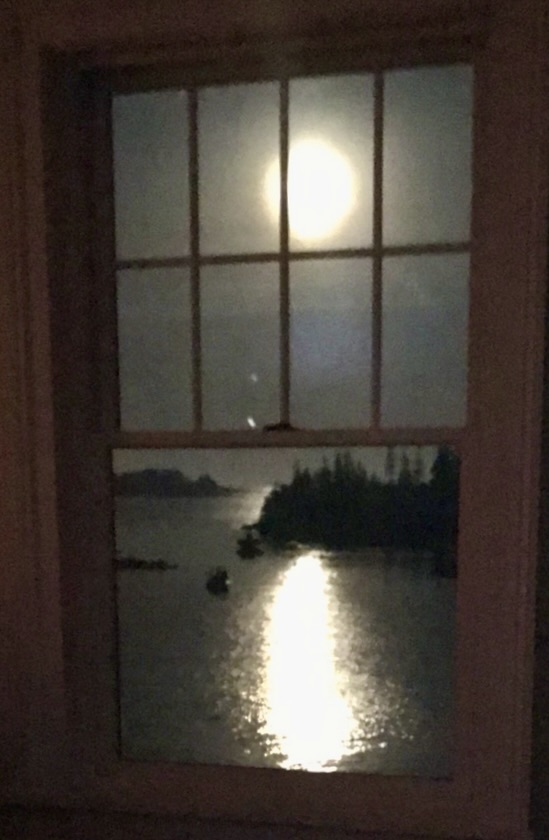
Wednesday, February 5, 2025

More Poems that Strike Me.


I blinked and
you were grown 
winter sunrise 

~Amy Borgman @ireneaddie.bsky.social
February 25,  2025


  I go down to the

clearing pick a handful of
raspberries and eat.

zphx  ~ July 8, 2013


The bright blue river.

I am struck by the bright blue of the river 
    (a deeper blue than the sky)
the fresh yellow green of the meadow 
     (coarse sedges just starting)
and a greener green next  the river edge
    (the green of the early rank river-grass). 

 These several colors 
are as distinct and simple 
as a child's painting.

H.D. Thoreau, May 4, 1860


Simple

R \aymond Carver

From Ultramarine

Random House, 1986


A break in the clouds. The blue

outline of the mountains.

Dark yellow of the fields.

Black river. What am I doing here, 

lonely and filled with remorse?


I go on casually eating from the bowl 

of raspberries. If I were dead, 

I remind myself, I wouldn't 

be eating them. It's not so simple.

It is that simple. 


The Cows at Night

     Hayden Carruth


The moon was like a full cup tonight,
too heavy, and sank in the Misty’s
soon after dark, leaving for light

faint stars and the silver leaves
of milkweed beside the road,
gleaming before my car.

Yet I like driving at night
in summer and in Vermont:
the brown road through the mist

of mountain-dark, among farms
so quiet, and roadside willows
opening out where I saw

the cows. Always a shock
to think of them, those breathings
close to me in the great dark.

I stopped, taking my flashlight
to the pasture fence. They turned
to me where they lay, sad

and beautiful faces in the dark,
and I counted them–forty
near and far in the pasture,

turning to me, sad and beautiful
like girls very long ago
who were innocent, and sad

because they were innocent,
and beautiful because they were
sad. I switched off my light.

But I did not want to go,
not yet, nor knew what to do
if I should stay, for how

in that great darkness could I explain
anything, anything at all.
I stood by the fence. And then

very gently it began to rain.


Picking Blueberries, Austerlitz, New York, 1957
     ~Mary Oliver

Once, in summer,
In the blueberries,
I fell asleep, and woke
When a deer stumbled against me.

I guess
She was so busy with her own happiness
She had grown careless
And was just wandering along

Listening
To the wind as she leaned down
To lip up the sweetnesss.
So there we were

With nothing between us
But a few leaves, and the wind’s
Glossy voice
Shouting instructions.

The deer
Backed away finally
And flung up her white tail
And went floating off toward the trees –

But the moment before she did that
Was so wide and so deep
It has lasted to this day;
I have only to think of her –

The flower of her amazement
And the stalled breath of her curiosity,
And even the damp touch of her solicitude
Before she took flight –

To be absent again from this world
And alive, again, in another,
For thirty years
sleepy and amazed,

Rising out of the rough weeds
Listening and looking.
Beautiful girl,
Where are you?


Midsummer

Two yearling deer 
stood in heavy, falling mist 
in the middle of

the road leading in-
to town, brown coat glistening
huge eyes open wide,

caught in the headlights
in the first yellowish smear 
of coming daybreak

Twenty feet away.
I finally stopped the car
and sat still inside.

eyes locked together
in a curious searching
with those of the doe. 

Minute by minute,
we were transfixed, motionless
each imagining

the other. And then
the sun peeled back the dark clouds 
like a second skin,

And, in unison, 
the deer stepped slowly forward
gently, cautiously 

off the road, into 
underbrush that flourishes 
along the woods edge 

and vanished in mist.
Dazed, I returned to my day, 
to the work at hand.

And now, the hour late 
in the morning, mist falling 
again, I can still

feel my skin prickle 
under those beautiful brown 
doe-eyes searching me

like a lover's hand,
cautious, slowly exploring 
something deep in me

I cannot touch or name.


Halfway down'

~ Chard deNiord, from “Interstate


Halfway down: the sight of a doe,

through the trees in the meadow.

I stopped to stare at her staring at me.

The silence arced between us like a wire 

in a current that equaled strangeness

over time, and since her stare was wild –

so charged with fear the moment froze

on the line of sky and field, man

and deer — she broke our stillness 

in her flight from me. I stood alone

but double then as the man on the path

and the memory of the man she carried 

with her beyond the meadow into 

the next meadow and the meadow after 

that where she returned my image

to the field of forgetting in which

I roamed like deer myself, remembering.


A HUNGER SO HONED
~ Tracy K Smith

Driving home late through town
He woke me for a deer in the road, 
The light smudge of it fragile in the distance,

Free in a way that made me ashamed for our flesh— 
His hand on my hand, even the weight 
Of our voices not speaking.

I watched a long time
And a long time after we were too far to see, 
Told myself I still saw it nosing the shrubs,

All phantom and shadow, so silent 
It must have seemed I hadn't wakened, 
But passed into a deeper, more cogent state -

The mind a dark city, a disappearing, 
A handkerchief
Swallowed by a fist.

I thought of the animal's mouth 
And the hunger entrusted it. A hunger 
So honed the green leaves merely maintain it.

We want so much,
When perhaps we live best 
In the spaces between loves,

That unconscious roving,
The heart its own rough animal.
Unfettered.

                    The second time,
There were two that faced us a moment
The way deer will in their Greek perfection,

As though we were just some offering
The night had delivered.
They disappeared between two houses, 

And we drove on, our own limbs,
Our need for one another 
Greedy, weak.

surprise fawn


Saturday, February 1, 2025

A Book of the Seasons: February Moonlight


The landscape covered with snow two feet thick
seen by moonlight from these Cliffs –
my owl sounds hoo hoo hoo, ho-O.

Henry Thoreau, February 3, 1852


February 2. Snows again half an inch more in the evening, after which, at ten o’clock, the moon still obscured, I skate on the river and meadows . . . Our skates make but little sound in this coating of snow about an inch thick, as if we had on woollen skates  and we can easily see our tracks in the night . . . In the meanwhile we hear the distant note of a hooting owl, and the distant rumbling of approaching or retreating cars sounds like a constant waterfall. February 2, 1855

February 3. The moon is nearly full tonight, and the moment is passed when the light in the east (i. e. of the moon) balances the light in the west. Venus is now like a little moon in the west, and the lights in the village twinkle like stars. It is perfectly still and not very cold. The shadows of the trees on the snow are more minutely distinct than at any other season, finely reticulated, each limb and twig represented, as cannot be in summer. The heavens appear less thickly starred than in summer, —  rather a few bright stars, brought nearer by this splendid twinkling in the cold sky. I hear my old acquaintance, the owl, from the Causeway. As I stand over Deep Cut the cars do not make much noise, or else I am used to it. And now whizzes the boiling, sizzling kettle by me, in which the passengers make me think of potatoes, which a fork would show to be done by this time. The steam is denser for the cold, and more white; like the purest downy clouds in the summer sky, its volumes roll up between me and the moon, and far behind, when the cars are a mile off, it still goes shading the fields with its wreaths, - the breath of the panting traveller. I now cross from the railroad to the road. This snow, the last of which fell day before yesterday, is two feet deep, pure and powdery. From a myriad little crystal mirrors the moon is reflected, which is the untarnished sparkle of its surface. Here, in the midst of a clearing, where the choppers have been leaving the woods in pieces to-day, I hear the hooting of an owl, whose haunts the chopper is laying waste. The ground is all pure white powdery snow, which his sled, etc., has stirred up. I can see every track distinctly where the teamster drove his oxen to the choppers' piles and loaded his sled, and even the tracks of his dog in the moonlight, and plainly to write this. The moonlight now is very splendid in the untouched pine woods above the Cliffs, alternate patches of shade and light. The light has almost the brightness of sunlight. The stems of the trees are more obvious than by day, being simple black against the moonlight and the snow. I can tell where there is wood and where open land for many miles in the horizon by the darkness of the former and whiteness of the latter. The landscape covered with snow two feet thick, seen by moonlight from these Cliffs, gleaming in the moon and of spotless white. Who can believe that this is the habitable globe? The scenery is wholly arctic. It looks as if the snow and ice of the arctic world, travelling like a glacier, had crept down southward and overwhelmed and buried New England. See if a man can think his summer thoughts now. But the evening star is preparing to set, and I will return. Floundering through snow, sometimes up to my middle, my owl sounds hoo hoo hoo, ho-OFebruary 3, 1852


February 411 P. M. — Coming home through the village by this full moonlight, it seems one of the most glorious nights I ever beheld. Though the pure snow is so deep around, the air, by contrast perhaps with the recent days, is mild and even balmy to my senses, and the snow is still sticky to my feet and hands . And the sky is the most glorious blue I ever beheld, even a light blue on some sides, as if I actually saw into day, while small white, fleecy clouds, at long intervals, are drifting from west-north west to south-southeast. If you would know the direction of the wind, look not at the clouds, which are such large bodies and confuse you , but consider in what direction the moon appears to be wading through them. The outlines of the elms were never more distinctly seen than now. It seems a slighting of the gifts of God to go to sleep now; as if we could better afford to close our eyes to daylight, of which we see so much. Has not this blueness of the sky the same cause with the blue ness in the holes in the snow, and in some distant shadows on the snow? — if, indeed, it is true that the sky is bluer in winter when the ground is covered with snow.  February 4, 1852

February 14.  Higginson told me yesterday . . . of a person in West Newbury, who told him that he once saw the moon rising out of the sea from his house in that place, and on the moonlight in his room the distinct shadow of a vessel which was somewhere on the sea between him and the moon!!  February 14, 1857

February 27.  To-night a circle round the moon. February 27, 1852

See also:


A Book of the Seasons,  by Henry Thoreau
 "A book, each page written in its own season,
out-of-doors, in its own locality."
 ~edited, assembled and rewritten by zphx ©  2009-2025

A Book of the Seasons: February Days


A year is made up of 
a certain series and number 
of sensations and thoughts 
which have their language in nature.

Henry Thoreau, June 6, 1857


The river is one 
level white blanket of snow
 quite to each shore now.
February 1, 1855


The scream of the jay
wholly without sentiment
a true winter sound.
February 2, 1854

This coating of snow mysterious muffled sounds the moon still obscured. February 2, 1855


The skater sails midst
a moving world of snow-steam
as high as his knees.
February 3, 1855


The tracks of a mink
in shallow snow along the 
edge of the river.
February 4, 1854

Distinct otter-track by the rock at the junction of the two rivers. February 4, 1855

Partridges feeding on the sumach berries make fresh tracks every snow. February 4, 1856


Silvery-lighted boughs
and shadowy intervals
belong to one tree.
February 5, 1852

Though on the back track
I draw nearer to the fox.
My thoughts grow foxy.
February 5, 1854


A mistiness makes
the woods look denser darker
and more primitive.
February 6, 1852

The coldest morning – all day well below zero, frostwork on windows. February 6, 1855


Single trees distinct
and black on the hill under
dull mist-covered sky.
February 7, 1856


First crust to walk on.
Now no difference between
rivers ponds and fields.
February 8, 1852

My vaporous life now radiant as frost in a winter morning. February 8, 1857


Though days are longer
cold sets in ever stronger.
It is midwinter.
February 9, 1851

The sun reflected from a hundred rippling sluices – melted snow-water. Listening for the first bluebird in this warm moist softened sunlit air. February 9, 1854

Drifted this morning. A very fine and dry snow about a foot deep. February 9, 1855


My shadow is blue.
Bright sunlight on pure white snow – celestial me. February 10, 1855


Willows shed pollen
how many aeons before
man was created?
February 11, 1854

Minus ten degrees. A blue atmosphere tinges the distant pine woods. February 11, 1855


Ice forced up on edge
like mirrors reflects the sun.
A fleet of ice boats.
February 12, 1851

The scream of a jay.
Cold hard tense frozen music
 like the winter sky.
February 12 , 1854

Sun shines in amid the pines and hemlocks as in a warm apartment. February 12, 1855

Sunlight thawing snow
 strangely excites a springlike
melting in my thoughts.
February 12, 1856

Return on green ice
to walk amid purple clouds
of the sunset sky.
February 12, 1860


They come with the storm
the falling and driving snow–
a flock of snowbirds.
February 13, 1853

Walking toward the sun
rainbow colors reflected
from powdery snow.

The red of sunsets
and of the snow at evening
and in rainbow flocks.

The blue of the sky and
of the ice and water
of shadows on snow.
 
Yellow of the sun
the morning and evening sky
and sedge bright when lit.

White of snow and clouds
and the black of clouds and of
thin wet snow on ice.

Purple of mountains
of the snow in drifts and of
clouds at evening.

The green of the sky
and of the ice and water
toward evening.


We are made to love the river and the meadow – wind ripples water.


The steady rushing
musical sound of rain soaks
into my spirit.
February 15, 1855

And another leaf or feather frost on the trees – handsome ghosts of trees. February 14, 1855


This cold afternoon
I inhale the clear bright air --
the sky undimmed blue.

Two large hawks circling 
over the woods by Walden – 
the first I have seen. 

The fog is so thick
we cannot see the engine  
almost upon us.

My voice is distinct under the pines draped with mist – you hear yourself speak. Oak leaves show more red amid the pines this wet day – agreeably so. And I feel as if I stood a little nearer – the heart of nature. February 16, 1855

The musical sound of rain on the shingles soaks into my spirit. February 15, 1855

Look back from the road 
through the sun to white-pine tops
this soft afternoon. 

What we call wildness is a civilization other than our own. February 16, 1859

This crystalline snow
lies up so light and downy –
semitransparent.


The first springlike note at the stone bridge from the hill in the misty air
February 17, 1855


Pleasant day
gathering nuts and apples
(still sound)
colors red and green
on the bare ground.
Strong south wind
skunk-cabbage in flower.
February 18, 1851

Now for the first time something in the air and light is spring-suggesting. February 18, 1855

A cloud in the west
changes the whole character
of the afternoon. 
February 18, 1860


Cold unvaried snow now stretching mile after mile and no place to sit.
February 19, 1852

I tend to walk where
I cannot walk in summer.
Swamps river and ponds.
 
Who placed us with eyes
between microscopic and
telescopic worlds?
February 19, 1854


The bright-blue water
here and there between the ice  
and on the meadow.

The northerly wind
roaring in the woods to-day
reminds me of March.

February 20, 1855


In new fallen snow
you cannot walk too early
to sense novelty.
February 21, 1854

Sheltered from the wind
I feel new life in Nature –
 season’s warmer sun.

Chickadee passes
the news through all the forest –
spring is approaching.

Snow on the mountains
now a silver rim to this
basin of the world.
February 21, 1855


Raw westerly wind 
but deliciously warm now
in sheltered places.

Such remarkably
pleasant weather – I  listen
for the first bluebird.

February 22, 1855

Fine snow drives along
like steam curling from a roof.
I see the drifts form.
February 23, 1854


Though snow covers ground
the quality of the air
reminds me of spring.

Observe the poplar's
swollen buds and the brightness
of the willow's bark.

February 24, 1852

Waves on the meadows.
Large cakes of ice blown up-stream 
against Hubbard’s Bridge.
February 25, 1851

Morning snow turns to
fine freezing rain with a glaze
changing to pure rain.
February 26, 1854


The North Branch has burst its icy fetters. 

This restless and now 
swollen stream flowing with ice 
on either side sparkles 
in the clear cool air. 
If rivers come out 
of their icy prison thus 
bright and immortal
shall not I too 
resume my spring life 
with joy and hope?

Bright and immortal
the unfettered stream sparkles
in the clear cool air.


To get the value of the storm we must be out long and travel far.

To-day it snows again
covering the ground.
 
To get the value of the storm 
we must be out a long time 

and travel far in it
so that it may fairly penetrate our skin 

and we be as it were 
turned inside out to it

 and there be no part in us 
but is wet or weather beaten –
 
so that we become storm men 
instead of fair weather men.

The snow finally turns 
to a drenching rain.
February 28, 1852

The westering sun
reflected from their edges
makes them shine finely.

February 28, 1855


From Pine Hill the snow-
crust shines in the sun as far
as the eye can reach.


“The year is but a succession of days,
and I see that I could assign some office to each day
which, summed up, would be the history of the year.”
Henry Thoreau, August 24, 1852


<<<<<<Last Month                                                       Next Month >>>>>


A Book of the Seasons
,  by Henry Thoreau 
"A book, each page written in its own season,
out-of-doors, in its own locality.”
~edited, assembled and rewritten by zphx © 2009-2025

Popular Posts Last 30 Days.

The week ahead in Henry’s journal

The week ahead in Henry’s journal
A journal, a book that shall contain a record of all your joy.
"A stone fruit. Each one yields me a thought." ~ H. D. Thoreau, March 28, 1859


I sit on this rock
wrestling with the melody
that possesses me.