Saturday, June 9, 2012

The season of waving boughs


June 9.


June 9, 2013

For a week past we have had washing days. The grass waving, and trees having leaved out, their boughs wave and feel the effect of the breeze. Thus new life and motion is imparted to the trees. The season of waving boughs; and the lighter under side of the new leaves are exposed. This is the first half of June. 

Methinks this is a traveller's month.  Already the grass is blossomed and some even gone to seed, and it is mixed with reddish ferns and other plants.  The deciduous trees have filled up the intervals between the evergreens, and the woods are bosky now. The locust in bloom. The waving, undulating rye. 

The general leafiness, shadiness, and waving of grass and boughs in the breeze characterize the season.  The weather is very clear, and the sky bright. The river shines like silver. 

H. D. Thoreau, Journal, June 9, 1852

For a week past we have had washing days. The grass waving, and trees having leaved out, their boughs wave and feel the effect of the breeze. Thus new life and motion is imparted to the trees. The season of waving boughs; and the lighter under sides of the new leaves are exposed. This is the first half of June. Already the grass is not so fresh and liquid-velvety a green, having much of it blossom[ed] and some even gone to seed, and it is mixed with reddish ferns and other plants, but the general leafiness, shadiness, and wav ing of grass and boughs in the breeze characterize the season. The wind is not quite agreeable, because it prevents your hearing the birds sing. Meanwhile the crickets are strengthening their quire. The weather is very clear, and the sky bright. The river shines like silver. Methinks this is a traveller's month. The locust in bloom. The waving, undulating rye. The deciduous trees have filled up the intervals between the ever greens, and the woods are bosky now.

The deciduous trees have filled up the intervals between the evergreens, and the woods are bosky now. The general leafiness, shadiness, and waving of grass and boughs in the breeze characterize the season. The river shines like silver. See June 6, 1855 ("The dark eye and shade of June”); June 8, 1860 “In early June, methinks, as now, we have clearer days, less haze, more or less breeze, — especially after rain, — and more sparkling water than before. . . .As there is more shade in the woods, so there is more shade in the sky, i. e. dark or heavy clouds contrasted with the bright sky. ”); June 9. 1856 ("Now I notice where an elm is in the shadow of a cloud,—the black elm-tops and shadows of June. It is a dark eyelash which suggests a flashing eye beneath. It suggests houses that lie under the shade, the repose and siesta of summer noons, the thunder-cloud, bathing, and all that belongs to summer. ") June 11, 1856 ("I think that this peculiar darkness of the shade, or of the foliage as seen between you and the sky, is not accounted for merely by saying that we have not yet got accustomed to clothed trees, but the leaves are rapidly acquiring a darker green, are more and more opaque, and, besides, the sky is lit with the intensest light. It reminds me of the thunder-cloud and the dark eyelash of summer."); June 23, 1852 ("It is an agreeably cool and clear and breezy day, when all things appear as if washed bright and shine, and, at this season especially, the sound of the wind rustling the leaves is like the rippling of a stream, and you see the light-colored under side of the still fresh foliage, and a sheeny light is reflected from the bent grass in the meadows.. . . The river too has a fine, cool, silvery sparkle or sheen on it. You can see far into the horizon.”); Compare May 26, 1854 (At sight of this deep and dense field all vibrating with motion and light, winter recedes many degrees in my memory. . . . The season of grass, now everywhere green and luxuriant.”); May 27, 1855 ("The fields now begin to wear the aspect of June, their grass just beginning to wave;. . . foliage thickening and casting darker shadows over the meadows,. . . deciduous trees rapidly investing evergreens .”; May 28, 1858 (“These various shades of grass remind me of June.”); May 30, 1852 (Now is the summer come. . . . A day for shadows, even of moving clouds, over fields in which the grass is beginning to wave.”)

June 9. See A Book of the Seasons, by Henry Thoreau, June 9


A Book of the Seasons, by Henry Thoreau
"A book, each page written in its own season,
out-of-doors, in its own locality.”
~edited, assembled and rewritten by zphx © 2009-2021


...

Wednesday, June 6, 2012

First devil's-needles

June 6 

First devil's-needles in the air, and some smaller, bright-green ones on flowers.  


The earliest blueberries are now forming as greenberries. 

The wind already injures the just-expanded leaves, tearing them and making there turn black. I see the effects of recent frosts on the young oaks in hollows in the woods. The leaves are turned dry, black, and crisp. 

The side-flowering sandwort, an inconspicuous white flower like a chickweed.

H. D. Thoreau, Journal, June 6, 1852 

First devil's-needles .See June 6, 1857 ("I see many great devil's-needles in an open wood — and for a day or two, — stationary on twigs, etc.,. . . They were evidently just escaped from the slough.”) See also June 8, 1855 (“A great many devil’s-needles in woods within a day or two."); June 11, 1860 (“See many small blue devil's-needles, but no mates with them.”); June 13, 1854 (“. . . my sail so idle that I count ten devil's-needles resting along it at once.”); June 19, 1860("The devil's-needles now abound in wood-paths and about the Ripple Lakes. “); June 23, 1853 (“Here are thousands of devil's-needles of all sizes hovering over the surface of this shallow pond in the woods”); July 16, 1854 (“Methinks there were most devil's-needles a month ago.”) and also A Book of the Seasons, by Henry Thoreau.the Devil's-needle

The earliest blueberries are now forming as greenberries. See  June 7, 1854 (“I am surprised at the size of green berries, -- shad-bush, low blueberries, choke-cherries, etc., etc. It is but a step from flowers to fruit.”)

The side-flowering sandwort, an inconspicuous white flower.
See June 3, 1859 ("Arenaria lateriflora well out, how long?"); June 5, 1855 ("Side-flowering sandwort apparently three days out in Clamshell flat meadow."); June 10, 1856 ("Side-flowering sandwort abundantly out this side of Dugan Spring."); June 13, 1858 ("Arenaria lateriflora, how long?") 

June 6.  See A Book of the Seasons, by Henry Thoreau, June 6.

First devil's-needles 
in the air and smaller ones
bright-green on flowers.


 A Book of the Seasons , by Henry Thoreau
"A book, each page written in its own season,
out-of-doors, in its own locality."
~edited, assembled and rewritten by zphx ©  2009-2025

https://tinyurl.com/hdt-520606

Tuesday, June 5, 2012

The lupine is now in its glory.


The lupine is now in its glory. It is the more important because it occurs in such extensive patches, even an acre or more together, and of such a pleasing variety of colors, - purple, pink, or lilac, and white, - especially with the sun on it, when the transparency of the flower makes its color changeable.

It paints a whole hillside with its blue, making such a field (if not meadow) as Proserpine might have wandered in. Its leaf was made to be covered with dewdrops.

I am quite excited by this prospect of blue flowers in clumps with narrow intervals. No other flowers exhibit so much blue. That is the value of the lupine.  The earth is blued with them.  

You passed along here, perchance, a fortnight ago, and the hillside was comparatively barren, but now you come and these glorious rededemers appear to have flashed out here all at once. Who planted the seeds of lupines in the barren soil? Who watereth the lupines in the fields?

H. D. Thoreau, Journal,  June 5, 1852

Monday, June 4, 2012

The birds sing at dawn.

June 4.

The birds sing at dawn. What sounds to be awakened by! If only our sleep, our dreams, are such as to harmonize with the song, the warbling of the birds, ushering in the day! They appear comparatively silent an hour or two later.

The dandelions are now almost all gone to seed, and children may now see if "your mother wants you." 

The golden alexanders is called Zizia aurea. The cistus is out. Lupines in prime. The Canada snapdragon, that little blue flower that lasts so long, grows with the lupines under Fair Haven. The early chickweed with the star-shaped flower is common in fields now.

H. D. Thoreau, Journal, June 4, 1852

An old New England superstition says that if you fail to dislodge all the dandelion seeds after blowing three times, it is a sign your mother wants you back home.  R. Webster, The Encyclopedia of Superstitions  74 (2008).

Sunday, June 3, 2012

A sultry day and a slight thunder-shower and now I see fireflies.


June 3

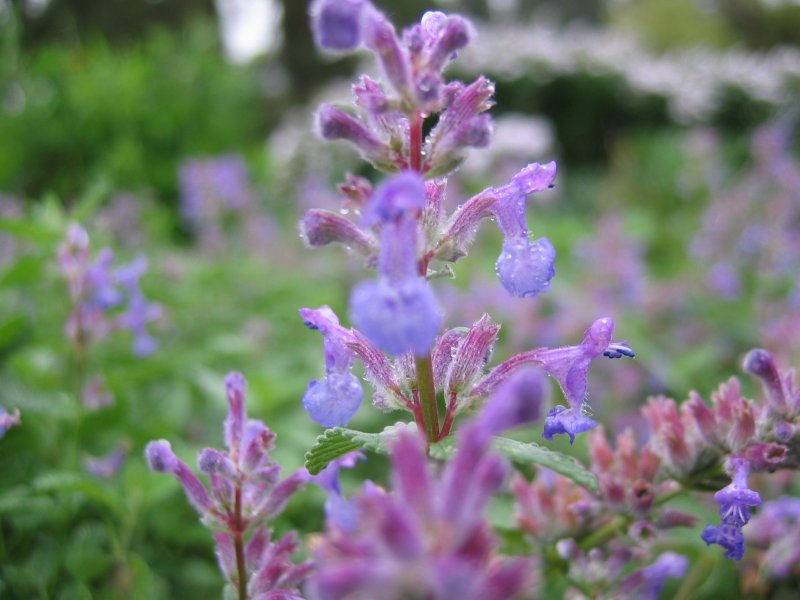
The nepeta by Deacon Brown's, a pretty blue flower. 


It has been a sultry day, and a slight thunder-shower, and now I see fireflies in the meadows at evening.

H. D. Thoreau, Journal, June 3, 1852

The nepeta. See June 30, 1852 ("Cat-mint (Nepeta cataria) in bloom.")

A slight thunder-shower, and now I see fireflies in the meadows at evening. See June 7, 1854 ("This muggy evening I see fireflies, the first I have seen.”); June 7, 1858 (“ Fireflies pretty numerous over the river, though we have had no thunder-showers of late.”) See also A Book of the Seasons,  by Henry Thoreau, Fireflies, winged sparks of fire!

June 3. See  A Book of the Seasons,  by Henry Thoreau, June 3

A sultry day and 
a slight thunder-shower and 
now I see fireflies.

 A Book of the Seasons, by Henry Thoreau
"A book, each page written in its own season,
out-of-doors, in its own locality.”
~edited, assembled and rewritten by zphx © 2009-2025

https://tinyurl.com/hdt-520603

Saturday, June 2, 2012

Early summer


June 2.

Buttercups now spot the churchyard. 

Golden alexanders - looks like a parsnip - near or beyond the East Quarter schoolhouse. 

The elms now hold a good deal of shade and look rich and heavy with foliage. You see darkness in them. 

Hazy days now. Milkweed, butter-and-eggs, etc., etc. are getting up. Low blackberry in bloom. The dried brown petals of apple blossoms spot the sod in pastures. Female sassafras in bloom.


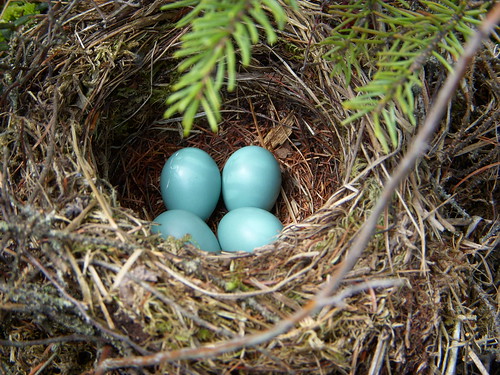
Nest of Wilson's thrush with bluish-green eggs. 


H. D. Thoreau, Journal, June 2, 1852

Buttercups now spot the churchyard.  See May 30, 1857 ("Buttercups thickly spot the churchyard. “); May 27, 1853 ("The buttercups in the church-yard and on some hillsides are now looking more glossy and bright than ever after the rain.”)

Low blackberry in bloom. See note to June 1, 1860 (“Many low blackberry flowers at Lee's Cliff.”)


June 2. See A Book of the Seasons, by Henry Thoreau, June 2

A Book of the Seasons,  by Henry Thoreau
"A book, each page written in its own season,
out-of-doors, in its own locality.”

~edited, assembled and rewritten by zphx © 2009-2021

Friday, June 1, 2012

Moonlit clouds

June 1

Evening. -To the Lee place, the moon about full.

The sounds I hear by the bridge: the midsummer frog (I think it is not the toad), the nighthawk, crickets, the peetweet (it is early), the hum of dor-bugs, and the whip-poor-will.

The moving clouds are the drama of the moonlight nights, and never-failing entertainment of nightly travellers. You can never foretell the fate of the moon, -- whether she will prevail over or be obscured by the clouds half an hour hence. The traveller's sympathy with the moon makes the drama of the shifting clouds interesting. 

H. D. Thoreau, Journal, June 1, 1852

The moving clouds are the drama of the moonlight nights
. See August 12, 1851 ("The traveller’s whole employment is to calculate what cloud will obscure the moon and what she will triumph over.") See also Basho:

From time to time 
the clouds give rest 
to the moon-watchers.
 ~ Bashō


Popular Posts Last 30 Days.

The week ahead in Henry’s journal

The week ahead in Henry’s journal
A journal, a book that shall contain a record of all your joy.
"A stone fruit. Each one yields me a thought." ~ H. D. Thoreau, March 28, 1859


I sit on this rock
wrestling with the melody
that possesses me.