Saturday, August 13, 2016

Does not the season require this tonic?

August 13 

P. M. — To Conantum. 
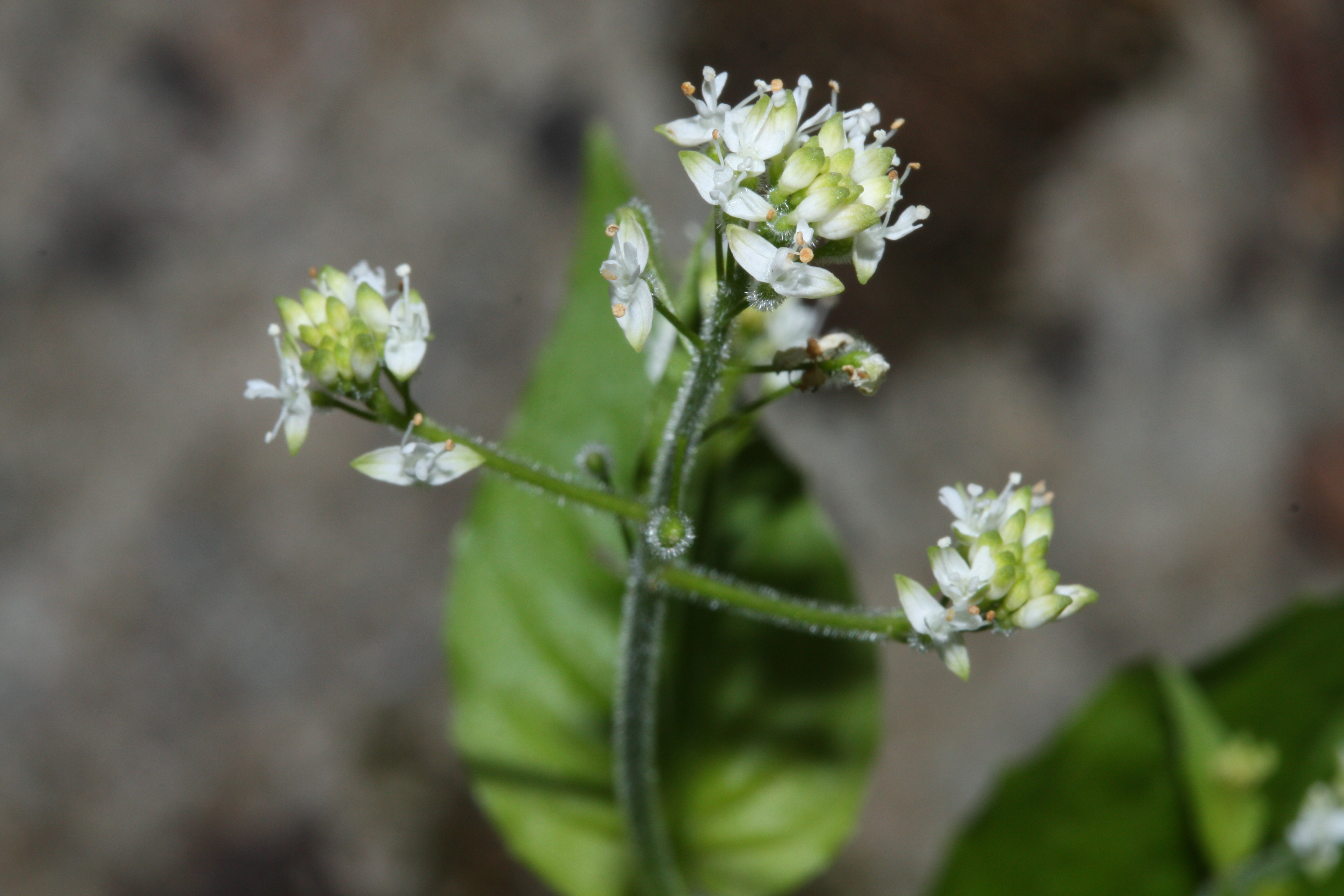
alpine enchanter’s-nightshade
(Circaea alpina)

Beck says of the small circaea (C. alpina), "Many botanists consider this a mere variety of the preceding." I am not sure but it is more deeply toothed than the large. Its leaves are of the same color with those of the large at Bittern Cliff, but more decidedly toothed; q. v. Why does it not grow larger at Corner Spring? 


The root of the Polygala verticillata also has the checkerberry odor. 

In Bittern Cliff Woods that (apparently) very oblong elliptical leafed Lespedeza violacea (?), growing very loose and open on a few long petioles, one foot high by four or five inches wide. Is this because it grows in woods? It is not in bloom. 

Is there not now a prevalence of aromatic herbs in prime? — The polygala roots, blue-curls, wormwood, pennyroyal, Solidago odora, rough sunflowers, horse-mint, etc., etc. Does not the season require this tonic? 

I stripped off a shred of Indian hemp bark and could not break it. It is as strong as anything of the kind I know.

H. D. Thoreau, Journal, August 13, 1856

The small circaea (C. alpine). . . leaves are of the same color with those of the large at Bittern Cliff.  See June 19, 1856 ("enchanter’s-nightshade"); July 8, 1856 ("Circaea alpina, some days, a foot high with opaque leaves and bracts . . .  the same with the small, also bracted, one at Corner Spring”); August 1, 1855 ("Pennyroyal and alpine enchanter’s-nightshade well out, how long?”)

A prevalence of aromatic herbs in prime. See August 11, 1853  ("Evening draws on while I am gathering bundles of pennyroyal on the further Conantum height. I find it amid the stubble mixed with blue-curls and, as fast as I get my hand full, tie it into a fragrant bundle.”); August 13, 1852 ("Pennyroyal abundant in bloom. I find it springing from the soil lodged on large rocks in sprout-lands, and gather a little bundle, which scents my pocket for many days."); August 26, 1856 ("I gather a bundle of pennyroyal; it grows largest and rankest high and close under these rocks, amid the loose stones.") See also December 14, 1855 ("In a little hollow I see the sere gray pennyroyal rising above the snow, which, snuffed, reminds me of garrets full of herbs.”)  See also June 6, 1851 ("Bigelow says, “The leaves of the Solidago odora have a delightfully fragrant odor, partaking of that of anise and sassafras, but different from either.”)  See also A Book of the Seasons,by Henry Thoreau, the Aromatic Herbs;   A Book of the Seasons, by Henry Thoreau,The Polygala

Indian hemp . . . is as strong as anything of the kind I know. See August 9, 1856 ("Again I am surprised to see the Apocynum cannabinum close to the rock at the Island”); August 16, 1856 ("I find the dog's-bane (Apocynum androsoemifolium) bark not the nearly so strong as that of the A. cannabinum. "); September 2, 1856 ("Some years ago I sought for Indian hemp (Apocynum cannabinum) hereabouts in vain, and concluded that it did not grow here. A month or two ago . . .my eyes fell on it, aye, in three different places, and different varieties of it. ");  Compare January 19,   1856 (“ I strip off some  [milkweed] bark . . . and, separating ten or twelve fibres from the epidermis, roll it in my fingers, making a thread about the ordinary size. This I can not break by direct pulling . . .I  doubt if a thread of flax or hemp of the same size could be made so strong."). See also   A Book of the Seasons, by Henry Thoreau, Dogsbane and Indian hemp

August 13. See A Book of the Seasons, by Henry Thoreau, August 13.

A prevalence of 
aromatic herbs in prime –
the season's tonic.
 A Book of the Seasons,  by Henry Thoreau
"A book, each page written in its own season,
out-of-doors, in its own locality.”
~edited, assembled and rewritten by zphx © 2009-2026

https://tinyurl.com/hdt-560813 

Friday, August 12, 2016

I see a deep full river on which vessels may float.

August 12 

11 a. m. — To Hill. 

The Hypericum mutilum is well out at this hour. 

The river is now at a standstill, some three feet above its usual level. The pickerel-weed is all covered, and lilies, and much of the button-bush and mikania. It is as great an accident as can befall these flowers. It is novel to behold this great, full tide in which you perceive some current by the eddies, in which no snarl of weeds is seen. So different from that Potamogeton River, where you caught a crab at every stroke of the oar, and farmers drove their hay-carts across. Instead of watery gleaming fields of potamogetons in which the boatman was entangled, and drifting vallisneria on which the dragon-flies alighted, I see a deep full river on which vessels may float, and I feel at a distance from terra firma when on its bosom. 

P. M. — To Moore's Swamp.

Gerardia purpurea, two or three days. 

The mulgedium in that swamp is very abundant and a very stately plant, so erect and soldier-like, in large companies, rising above all else, with its very regular long, sharp, elliptic head and bluish-white flowers. 

Again I examine that very strict solidago, which perhaps I must call wand-stemmed. Perhaps it is only a swamp variety of S. stricta, yet the leaves are thicker and darker(?)-green, and the upper commonly broader, often elliptic, pointed, less recurved and not wavy. Stem and head is now commonly much more strict and branches more erect, and racemes less one-sided, but in larger and maturer ones they are at length recurving and forming a pyramid like S. stricta. Rays are fewer and broader, five or six; stem reddish, with apparently more branchlets or leafets in axils.

Am surprised to see still a third species or variety of helianthus (which may have opened near August 1st, say only a week). Only the first flowers out. At edge of the last clearing south of spring. I cannot identify it. It has very short but not margined petioles; leaves narrower than yesterday's, and rough beneath as well as above. The outer scales of involucre a little the longest; but I think this of little importance, for the involucre of the H. divaricatus is very variable, hardly two alike; rays about ten. In some respects it is most like H. strumosus, but not downy beneath. The bruised leaves of these helianthuses are rather fragrant. 

It is thick, smoky, dog-day weather again. 

Bradford speaks of the dog's-tooth violet as a plant which disappears early. 

The Aster patens is very handsome by the side of Moore's Swamp on the bank, — large flowers, more or less purplish or violet, each commonly (four or five) at the end of a long peduncle, three to six inches long, at right angles with the stem, giving it an open look. 

Snake-head, or chelone. 

On the edge of the ditch opposite the spring, Epilobium coloratum, and also what I must call E. palustre of Willdenow and Pursh and Eaton. It is smooth or smoothish, leaves somewhat toothed or subdenticulate, peduncle one inch long, flowers white. 

The most interesting domes I behold are not those of Oriental temples and palaces, but of the toadstools. On this knoll in the swamp they are little pyramids of Cheops or Cholula, which also stand on the plain, very delicately shaded off. They have burst their brown tunics as they expanded, leaving only a clear-brown apex, and on every side these swelling roofs or domes are patched and shingled with the fragments, delicately shaded off thus into every tint of brown to the edge. As if this creation of a night would thus imitate the weather-stains of centuries. Toads' temples. So charming is gradation! 

Gerardia pedicularia, how long? 

What a wilderness of weeds is Moore's Swamp now! Tall rough goldenrods, erechthites, poke, Aster Radula, dogwood, etc., etc. It looks as if the potatoes which grew there would be poisonous. 

An arrowhead in Peter's Path. How many times I have found an arrowhead by that path, as if that had been an Indian trail! Perchance it was, for some of the paths we travel are much older than we think, especially some which the colored race in our midst still use, for they are nearest to the Indian trails.

The Emerson children say that Aralia nudicaulis berries are good to eat. The leaves of Sericocarpus conyzoides are fragrant when bruised. Black cherries ripe. 

Saw the primrose open at sundown. The corolla burst part way open and unfolded rapidly; the sepals flew back with a smart spring. In a minute or two the corolla was opened flat and seemed to rejoice in the cool, serene light and air. 

Lespedeza capitata, not long. 

The sarothra — as well as small hypericums generally — has a lemon scent.

The late rains have tried the roofs severely. Tenants have complained to their landlords, and now I see carpenters setting up their staging and preparing to shingle on various sides.

H. D. Thoreau, Journal, August 12, 1856

The Hypericum mutilum is well out at this hour . . . The sarothra — as well as small hypericums generally — has a lemon scent. See August 3, 1852 ("The Hypericum Sarothra appears to be out.  . . . Hypericum mutilum, probably last part of July."); August 3, 1856 ("Sarothra apparently now in prime.");   August 19, 1856 (I see Hypericum Canadense and mutilum abundantly open at 3 p. M. Apparently they did not bear the dry, hot weather of July so well. They are apparently now in prime, but the Sarothra is not open at this hour . . . The small hypericums have a peculiar smart, somewhat lemon-like fragrance, but bee-like."); August 27, 1856 ("Hypericum Canadense and mutilum now pretty generally open at 4 P.M., thus late in the season"); August 30, 1856("The sarothra is now apparently in prime on the Great Fields, and comes near being open now, at 3 p. m. Bruised, it has the fragrance of sorrel and lemon, rather pungent or stinging, like a bee.”);  See also A Book of the Seasons, by Henry Thoreau, St. Johns-wort (Hypericum)

Gerardia purpurea, two or three days. See August 20, 1852 ("The purple gerardia is very beautiful now in green grass.")

An arrowhead in Peter's Path. How many times I have found an arrowhead by that path, as if that had been an Indian trail! See  April 3, 1852 ("I am going over the hills in the rear of the windmill site and along Peter's path. This path through the rolling stubble-fields, with the woods rather distant and the horizon distant . . .i s the only walk of the kind that we have in Concord."); November 9, 1852 ("All around Walden, both in the thickest wood and where the wood has been cut off, there can be traced a meandering narrow shelf on the steep hillside, the footpath worn by the feet of Indian hunters, and still occasionally trodden by the white man, probably as old as the race of man here. And the same trail may be found encircling all our ponds."); February 16, 1854 ("That Indian trail on the hillside about Walden is revealed with remarkable distinctness to me standing on the middle of the pond, by the slight snow which had lodged on it forming a clear white line.”)

The Emerson children say that Aralia nudicaulis berries are good to eat. See July 7, 1853 ("Sarsaparilla berries are ripe."); July 16, 1864 ("Aralia nudicaulis berries well ripe."); July 19, 1856 (“On Linnaea Hills, sarsaparilla berries.”); August 6, 1852 ("The bristly aralia [Aralia hispida] berries are ripe; like the sarsaparilla, a blue black."); September 4, 1856 ("Aralia racemosa [Spikenard ] berries just ripe . . . not edible. "); See also A Book of the Seasons, by Henry Thoreau, Sarsaparilla (Aralia nudicaulis) and Wildflowers of the Adirondacks:Wild Sarsaparilla (Aralia nudicaulis)

Saw the primrose open at sundown . . . seemed to rejoice in the cool, serene light and air. See July 5, 1856 ("The large evening-primrose below the foot of our garden does not open till some time between 6.30 and 8 P. M. or sundown. . . . freshly out in the cool of the evening at sundown, as if enjoying the serenity of the hour.”)

Snake-head, or chelone: The name of the genus Chelone comes from the Greek word meaning a tortoise, from the resemblance of the corolla to a tortoise-head. Snake-head. Turtle-head. Turtle-bloom. Shell flower. Not the snake-head arethusa of July 7, 1856.  See August 1, 1852  ("Chelone glabra [white turtlehead] just out.”)

Am surprised to see still a third species or variety of helianthus. See August 1, 1852 ("The small rough sunflower (Helianthus divaricatus) tells of August heats; also Helianthus annuus, common sunflower.”);   August 11, 1856  ("A new sunflower at Wheeler's Bank, this side Corner Spring, which I will call the tall rough sunflower; opened say August 1st (?). (I saw it out the 7th.) It does not correspond exactly to any described."); August 29, 1856 ("The Helianthus decapetalus, apparently a variety, with eight petals, about three feet high, leaves petioled, but not wing-petioled, and broader-leaved than that of August 12th."); September 2, 1856  ("A short time ago, I was satisfied that there was but one kind of sunflower (divaricatus) indigenous here. Hearing that one had found another kind, it occurred to me that I had seen a taller one than usual lately, but not so distinctly did I remember this as to name it to him or even fully remember it myself. (I rather remembered it afterward.) But within that hour my genius conducted me to where I had seen the tall plants, and it was the other man's new kind. The next day I found a third kind, miles from there, and, a few days after, a fourth in another direction.") See also A Book of the Seasons, by Henry Thoreau, Helianthus.  
Note GoBotany lists:

What a wilderness of weeds is Moore's Swamp now! See August 31, 1853 (The rank growth of flowers (commonly called weeds) in this swamp now impresses me like a harvest of flowers. . . .One would think that all the poison that is in the earth and air must be extracted out of them by this rank vegetation.")

Wednesday, August 10, 2016

The convexity of the earth.

August 11

This morning the river is an inch and a half higher, or within eight inches of the top of Hoar's wall.

August 11, 2016

The other evening, returning down the river, I think I detected the convexity of the earth within a short distance. I saw the western landscape and horizon, reflected in the water fifty rods behind me, all lit up with the reflected sky, though it was a narrow picture. A stroke of my oar and the dark intervening water was interposed like a dark, opaque wall. Moving my head a few inches up or down produced the same effect; i.e., by raising my head three inches I could partially oversee the plane of the water at that point, which was otherwise concealed by the slightest convexity.

P. M. — Walk to Conantum with Mr. Bradford. 

He gives me a sprig of Cassia Marilandica, wild senna, found by Minot Pratt just below Leighton's by the road side. How long? P. thought it in prime August 10th.

Aster puniceus a day or more.

A new sunflower at Wheeler's Bank, this side Corner Spring, which I will call the tall rough sunflower; opened say August 1st (?). (I saw it out the 7th.) It does not correspond exactly to any described. Stem three to six feet high, branched at top, purple with a bloom, roughish, especially the peduncles. Leaves opposite, except a few small ones amid the branches, thick, ovate or ovate-lanceolate, taper-pointed, three-nerved, obscurely and remotely toothed, rough above, smooth and whitish below, abruptly contracted into margined petioles. Scales of the involucre lanceolate, taper-pointed, subequal, exceeding the disk, ciliate; rays eight or nine, one and a half or more inches long, chaff black. Edge of meadow.

Measured a mulgedium, eight feet three inches long and hollow all the way. 

Some boy had fixed an arch-angelica stem so as to conduct the water at the spring close by. 

Elder-berries in a day or two. 

I see some Hypericum angulosum turned a delicate clear purple. 

Polygonum dumetorum at Bittern Cliff, one flower gone to seed (!); say day or two.

7 p. m. — The river has risen about two inches to day, and is now within six inches of the top of Hoar's wall.

H. D. Thoreau, Journal, August 11, 1856

I think I detected the convexity of the earth. . . by raising my head three inches. 
See June 7, 1851 ("You may walk out in any direction over the earth's surface, lifting your horizon, and everywhere your path, climbing the convexity of the globe, leads you between heaven and earth.”);  August 23, 1851 ("We experience pleasure when an elevated field or even road in which we may be walking holds its level toward the horizon at a tangent to the earth, is not convex with the earth’s surface, but an absolute level."); March 28, 1858 ("On ascending the hill next his home, every man finds that he dwells in a shallow concavity whose sheltering walls are the convex surface of the earth, beyond which he cannot see.") See also Samuel Birley Rowbotham ("If the earth is a globe, and is 25,000 English statute miles in circumference, the surface of all standing water must have a certain degree of convexity—every part must be an arc of a circle. From the summit of any such arc there will exist a curvature or declination of 8 inches in the first statute mile. In the second mile the fall will be 32 inches; in the third mile, 72 inches, or 6 feet." ~ wikipedia)

Aster puniceus a day or more. See August 30, 1856 ("The Aster puniceus is hardly yet in prime; its great umbel-shaped tops not yet fully out.") See also 
A Book of the Seasons,  by Henry Thoreau, Asters in August

A new sunflower at Wheeler's Bank, this side Corner Spring, which I will call the tall rough sunflower; opened say August 1st (?). (I saw it out the 7th.) It does not correspond exactly to any described. 
See August 12, 1856 ("Am surprised to see still a third species or variety of helianthus (which may have opened near August 1st, say only a week). Only the first flowers out. At edge of the last clearing south of spring. I cannot identify it."); September 2, 1856 ("A short time ago, I was satisfied that there was but one kind of sunflower (divaricatus) indigenous here. Hearing that one had found another kind, it occurred to me that I had seen a taller one than usual lately, but not so distinctly did I remember this as to name it to him or even fully remember it myself. (I rather remembered it afterward.) But within that hour my genius conducted me to where I had seen the tall plants, and it was the other man's new kind. The next day I found a third kind, miles from there, and, a few days after, a fourth in another direction. It commonly chances that I make my most interesting botanical discoveries when I am in a thrilled and expectant mood, perhaps wading in some remote swamp where I have just found something novel and feel more than usually remote from the town. Or some rare plant which for some reason has occupied a strangely prominent place in my thoughts for some time will present itself. My expectation ripens to discovery. I am prepared for strange things.") See also A Book of the Seasons,  by Henry Thoreau, Helianthus

Measured a mulgedium, eight feet three inches long and hollow all the way.
See August 7, 1856 ("One mulgedium at Corner Spring is at least ten feet high and hollow all the way. "); August 12, 1856 ("The mulgedium in that swamp is very abundant and a very stately plant, so erect and soldier-like, in large companies, rising above all else, with its very regular long, sharp, elliptic head and bluish-white flowers.")

Elder-berries in a day or two.
See August 9, 1854 ("'Walden' published. Elder-berries."); August 23, 1856 ("Elder-berries, now looking purple, are weighing down the bushes along fences by their abundance.") See also A Book of the Seasons, by Henry Thoreau, Elder-berries

Hypericum angulosum turned a delicate clear purple.  
See July 25, 1856 ("Up river to see hypericums out.”); July 26, 1856 ("Arranged the hypericums in bottles this morning and watched their opening. The H. angulosum has a pod one-celled (with three parietal placentae), conical, oblong, acute, at length longer than the sepals, purple.”) See also A Book of the Seasons,  by Henry Thoreau, St. Johns-wort (Hypericum)

The river has risen about two inches to day, and is now within six inches of the top of Hoar's wall. See August 10, 1856 ("The river has been rising all day. It is between two and a half and three feet higher than ten days ago . . . It is within nine and a half inches of the top of Hoar's wall at 6 p. m. "); August 22, 1856 ("Owing to the rain of the 8th and before, two days and two nights, the river rose to within six inches of the top of Hoar's wall. It had fallen about one half, when the rain began again on the night of the 20th, and again continued about two nights and two days, though so much did not fall as before; but, the river being high, it is now rising fast . . . It is within three inches of the top of Hoar's wall at 7 p. m.") 

August 11. See A Book of the Seasons, by Henry Thoreau, August 11

By raising my head
three inches I detected
earth's convexity.
A Book of the Seasons,  by Henry Thoreau 
"A book, each page written in its own season,
out-of-doors, in its own locality.”
~edited, assembled and rewritten by zphx © 2009-2026


https://tinyurl.com/hdt-18560811 

I go across lots like a hunting dog.

August 10

Sunday. 

The weather is fair and clear at last. The dog-days over at present, which have lasted since July 30th. 

P. M. — To Fair Haven Hill and Walden.

Fragrant everlasting, maybe some days. 

Rhus copallina not yet for two or three days. 

The Pycnanthemum incanum, the handsomest of the pycnanthemums, grows also at the west end the Knoll with the R. copallina. All the upper leaves are equally hoary there in the light. The corymbs are an inch across, and the flowers large and very prettily purple-spotted. They are swarming with great wasps of different kinds, and bees.

Hear the wood thrush still.


I go across lots like a hunting dog. With what tireless energy and abandonment they dash through the brush and up the sides of hills! I meet two white foxhounds, led by an old red one. How full of it they are! How their tails work! They are not tied to paths; they burst forth from the thickest shrub oak lot, and immediately dive into another as the fox did.

There are more varieties of blackberries between the low and the high than I take notice of. Vide that kind in the Well Meadow Field.

The fine (early sedge?) grass in the frosty hollows about Walden (where no bushes have sprung up) looks like an unkempt head. 

Vernonia, how long? 

The river has been rising all day. It is between two and a half and three feet higher than ten days ago. Even the white umbels of the sium are drowned, except here and there where they stand over the water. It is within nine and a half inches of the top of Hoar's wall at 6 p. m. 

The meadows have quite a springlike look, yet the grass conceals the extent of the flood. It appears chiefly where it is mown. Yet a quarter part as much rain would have raised the river more in the spring, so much of it was soaked up by the thirsty earth. 

H. D. Thoreau, Journal, August 10, 1856

Fragrant everlasting, maybe some days. See August 4, 1851 ("I scent the sweet-scented life-everlasting, which is half expanded."); August 4, 1852. ("I smell the fragrant life-everlasting, now almost out; another scent that reminds me of the autumn."); August 11, 1858 ("I smell the fragrant everlasting concealed in the higher grass and weeds there, some distance off. It reminds me of the lateness of the season.") See also A Book of the Seasons, by Henry Thoreau, the Aromatic Herbs

The Pycnanthemum incanum, the handsomest of the pycnanthemums, . . .swarming with great wasps of different kinds: See 
July 31, 1856 ("Again I am attracted by the hoary, as it were misty morning light on the base of the upper leaves of the velvety Pycnanthemum incanum. It is the most interesting of this genus here. ) [Pycnanthemum incanum, with the common name hoary mountain-mint, wild basil or hoary basil, is a herbaceous perennial in the mint family. Pycnanthemum means "dense flower-clusters" in Greek, and the flowers are favored by butterflies, moths, and some species of wasps. ~ wikipedia]

Hear the wood thrush [sic] still.  See August 10, 1854 ("The woods are comparatively still at this season"); August 12, 1851("I hear a wood thrush even now, long before sunrise . . . inviting the day once more to enter his pine woods."); August 12, 1854 ("Have not heard a wood thrush since last week of July."); August 14, 1853 ("I hear no wood thrushes for a week"); August 18, 1852 ("The woods are very still. I hear only a faint peep or twitter from one bird, then the never-failing wood thrush, it being about sunrise");  September 3, 1852 ("Of late I have not heard the wood thrush."); September 29, 1855 ("At Natural History Library saw Dr. Cabot, who says that he has heard either the hermit, or else the olivaceous, thrush sing,—very like a wood thrush, but softer."); October 22, 1857 ("I see what I call a hermit thrush on the bushes by the shore of Flint’s Pond; pretty tame . . . Can it be the Turdus olivaceus of Giraud [
Swainson's Thrush]?")

I go across lots like a hunting dog. See April 22, 1852 ("A strange dog accompanies us today, a hunting dog, gyrating about us at a great distance, beating every bush and barking at the birds, with great speed, gyrating his tail too all the while. Our dog sends off a partridge with a whir, far across the open field and the river, like a winged bullet. This stranger dog has good habits for a companion, he keeps so distant. He never trusts himself near us, though he accompanies us for miles.").

There are more varieties of blackberries between the low and the high than I take notice of.  See August 10, 1853  ("August, royal and rich . . .  It is glorious to see those great shining high blackberries, now partly ripe there, bending the bushes in moist, rocky sprout-lands, down amid the strong, bracing scented, tender ferns, which you crush with your feet ") See also A Book of the Seasons, by Henry Thoreau, Blackberries

August 10. See A Book of the Seasons, by Henry Thoreau , August 10

The weather is fair 
and clear at last. The dog-days 
over at present.


A Book of the Seasons,  by Henry Thoreau
"A book, each page written in its own season,
out-of-doors, in its own locality.”
~edited, assembled and rewritten by zphx © 2009-2026


https://tinyurl.com/hdt-560810 

Tuesday, August 9, 2016

A succession of thunder-storms merged into one long thunder-storm, lasting almost continuously two nights and two days.

August 9

Saturday. 

Notwithstanding the very copious rain, with lightning, on the night of August 5th and the deluge which fell yesterday, raising the river still higher, it rained again and again with very vivid lightning, more copiously than ever, last night, and without long intervals all this day.  Few, if any, can remember such a succession of thunder-storms merged into one long thunder-storm, lasting almost continuously (the storm does) two nights and two days. 

August 9, 2019

We are surprised to see that it can lighten just as vividly, thunder just as loud, rain just as copiously at last as at first. 

P. M. — Up Assabet. 

The river is raised about two feet! My boat is nearly even full, though under the willows. The water stands nearly a foot over the highest part of the large flat rock by Island. There is more current. The pads are drowned; hardly one to be seen afloat; the utmost length of their tethers does not permit them to come within a foot or ten inches of the surface. They lay smoothly on the top before, with considerable spare coil beneath; now they strain in vain toward the surface. All the Bidens Beckii is drowned too, and will be delayed, if not exterminated for this year. The water is cool to the bather after so much rain.

The notes of the wood pewee and warbling vireo are more prominent of late, and of the goldfinch twittering over. 

Does the last always utter his twitter when ascending? These are already feeding on the thistle seeds. 

Again I am surprised to see the Apocynum cannabinum close to the rock at the Island, several plants, apparently not more than ten days out; say July 25th, including the ones I saw before. The flowers of this are white, with divisions of the corolla erect or nearly so, corolla not one eighth of an inch wide, calyx-segments lanceolate, pointed, as long as the tube of the corolla. I now notice that all the branches are about equally upright, and hence the upper ones are much more upright than the upper ones of the A. andro-soemifolium. The plant is inclined to be taller and narrower than that, perhaps because it grows by water. The leaves are more oblong or lanceolate and pointed, the downiness and petioles about the same with that of the common; in this case, none heart-shaped. The one found the 5th was between this and the common, a rose-streaked one, in fact colored like the common; this, a white one with still longer calyx-segments and no heart-shaped leaves. This is rather smooth. Say, then, for that of the 5th and this, they are varieties of the A. cannabinum.

I scare up a couple of wood ducks separately, undoubtedly birds bred and dispersed about here. The rise of the river attracts them. 

What I have called Aster corymbosus out a day, above Hemlocks. It has eight to twelve white rays, smaller than those of the macrophyllus, and a dull-red stem commonly. It differs from Gray's corymbosus in the achenia being apparently not slender, not opening in July, and there being no need of distinguishing it from A. macrophyllus; from his cordifolius in the rays not being numerous, nor the panicled heads very numerous (sometimes pretty numerous), and the rays not pale-blue.

Perhaps I must call it A. cordifolius, yet the lower and principal petioles are naked (Gray makes them so commonly!), not at all winged, though the upper are. Found one individual at Miles Swamp whose lower petioles were winged. Its petioles (the lower) are only sometimes winged here. The flowers of A. macrophyllus are white with a very slight bluish tinge, in a coarse flat-topped corymb. Flowers nine to ten eighths of an inch in diameter. A. cordifolius flowers six eighths of an inch diameter.

H. D. Thoreau, Journal, August 9, 1856

Few, if any, can remember such a succession of thunder-storms. See  August 6, 1856 ("Copious and continuous rain in the night, deluging, soaking rain, with thunder and lightning, beating down the crops.");;August 8, 1856("Rain, lightning, and thunder all day long in torrents."). Compare September 6, 1854 ("There is now approaching from the west one of the heaviest thunder-showers (apparently) and with the most incessant flashes that I remember to have seen.")

 The water stands nearly a foot over the highest part of the large flat rock by Island. See March 17, 1859 ("Here is Mantatuket Rock, commonly a rocky peninsula with a low or swampy neck and all covered with wood. It is now a small rocky island, and not only the swampy neck but a considerable portion of the upland is blotted out by the flood, covered and concealed under water."); August 1, 1859 ("The west edge of the Rock above Island is eleven and a half inches above summer level . . . Is this rise owing to the water let on from various mill-ponds this Monday morning?")

All the Bidens Beckii is drowned too, and will be delayed, if not exterminated for this year. See September 18, 1856 ("On account of freshet I have seen no Bidens Beckii"); October 20, 1856 ("Owing to the great height of the river, there has been no Bidens Beckii . . . this year,")  See also August 11, 1853 ("The weeds still covered by the flood, so that we have no Bidens Beckii.");  September 12, 1859 ("Much of the Beckii was drowned by the rise of the river");  September 14, 1854 ("The Bidens Beckii is drowned or dried up,") and A Book of the Seasons, by Henry Thoreau, The Bidens Beckii

The notes of the wood pewee and warbling vireo are more prominent of late. See August 6, 1858 ("The note of the wood pewee is now more prominent, while birds generally are silent."); August 14, 1858 ("The more characteristic notes would appear to be the wood pewee’s and the goldfinch’s, with the squeal of young hawks. These might be called the pewee-days. "); August 18, 1860 ("The note of the wood pewee sounds prominent of late.”)

The goldfinch twittering over. . . already feeding on the thistle seeds. See August 6, 1852 (“With the goldenrod comes the goldfinch. About the time his cool twitter is heard, does not the bobolink, thrasher, catbird, oven-bird, veery, etc ., cease?”); August 7, 1853 (“The river is dark and smooth these days, reflecting no brightness but dark clouds, and the goldfinch is heard twittering over.”); August 10, 1854 (“The tinkling notes of goldfinches and bobolinks which we hear nowadays are of one character and peculiar to the season. They are nuts of sound, --ripened seeds of sound. . . like the sparkle on water.”); August 12, 1854 (“I see goldfinches nowadays on the lanceolate thistles, apparently after the seeds.”); August 15, 1854 (“On the top of the Hill I see the goldfinch eating the seeds of the Canada thistle. I rarely approach a bed of them or other thistles nowadays but I hear the cool twitter of the goldfinch about it.“); August 14, 1858 ("The Canada thistle down is now begun to fly, and I see the goldfinch upon it."); September 4, 1860 (“The goldfinch is very busy pulling the thistle to pieces.”) See also A Book of the Seasons,  by Henry Thoreau, the Goldfinch

Again I am surprised to see the 
Apocynum cannabinum close to the rock at the Island: See August 1, 1857 ("Small Apocynum cannabinum on the rocks.") July 11, 1857 ("Apocynum cannabinum, with its small white flowers and narrow sepals "); August 5, 1856 ("At the Assabet stone bridge, apparently freshly in flower . . . apparently the Apocynum cannabinum var. hypericifolium (?).”) and note to September 2, 1856 ("Some years ago I sought for Indian hemp (Apocynum cannabinum) hereabouts in vain, and concluded that it did not grow here. A month or two ago I read again, as many times before, that its blossoms were very small, scarcely a third as large as those of the common species, and for some unaccountable reason this distinction kept recurring to me, and I regarded the size of the flowers I saw, though I did not believe that it grew here; and in a day or two my eyes fell on it, aye, in three different places, and different varieties of it.") See also A Book of the Seasons,   by Henry Thoreau, Dogsbane and Indian hemp

Apocynum means "poisonous to dogs". All parts of the plant are poisonous and can cause cardiac arrest if ingested. The cannabinum in the scientific name and the common names Hemp Dogbane and Indian Hemp refer to its similarity to cannabis as a fiber plant.  ~ Wikipedia

I scare up a couple of wood ducks separately, undoubtedly birds bred and dispersed about here. See Auguat 3, 1856 ("Two small ducks (probably wood ducks) flying south. Already grown, and at least looking south! ! It reminds me of the swift revolution of the seasons.")

What I have called Aster corymbosus out a day, above Hemlocks. Perhaps I must call it A. cordifolius. See August 11, 1852 ("Aster corymbosus, path beyond Corner Spring and in Miles Swamp );  September 6, 1856 ("For the first time distinguish the Aster cordifolius, a prevailing one in B[rattleboro] and but just beginning to flower") September 22, 1858 [from Salem to Cape Ann on foot] ("I had seen in this day’s walk an abundance of Aster cordifolius . . . also saw A. corymbosus, which is a handsome white wood aster"); See also A Book of the Seasons,   by Henry Thoreau, Asters in August. Aster corymbosus and Aster cordifolius -- white and blue wood asters. Wood asters are now classified as genus Eurybia This genus’s species in New England:
August 9. See A Book of the Seasons,  by Henry Thoreau,  August 9

A succession of 
thunder-storms, vivid lightning 
and copious rain.  

A Book of the Seasons,  by Henry Thoreau
"A book, each page written in its own season,
out-of-doors, in its own locality.”
~edited, assembled and rewritten by zphx © 2009-2026

https://tinyurl.com/hdt-560809

Monday, August 8, 2016

Lightning is become a drug.

August 8, 2016
August 8

Rain, lightning, and thunder all day long in torrents. The ground was already saturated on the night of the 5th, and now it fills all gutters and low grounds. No sooner has one thunder-shower swept over and the sky begun to light up a little, than another darkens the west. 

We were told that lightning clears the air and so clears itself, but now we lose our faith in that theory, for we have thunder after thunder-shower and lightning is become a drug. Nature finds it just as easy to lighten the last time as at first, and we cannot believe that the air was so very impure.

H. D. Thoreau, Journal, August 8, 1856

Rain, lightning, and thunder all day long in torrents.
See August 6, 1856 ("Copious and continuous rain in the night, deluging, soaking rain, with thunder and lightning, beating down the crops."); August 9, 1856 (" Few, if any, can remember such a succession of thunder-storms merged into one long thunder-storm, lasting almost continuously (the storm does) two nights and two days"); See also June 27,1852 ("All the phenomena of nature need be seen from the point of view of wonder and awe, like lightning; and, on the other hand, the lightning itself needs to be regarded with serenity, as the most familiar and innocent phenomena are.") and 
A Book of the Seasons,  by Henry Thoreau, Lightning

August 8. See A Book of the Seasons,  by Henry Thoreau, August 8

Lightning and thunder, 
rain all day long in torrents – 
saturated ground.

A Book of the Seasons,  by Henry Thoreau
"A book, each page written in its own season,
out-of-doors, in its own locality."
~edited, assembled and rewritten by zphx © 2009-2026

https://tinyurl.com/hdt-560808

Popular Posts Last 30 Days.

The week ahead in Henry’s journal

The week ahead in Henry’s journal
A journal, a book that shall contain a record of all your joy.
"A stone fruit. Each one yields me a thought." ~ H. D. Thoreau, March 28, 1859


I sit on this rock
wrestling with the melody
that possesses me.