Showing posts sorted by date for query inward morning. Sort by relevance Show all posts

Tuesday, August 19, 2025

A meteorological journal of the mind.


The poet must be
continually watching
the moods of his mind.
Henry Thoreau, August 19, 1851


Such cheerful morning news,
In the horizon of my mind
A Week, ("The Inward Morning")


July 23, 1851.  The mind is subject to moods, as the shadows of clouds pass over the earth.   
August 17, 1851 I feel as if this coolness would do me good. If it only makes my life more pensive! Why should pensiveness be akin to sadness? There is a certain fertile sadness which I would not avoid, but rather earnestly seek. It is positively joyful to me. 
August 17, 1851   Ah ! if I could so live that . . . when small fruits are ripe, my fruits might be ripe also!  that I could match nature always with my moods!  that in each season when some part of nature especially flourishes, then a corresponding part of me may not fail to flourish!
 August 18, 1851 It plainly makes men sad to think. Hence pensiveness is akin to sadness. 
August 19, 1851. The poet must be continually watching the moods of his mind . . . What might we not expect from a long life faithfully spent in this wise? . . . A faithful description . . . of the thoughts which visited a certain mind in threescore years and ten . . . A meteorological journal of the mind.
August 28, 1851 The poet is a man who lives at last by watching his moods.  An old poet comes at last to watch his moods as narrowly as a cat does a mouse.
August 30, 1851  I can be said to note the flower's fall only when I see in it the symbol of my own change. When I experience this, then the flower appears to me.
A cold afternoon
windy with some snow not yet
melted on the ground.
My eye wanders as
I sit on an oak stump by
an old cellar-hole.
Methinks that in my 
mood I am asking Nature 
to give me a sign.
Transient gladness.
I do not know what it is –
something that I see.
This recognition
from white pines now reflecting
a silvery light.
Where is my home? 
It is as indistinct as 
an old cellar-hole. 
And  by the old site
I sit on the stump of an
oak which once grew here.
November 30, 1851

December 27, 1851  The man is blessed who every day is permitted to behold anything so pure and serene as the western sky at sunset . . . The sky is always ready to answer to our moods.
January 17, 1852.  As the skies appear to a man, so is his mind. Some see only clouds there; some behold there serenity, purity, beauty ineffable. 
January 26, 1852.  Would you see your mind, look at the sky. Would you know your own moods, be weather-wise.
February 3, 1852 .  The sky must have a few clouds, as the mind a few moods; nor is the evening the less serene for them.
March 5, 1852.  Such is the mood of my mind, and I call it studying lichens.  . . . The habit of looking at things microscopically, as the lichens on the trees and rocks, really prevents my seeing aught else in a walk. 
May 9, 1852. Our moods vary from week to week, with the winds and the temperature and the revolution of the seasons.  It is impossible to remember a week ago. A river of Lethe flows with many windings the year through, separating one season from another.
June 25, 1852.  There is a flower for every mood of the mind.
August 25. 1852At length, before sundown, it begins to rain . . . and now, after dark, the sound of it dripping and pattering without is quite cheering. It is long since I heard it . . . something regular, a fall rain, coincident with a different mood or season of the mind.
March 22, 1853  I am waked by my genius, surprised to find myself expecting the dawn in so serene and joyful and expectant a mood.
March 31, 1853    It is affecting to see a distant mountain-top, like the summits of Uncanoonuc, well seen from this hill, whereon you camped for a night in your youth, which you have never revisited, still as blue and ethereal to your eyes as is your memory of it.  
Distant mountain top
as blue to the memory
as now to the eyes.
March 31, 1853
May 17, 1853 I was surprised, on turning round, to behold the serene and everlasting beauty of the world, it was so soothing . . . It was so much fairer, serener, more beautiful, than my mood had been.
May 23, 1853   Every new flower that opens, no doubt, expresses a new mood of the human mind. 
June 14, 1853  This seems the true hour to be abroad sauntering far from home . . . you are in that favorable frame of mind . . . open to great impressions, and you see those rare sights with the unconscious side of the eye, which you could not see by a direct gaze before. Then the dews begin to descend in your mind, and its atmosphere is strained of all impurities; and home is farther away than ever. Here is home; the beauty of the world impresses you. There is a coolness in your mind as in a well. 
August 7, 1853.  [The poet] sees a flower or other object, and it is beautiful or affecting to him because it is a symbol of his thought . . . The objects I behold correspond to my mood.
July 31, 1856.  I hear the distant sound of a flail, and thoughts of autumn occupy my mind, and the memory of past years.
Thoughts of autumn and
the memory of past years
occupy my mind.
July 31, 1856
 August 18, 1856 I hear the steady shrilling of . . . the alder cricket, clear, loud, and autumnal, a season sound . . . It reminds me of past autumns and the lapse of time, suggests a pleasing, thoughtful melancholy.
September 2, 1856 It commonly chances that I make my most interesting botanical discoveries when I am in a thrilled and expectant mood.
June 6, 1857. A year is made up of a certain series and number of sensations and thoughts which have their language in nature. Now I am ice, now I am sorrel. Each experience reduces itself to a mood of the mind.
October 26, 1857. The seasons and all their changes are in me  . . .  After a while I learn what my moods and seasons are . . . My moods are thus periodical, not two days in my year alike. 
November 2, 1857.  It is only a reflecting mind that sees reflections. I am aware often that I have been occupied with shallow and commonplace thoughts, looking for something superficial, when I did not see the most glorious reflections, though exactly in the line of my vision. 
November 18, 1857.  You cannot perceive beauty but with a serene mind.
January 23, 1858.  It is in vain to write on the seasons unless you have the seasons in you.
August 26, 1858 Each humblest plant, or weed, as we call it, stands there to express some thought or mood of ours.
November 17, 1858.  Not only different objects are presented to our attention at different seasons of the year, but we are in a frame of body and of mind to appreciate different objects at different seasons.
August 20, 1858 The grass and foliage and landscape generally are of a more thought-inspiring color suggest what some perchance would call a pleasing melancholy. 
December 25, 1858.  How full of soft, pure light the western sky now, after sunset! . . . In a pensive mood I enjoy the complexion of the winter sky at this hour.
 April 24, 1859.  The moods and thoughts of man are revolving just as steadily and incessantly as nature’s.
 September 24, 1859.  I would know when in the year to expect certain thoughts and moods, as the sportsman knows when to look for plover.
January 18, 1860,   They are very different seasons in the winter when the ice of the river and meadows and ponds is bare, — blue or green, a vast glittering crystal, — and when it is all covered with snow or slosh; and our moods correspond.
February 18, 1860  Sometimes, when I go forth at 2 P. M., there is scarcely a cloud in the sky, but soon one will appear in the west and steadily advance and expand itself, and so change the whole character of the afternoon and of my thoughts.
 September 18, 1860  If you are not happy to-day you will hardly be so to-morrow.

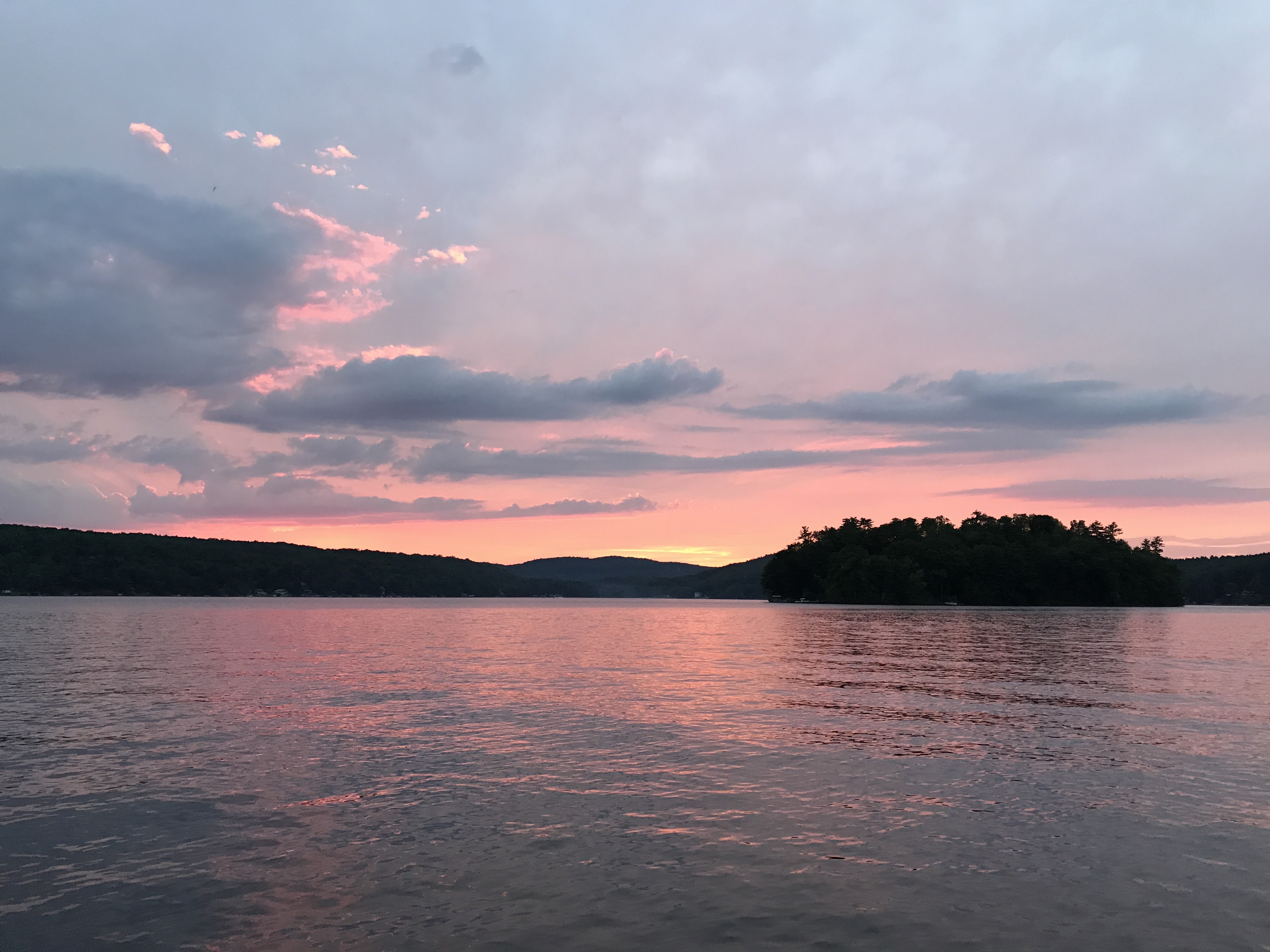
Western sunset sky
serene, pure, ineffable
– the unclouded mind.


 A Book of the Seasons, by Henry Thoreau
"A book, each page written in its own season,
out-of-doors, in its own locality.”
~edited, assembled and rewritten by zphx © 2009-2025


Each experience
reduces itself to a mood
of the mind. 

https://tinyurl.com/hdt-mind
;
 

Friday, July 4, 2025

A Book of the Seasons: July Days


A year is made up of 
a certain series and number 
of sensations and thoughts 
which have their language in nature.

Henry Thoreau, June 6, 1857


A late breeze rises
wood thrush and tanager sing
sparkling the river.  

Fine silvery light
reflecting from the blades of
miles of waving grass.

Wintergreen blossom,
pretty little chandelier,
adorns forest floor.

Waves of light and shade
over the breadth of the land
sweeping the landscape.

Shadows of pine stems
fall across the small wood path
red with pine-needles.

June grasses are past.
Now the grass turns to hay as
flowers turn to fruits.

Lilies surprise me.
Now the flowering season
has reached its height.

The moon reflected
from the rippled surface like
a stream of dollars.

Busy hummingbird
unmindful of the shower,
struck by a big drop.

Aboriginal
bream over its sandy nest
poised on waving fin.

Waving in the wind
this grass gives a purple sheen
over the meadow.

The upland plover
hovers on quivering wing –
 alights by steep dive.
July 12, 1855

Hayers rest at noon
and resume after sunset.
The Haymaker’s moon.

A fine misty rain
lies on reddish tops of grass
like morning cobwebs.

Thoughts driven inward –
clouds and trees reflected in 
the still, smooth water.


Dark-blue winding stripe,
green meadow, dark-green forest,
blue dark and white sky.

Flying shore to shore,
yellowish devil's-needles
cross their Atlantic.


I first hear the locust sing 
so dry and piercing
by the side of the pine woods 
in the heat of the day.  
July 18, 1851

With midsummer heats
asters and goldenrods come –
children of the sun.

The more smothering
furnace-like heats are begun –
and the locust days.

We see the first star 
and know not if we might have
seen it earlier.

Sun warm on my back
I turn round and shade my face -
a beautiful life.

Our fairest days born
in a fog, the season of
morning fogs arrived.

Along the river
the memory of roses -
late rose now in prime.

In low Flint's Pond Path 
goldenrod makes a thicket 
higher than my head. 

Fog rises highest
over the river and ponds
which are thus revealed.
July 25, 1852

Sun's disk round and red
seen well above horizon
through thick atmosphere.

The voice of the loon 
in the middle of the night
far over the lake.

Goldenrod, asters
grasshoppers now abundant -
cooler breezy air.

Kindred red color
of skies in the evening and
fruits in the harvest.

Grand sound of the rain
on the leaves of the forest
distant, approaching.

Thoughts of autumn and
the memory of past years
occupy my mind.
July 31, 1856


<<<<< Last Month                                                                                           Next Month  >>>>>                                                                                                                                                                                


A Book of the Seasons, by Henry Thoreau, July Days

 A Book of the Seasons, by Henry Thoreau
"A book, each page written in its own season,
out-of-doors, in its own locality."
~edited, assembled and rewritten by zphx ©  2009-2025

Wednesday, November 20, 2024

A Book of the Seasons: November days I (now there is nothing but how bright the stars)


A year is made up of 
a certain series and number 
of sensations and thoughts 
which have their language in nature.

Henry Thoreau, June 6, 1857


November 22, 2022


It is a bright, clear, 
warm November day.
 I feel blessed. I love my life.
 I warm toward all nature. 
November 1, 1851

In November,
 a man will eat his heart, 
if in any month. 


November twilight,
clear white light seen through the woods —
the leaves being gone.


In the cold sunlight

In the cold sunlight
I see the bare hillside beyond
and think now we are left

to the hemlocks and pines
with their silvery light.

to the bare trees and withered grass. 

to a certain emptiness beyond
between the hemlocks and the hill,
the bleak fields vacated. 

The very earth is a house 
shut up for the winter.

I go knocking about it in vain. –


but now I am cheered
to hear a chickadee on a hemlock

that old acquaintance
assured to be here all winter.

All that is 
evergreen in me 
revives at once.

November 7, 1858


The chickadee 
Hops near to me.
November 8, 1857


We had a true November sunset 
after a dark, cloudy afternoon.

The sun reached a clear stratum 
just before setting  . . .  and 

a cold, yellow sunlight 
suddenly illumined

the withered grass 
of the fields around.

November 9, 1858


Now a new season begins 

The season of brilliant leaves
 may be considered over, — 
say about the 10th; 
and now a new season begins, 
the pure November season 
of the russet earth 
and withered leaf 
and bare twigs 
and hoary withered goldenrods.


November 

November 
whose name sounds 
so bleak and cheerless. 
Perhaps its harvest of thought 
is worth more than 
all the other crops of the year. 
 November 11, 1858

Now is there nothing

Now is there nothing
but the echo of your steps
over frozen ground.

In this cold weather
your deep inward fires burn
with a clearer flame.

 November 13, 1851


The willow twigs
The willow twigs right
of the Red Bridge causeway
are bright greenish-
yellow and reddish
as in the spring.
November 14, 1854

Just after sundown
Just after sundown the waters
become suddenly smooth
and the clear yellow light
of the western sky
reflected in the water
making it doubly light
to me on the water
diffusing light from below
as well as above.
November 15, 1853

The pines on shore
Colder weather
very windy
but still no snow.
Ice along the river
does not melt. 
The waves running high
with white caps
give a pleasant motion
to the boat. 
Pines on shore 
look very cold
reflecting a silvery light.
 November 16, 1852

November lights
We are interested at this season
by the manifold ways in which
the light is reflected to us. 
Looking toward the sun now
when an hour high,
many small birches between,
the light pleasantly diffused.
Ascending a little knoll
covered with sweet-fern
the sunlight reflected
as from grass and weeds
covered with hoar frost
a perfect halo of light
resting on the knoll
as I move to right or left. 
The setting sun reflected from windows
more brightly than any other season.
The hundred silvery lights of November.

A myriad of surfaces now 
prepared to reflect the light.
November 17, 1858


These are cold, gray days. 

Such is November

Much cold slate-colored cloud
bare twigs seen gleaming
toward the light like gossamer,
pure green of pines
whose old leaves have fallen,
reddish or yellowish brown oak leaves
rustling on the hillsides,
pale brown bleaching almost hoary
grass or hay in the fields
akin to the frost which has killed it.
And flakes of clear yellow sunlight
falling on it here and there –
such is November. 

November 18, 1857

A cold gray day
A cold gray day
once spitting snow. 
Water froze in tubs 
 last night. 
November 19, 1855

Seen when the sun is low
Seen when the sun is low –
the rare wholesome
and permanent beauty
of withered oak leaves
of various hues of brown --
Quaker colors, sober ornaments
beauty that quite satisfies the eye.
The richness and variety same as before –
the colors different, incorruptible and lasting.

Fair Haven Pond

I see Fair Haven Pond
with its island and meadow
between the island
and the shore and a
strip of perfectly still 
and smooth water in the
lee of the island
and two hawks 
fish hawks perhaps
sailing over it.

I do not see how
it could be improved –
or yet what these things can be.

I begin to see
such an object when I
cease to understand it.
and I see that I
did not appreciate or
realize it before –

how adapted these
forms and colors to my eye!
meadow and island!
Nature so reserved!
the hawks and ducks so aloof!

What are these things? 
I get no further than this:

we are made to love
pond and meadow as the wind
to ripple water.

November 21, 1850


November's bare bleak 
inaccessible beauty 
seen through a clear air.

A very beautiful November day - 
a cool but clear, crystalline air. 
 I rejoice in the bare, bleak, 
hard, and barren-looking 
surface of the tawny pastures, 
the firm outline of the hills, 
and the air so bracing 
and wholesome.
 
Simply to see to a distant
 horizon through a clear air, –
this is wealth enough for one afternoon. 

It is glorious November weather
and only November fruits are out.
 

November 22, 2017

The new-fallen snow


This morning is white –
the beauty and purity
of new-fallen snow.

The new-fallen snow
seen lying just as it fell
on the twigs and leaves.

With the first snowfall
Nature seems to relent her
November harshness.


Snow sugars the ground
to reveal a cow-path in
the distant landscape.
November 24, 1858

Amber light in the west 
A clear amber light in the west 
and, turning about, 
we are surprised
 at the darkness in the east –
 a crescent of night
 as if a thick snow-storm gathering
that we are not prepared for –
 yet the air is clear.
November 25, 1851

The unexpected
exhilarating yellow 
light of November.

November 25, 2017

The warmth of existence.

The air this afternoon  
is indescribably clear and exhilarating

and though the thermometer 
would show it to be cold

I think that there is a finer and
purer warmth than in summer –

a warmth hardly sensuous
but rather the satisfaction of existence.

I  experience such an interior comfort
 
as if the thin atmosphere  
were the medium of invisible flames

as if the whole landscape 
were one great hearthside .

When I get up so high on the side of the Cliff 

the sun is setting like an Indian-summer sun.  
There is a purple tint in the horizon. 

It is warm on the face of the rocks 
and I could sit till the sun disappears 

to dream there. A mild sunset 
such as is to be attended to.

Just as the sun shines into us 
warmly and serenely

our Creator 
breathes on us 
and re-creates us.
 
November 25, 1850

The bare, barren earth 
cheerless without ice and snow –
but how bright the stars. 

Twilight makes so large
a part of the afternoon
these November days.

A regular snow-storm

A very few fine snowflakes 
falling for many hours, and now, 
by 2 P. M., a regular snow-storm --
fine flakes falling steadily
 rapidly whitening all the landscape. 
In half an hour the russet earth 
is painted white even to the horizon. 
Do we know of any other
 so silent and sudden a change? 

I cannot now walk without 
leaving a track behind me.


Glorious yellow sunlight

Cloudy and milder this afternoon
but now I begin to see under the clouds
 
in the west horizon a clear 
crescent of yellowish sky
 
and suddenly a glorious yellow sunlight
 falls on all the eastern landscape --

      russet fields and hillsides,
      evergreens and rustling oaks
      and single leafless trees. 

The clearness of the air at this season 
  the light is all from one side
  
 reflected  from russet earth and clouds 
so intensely bright --

all the limbs of a maple 
far eastward rising over a hill 
wonderfully distinct and lit.

I think that we have some such sunsets 
 peculiar to the season every year. 
 
I should call it the russet afterglow of the year.

November 29, 1853

“Winter, come on!” 

Again I am struck 
by the wholesome colors of
 the withered oak leaves -

  the clear reddish-brown
of the shrub oak, contrasting
 whitish undersides 

 so strong and cheerful
as if it rejoiced at the 
advent of winter.

November 29, 1857


Sparkling windows and
vanes of the village now seen
against the mountains.
 November 30, 1852


Recognition from white pines

A cold and windy
afternoon with snow not yet
melted on the ground.  
My eye wanders as
I sit on an oak stump by
an old cellar hole.
Methinks that in my 
mood I am asking Nature 
to give me a sign.
Transient gladness.
I do not know what it is – 
something that I see:
This recognition
from white pines now reflecting
a silvery light.
And  by the old site
I sit on the stump of an
oak which once grew here.


November 30, 2015


The year is but a succession of days,
and I see that I could assign some office to each day
which, summed up, would be the history of the year.
Henry Thoreau, August 24, 1852

See also A Book of the Seasons,  by Henry Thoreau, November Days II

<<<<<<<< Last Month                                        Next Month >>>>>

A Book of the Seasons,  by Henry Thoreau, November Days I 

A Book of the Seasons
,  by Henry Thoreau, 
"A book, each page written in its own season,
out-of-doors, in its own locality.”
~edited, assembled and rewritten by zphx © 2009-2024

https://tinyurl.com/hdt-novdays


Popular Posts Last 30 Days.

The week ahead in Henry’s journal

The week ahead in Henry’s journal
A journal, a book that shall contain a record of all your joy.
"A stone fruit. Each one yields me a thought." ~ H. D. Thoreau, March 28, 1859


I sit on this rock
wrestling with the melody
that possesses me.